The short answer is yes, but only if you treat the drinking water on the Annapurna Circuit first. Drinking straight from the tap, streams, or local waterfalls on the Annapurna Circuit can lead to stomach problems during the trek.
Fortunately, staying safe on the trail is fairly simple. You can buy boiled water from teahouses, refill your bottles at eco-stations in the bigger villages, or purify water yourself using purification tablets, UV purifiers, or portable filters.
Hydration also becomes more important as you climb higher during the trek of the Annapurna Circuit. The mountain air is dry, long walking days drain you faster than expected, and dehydration can make altitude symptoms feel worse. Carrying a couple of reusable bottles and a reliable purification method usually makes life on the trail much easier.
Key Takeaways
- Do not drink tap or stream water directly on the Annapurna Circuit without treating it first
- Boiled water from teahouses is one of the safest and easiest options during the trek
- Refill stations are available in many villages and help reduce plastic waste on the trail
- Carrying a reusable bottle and a basic purification method makes the trek much easier
- Bottled water becomes noticeably more expensive at higher altitudes
- Dry mountain air and long walking days can dehydrate you faster than expected
Where To Get Drinking Water On The Annapurna Circuit
On this Circuit drinking water is available in teahouses, refill stations, local taps, and natural water sources. Since the Annapurna Circuit passes through villages regularly, finding places to refill your bottle is not difficult.
Teahouse Drinking Water On The Annapurna Circuit
Teahouses are the most reliable places to get safe drinking water during the trek. Almost every lodge sells boiled water, and furthermore, many trekkers prefer it over untreated tap water or stream water.
You can normally refill your reusable bottle:
- Before leaving in the morning
- During lunch stops
- After reaching your overnight village
Prices stay fairly low at the beginning of the trek. After Manang, however, water becomes more expensive because fuel and supplies are harder to transport into remote villages.
Water Refill Stations On The Annapurna Circuit
Water refill stations are available in many of the larger villages along the Annapurna Circuit route. These stations usually provide filtered or treated water and are a better alternative to buying plastic bottles every day.
Refill stations are useful because they:
- Reduce plastic waste
- costs less than bottled water
- work well with reusable bottles and hydration bladders
You will usually find them in busier trekking stops during the main trekking seasons.
Bottled Water On The Annapurna Circuit
Bottled water on the Annapurna Circuit is readily available during the lower sections of the trek. Small shops and teahouses sell mineral water in most villages.
But the higher you go, the more expensive it becomes. Near Thorong Phedi or High Camp, even a single bottle can feel overpriced because everything has to be carried up the trail by porters or mules.
That is one reason many trekkers stop relying completely on bottled water after the first few days.
Streams, Taps, And Natural Water Sources
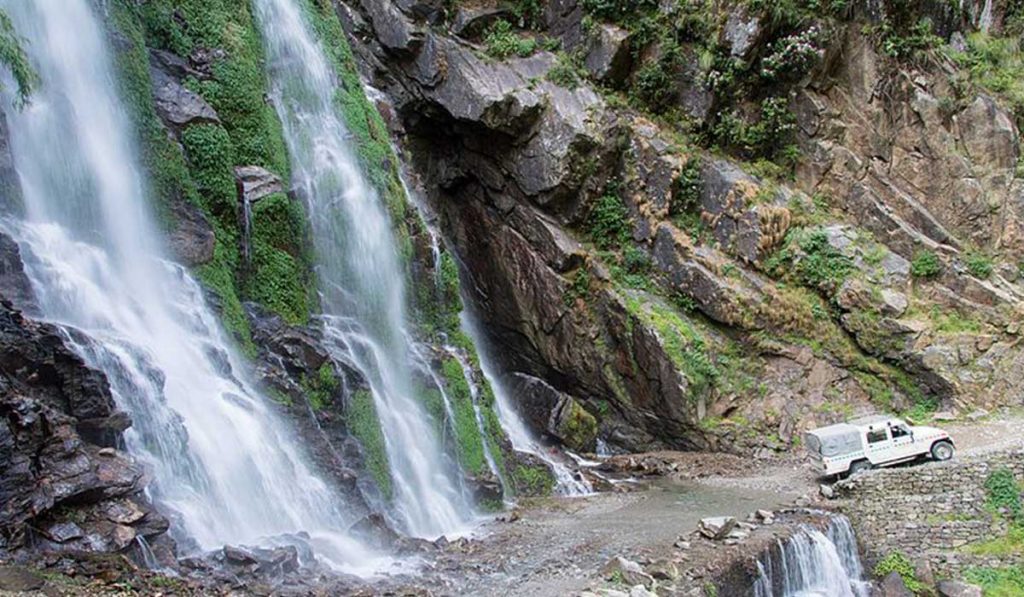
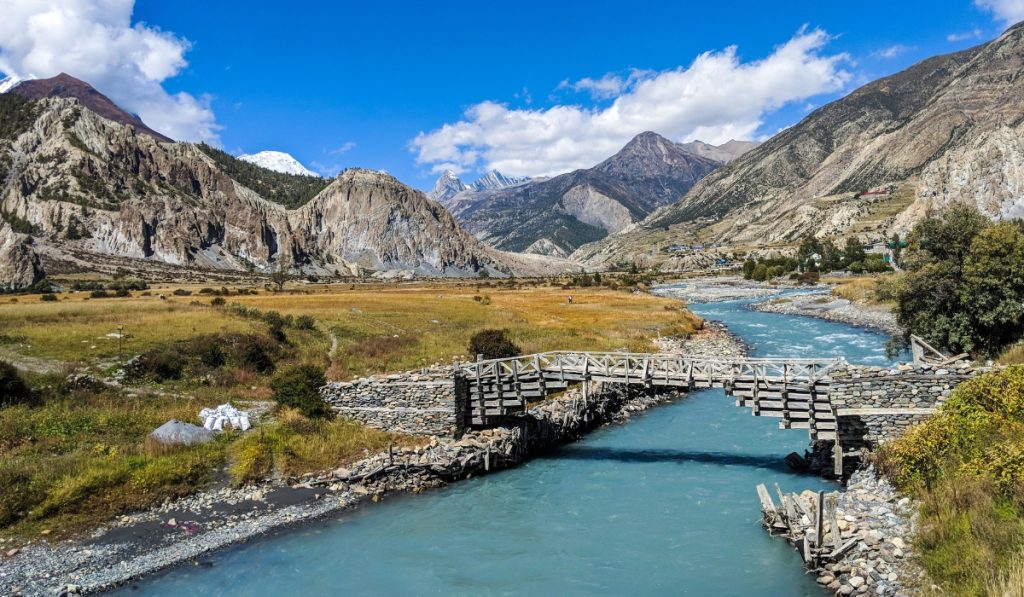
You will see streams, roadside taps, and village water pipes throughout the Annapurna region. Some of them look incredibly clean, especially near higher mountain areas. Still, you should avoid drinking directly from these sources without treatment.
Water in the mountains can look perfectly clean and still upset your stomach. Along the Annapurna Circuit, some water sources pass through villages, grazing areas, or old pipelines before reaching the trail. So, if you are filling your bottle from taps, streams, or roadside pipes, it is safer to purify the water first before drinking it.
Is Tap Water Drinkable On The Annapurna Circuit?
No, so it is better not to drink water straight from the taps along the trail. A lot of the water comes through local pipes connected to streams or spring sources. Even when the water looks clean, it can still upset your stomach if you drink it without treating it first.
To guarantee safe drinking water on the Annapurna Circuit, you must always treat tap water using a water filter for the Annapurna Circuit, purification tablets, or by purchasing boiled water before drinking it.
Why Clear Mountain Water Is Not Always Safe
One of the easiest mistakes during the trek is assuming cold mountain water is naturally safe to drink. Along the Annapurna Circuit, the following conditions can contaminate water sources:
- Livestock grazing areas
- Open storage tanks
- Damaged pipelines
- Settlements further uphill
Because of these factors, untreated water may carry bacteria or parasites that can cause stomach infections during the trek.
How Stomach Illness Affects Trekking at Altitude
A stomach problem at altitude feels very different from one at home. Even a small stomach problem can feel much worse once you are trekking at altitude. Losing fluids, struggling to eat properly, and feeling drained after a long walking day can make the next day on the trail noticeably harder.
Above places like Manang, dehydration can make altitude symptoms feel worse and drain your energy surprisingly fast.
Water Safety in Higher Villages
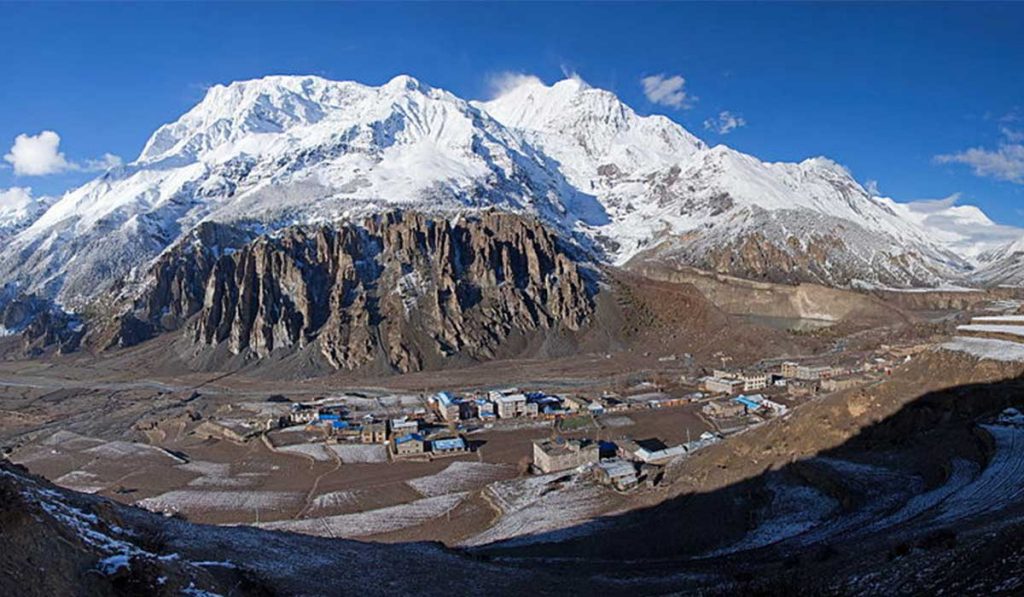
Water conditions usually become more basic as you move higher into the mountains. Villages near Thorong Phedi and High Camp have fewer resources compared to the lower sections of the trek.
That is why many trekkers become more careful about treating water properly before crossing Thorong La Pass.
Best Water Purification Methods for the Annapurna Circuit
Purifying water properly is one of the easiest ways to avoid stomach problems during the trek. Since buying bottled water every day becomes more expensive higher up the trail, many trekkers carry their own purification methods instead.
The good thing is that you do not need anything complicated. A simple setup usually works well throughout the Annapurna Circuit.
Boiled Water on the Annapurna Circuit
Boiled water is one of the safest and most commonly used options during the trek. Most teahouses sell boiled drinking water, especially in the higher villages where treated water matters more.
It is convenient because you do not need to carry extra equipment. You can simply refill your bottle before leaving for the day or after reaching your next stop.
The downside is cost. Prices increase steadily with altitude because fuel becomes harder to transport into remote mountain villages.
Purification Tablets for Annapurna Circuit
They are lightweight, cheap, and convenient to carry. Furthermore, they are useful when you refill from taps, streams, or public water points along the trail.
Most tablets take around 30 minutes to work properly. Some leave a chlorine or iodine taste in the water, which is why many trekkers add electrolyte powder or flavored hydration tablets afterward.
Purification tablets are especially useful as:
- A backup purification method
- An emergency option on longer trekking days
- A lightweight solution for independent trekkers
Portable Water Filters for Trekking
Portable water filters have become increasingly popular on the Annapurna Circuit because they work quickly and reduce the need to buy bottled water.
Many filters can remove:
- Bacteria
- Parasites
- Sediment from natural water sources
They are practical if you regularly refill from taps or streams during the day. Unlike tablets, you do not have to wait before drinking the water.
UV Purifiers and Filter Bottles
UV purifiers are popular with trekkers who want something quick and convenient to carry. You stir the device inside your bottle for a short time, and the water is ready to drink.
Filter bottles work a little differently. The bottle comes with its filter, so you can refill it along the trail and drink from the same bottle afterward. Many trekkers like them because they keep things simple during the day.
Which Water Purification Method Is Best?
Honestly, it mostly depends on what you find easiest to use every day on the trek. Some trekkers prefer boiled water from teahouses, especially in the higher villages. Others find filters more practical since they can refill and drink water during the walk without stopping for too long. Tablets are handy too, because they are lightweight and easy to carry during the trek.
Whichever method you choose, treating your water properly is worth the effort once you are several days into the trek.
Boiled Water vs Filtered Water On The Annapurna Circuit
Most trekkers on the Annapurna Circuit end up relying on either boiled water from teahouses or their own filter system. Both work well, but the experience is a little different.
Boiled water is the easier option. You can ask for it directly at teahouses, refill your bottle, and continue the trek without carrying extra gear. Many trekkers feel more comfortable drinking boiled water once they start getting higher into the mountains.
Filtered water gives you more freedom during the day. With a filter bottle or portable filter, you can refill your water along the trail without relying entirely on teahouses for boiled water. It is useful on longer walking days when you are stopping often to drink or refill.
Boiled water is simpler since you do not need to carry extra gear, but the cost starts adding up once you get higher into the trek. Filters feel more practical for some trekkers because they make it easier to refill water during the day without buying bottled water repeatedly.
Quick Comparison of Boiled and Filtered Water on the Trail
| Boiled Water | Filtered Water |
| Easy to get in teahouses | Easy to refill during the day |
| No extra equipment needed | You need to carry a filter |
| Common in higher villages | Useful on longer walking days |
| Gets expensive at altitude | Cuts down daily water costs |
Many trekkers end up using both depending on the section of the trail and the kind of water source available nearby.
Hydration On The Annapurna Circuit At High Altitude
Drinking enough water becomes more important as you gain altitude on the Annapurna Circuit. Many trekkers expect the cold weather to be the greatest challenge, but dehydration is surprisingly common during the trek.
The air gets much drier higher up the trail, and long walking hours make you lose fluids steadily throughout the day. The problem is that you may not always feel thirsty in colder weather, even when your body needs more water.
How Much Water To Drink During the Trek
There is no exact amount of water that suits everyone on the Annapurna Circuit. Some trekking days are short and relaxed, while others involve hours of uphill walking in dry mountain air.
A beneficial habit is to drink small amounts regularly during the day instead of finishing an entire bottle only during breaks. Once you get higher on the trail, it is easy to fall behind on hydration without noticing it immediately.
Electrolytes and Oral Rehydration Salts
After a long day of walking, plain water does not always feel enough. Electrolyte tablets or oral rehydration salts can help replace some of the salts and minerals your body loses during the trek.
Trekkers carry a few sachets in their backpack because they are easy to pack and useful after long climbs, hot afternoons, or tiring days on the trail.
They are especially useful:
- After long uphill climbs
- During hot afternoons in the lower sections
- If you feel drained or dehydrated
Some people also use them simply to improve the taste of purified water.
Signs You Are Not Drinking Enough Water
Mild dehydration can creep up slowly during the trek. Some common signs of dehydration during the trek include:
- Headache
- Tiredness
- Dizziness
- Dry lips or mouth
- Dark yellow urine
At higher altitudes, dehydration can make the body feel even more exhausted and can sometimes make altitude-related discomfort more difficult to manage.
Reusable Water Bottle For Annapurna Circuit
Carrying a reusable water bottle on the Annapurna Circuit makes the trek much easier. Since you will be refilling water regularly throughout the day, buying plastic bottles again and again quickly becomes expensive and impractical, especially at higher altitudes.
A reusable bottle also works better with boiled water, refill stations, purification tablets, and portable filters.
Why Carrying a Reusable Bottle Matters
Buying bottled water on the Annapurna Circuit every day gets expensive after a while, especially once you start moving higher into the mountains. Carrying a reusable bottle is simpler since you can refill it at teahouses, refill stations, or anywhere you are treating water yourself.
It also cuts down on plastic waste along the trail, which has become a bigger issue in popular trekking areas of the Annapurna region.
Best Water Bottle Setup For The Trek
There is no single setup that works for everyone during the trek. Some trekkers carry a single large bottle for the day, while others prefer two smaller bottles to spread the weight more comfortably in their backpack.
Hydration bladders are useful too, especially if you like sipping water while walking instead of stopping every time you need a drink.
Insulated Bottles For Cold Weather Trekking
If you are trekking during colder months, insulated bottles can be useful higher up the trail. Water can get extremely cold early in the morning and sometimes begins freezing overnight in villages near Thorong Phedi or High Camp.
Keeping your bottle inside the sleeping bag at night is also common once temperatures start dropping below freezing.
How Expensive Is Bottled Water On The Annapurna Circuit?
Bottled water on the Annapurna Circuit is easy to find, but the price changes quite a bit as you move higher into the mountains. In the lower villages, bottled water is fairly affordable. A few days later, the same bottle can cost several times more.
The main reason is transportation. Porters, mules, or jeeps carry most supplies in the higher parts of the trail wherever roads are available. Once the trail climbs beyond the road-connected sections, everything becomes more expensive to bring in, including drinking water.
Common Mistakes Of Drinking Water On The Annapurna Circuit
Most water-related problems on the Annapurna Circuit happen because people get careless after a few days on the trail. Drinking untreated water or failing to drink enough during a long walking day can quickly make the trek harder than expected.
Some common mistakes people make with drinking water on the Annapurna Circuit include:
- Drinking straight from streams or roadside taps without treating the water
- Carrying too little water between villages
- Depending only on bottled water for the entire trek
- Forgetting to drink enough water in cold weather
- Assuming clear mountain water is automatically safe
- Not carrying purification tablets or a backup filter
Another thing that happens regularly is that people wait until they feel very thirsty before drinking water. By that point, dehydration has usually already started catching up.
At higher altitudes, dehydration builds up gradually, and many trekkers do not notice it until they start feeling fatigued, dizzy, or unusually drained during the walk.
Being consistent with hydration and water purification usually prevents most of these problems during the trek.
Best Water Setup for the Annapurna Circuit
You do not need a complicated water setup for the Annapurna Circuit. A couple of basic things are usually enough for the entire trek. Most trekkers carry:
- One or two reusable bottles
- A way to purify water
- A few electrolyte sachets or tablets
If you like keeping things light, purification tablets are easy to pack and barely take up space. Filters are more convenient if you plan to refill water often during the day.
Once you get higher into the mountains, an insulated bottle cover can help keep the water from getting too cold, especially during early mornings.
It is also worth refilling your bottles before leaving each village. Some stretches of the trail are longer than they first appear on the map.
Frequently Asked Questions (FAQs)
Can You Drink Tap Water On The Annapurna Circuit?
It is better not to drink tap water straight from the source during the trek. Even when the water looks clean, most trekkers still treat it first to avoid stomach issues on the trail.
Are Water Refill Stations Available On The Annapurna Circuit Safe?
Yes, they are. The refill stations are used throughout the Annapurna Circuit. And they are a common way to get drinking water during the trek. Most provide filtered or treated water, which is why many trekkers prefer them over buying bottled water every day.
Do You Need Purification Tablets For The Annapurna Circuit?
You do not absolutely need purification tablets, but carrying a few is useful. They take up almost no space and can help if you need to refill water somewhere without a refill station or teahouse nearby.
Is Boiled Water Safe At High Altitudes?
Many trekkers switch to boiled water once they get into the higher villages. It is easy to find in teahouses and is usually the option people feel most comfortable with during the colder parts of the trek.
How Much Water Should You Drink While Trekking?
There is no single answer to this, as no fixed amount works for everyone. Some days are short and easy, but others require long climbs. And thus, in dry mountain air, the amount of water intake might vary with it, too. The important thing is to keep drinking water regularly during the day instead of waiting until you feel exhausted or dehydrated.