


Overview
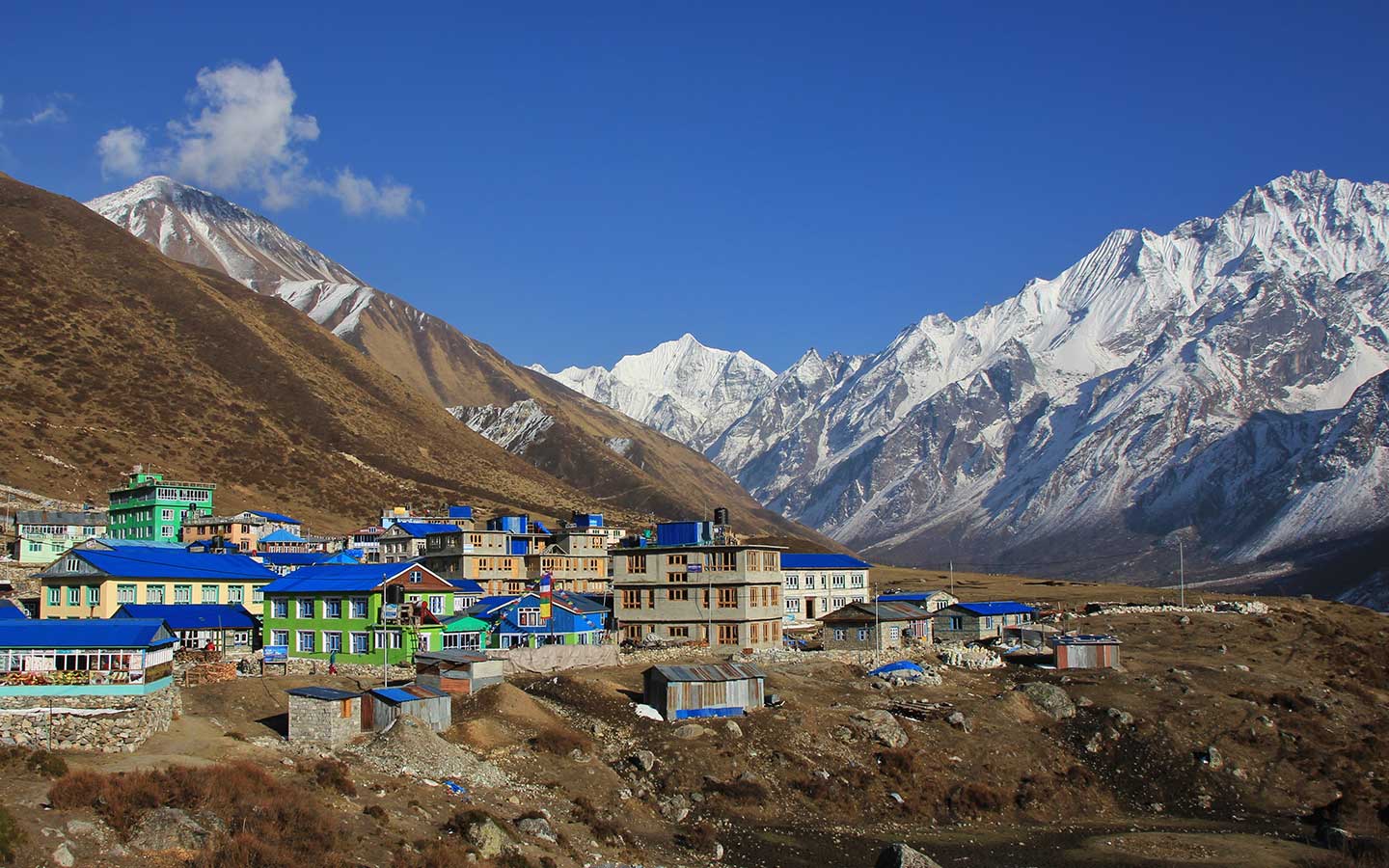
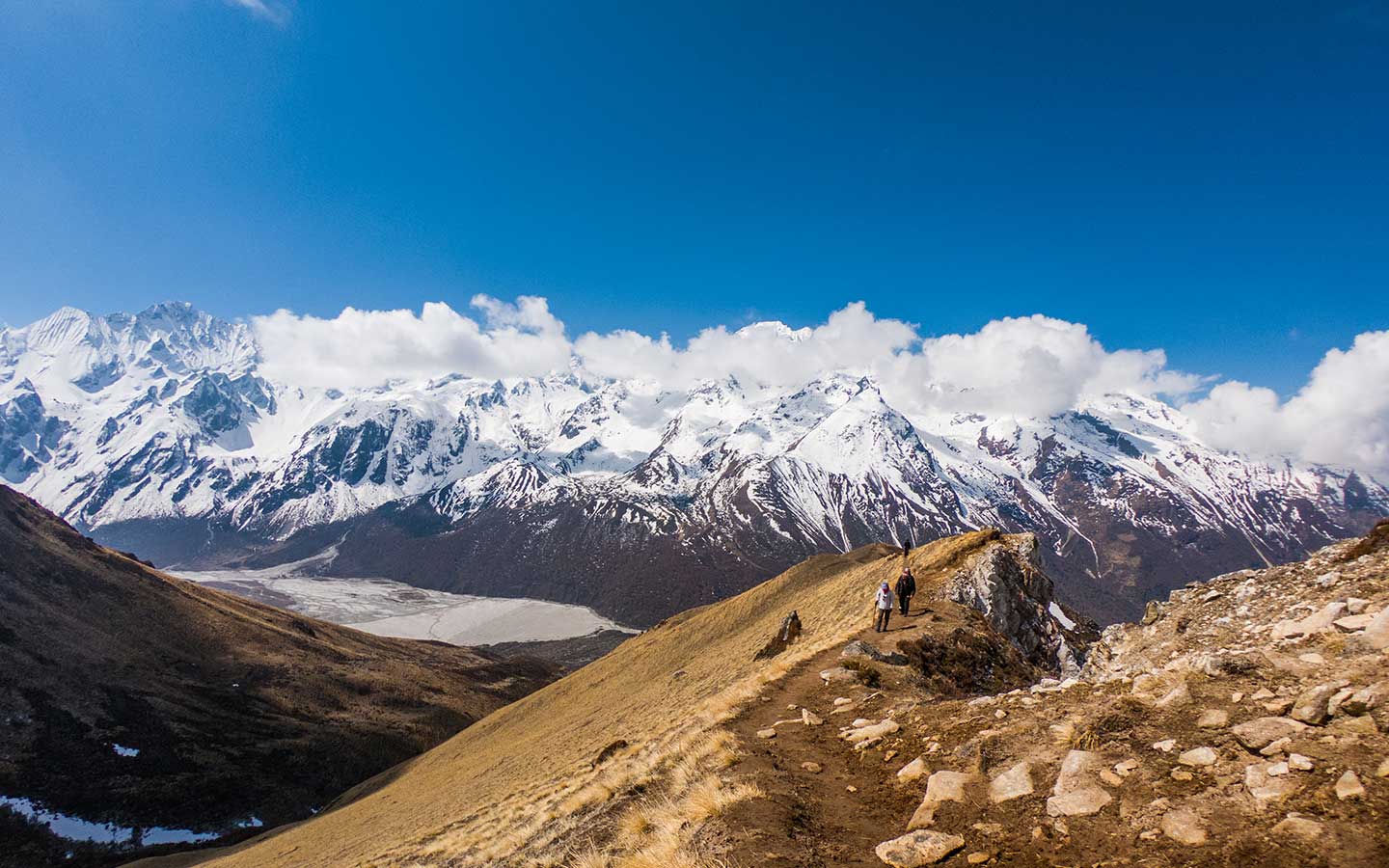
The Langtang Valley Trek takes you into Langtang National Park, Nepal’s closest major trekking region to Kathmandu. Over 12 days and roughly 77 km round-trip, the trail follows the Langtang River through rhododendron forest, Tamang villages, and yak pastures. Eventually, it ends at Kyanjin Gompa (3,870 m) beneath Langtang Lirung. Often called the ‘Valley of Glaciers,’ it offers genuine Himalayan scenery and deep Tibetan-Buddhist culture without requiring a domestic flight or a long approach.
This is Radiant Treks‘ standard full-board Langtang package: guide, permits, and Kathmandu logistics arranged before you land, so the trek is the only thing left to plan.
Want more time in the mountains? Ask about extending into Gosaikunda or the Tamang Heritage Trail.
Why Choose This Langtang Trek Package?
Langtang packs in more than its short distance suggests — dense rhododendron forest, Tamang villages that still run on old mountain rhythms, and glacier views that rival treks twice as long. Here’s what makes this particular package worth booking:
- You’ll pass through Langtang National Park’s mix of subtropical forest and high alpine terrain in under two weeks, ending at Kyanjin Gompa beneath Langtang Lirung
- Kyanjin Ri and the valley’s yak-cheese factory are both reachable without any technical climbing
- Your Langtang National Park permit is sorted before you land, and a licensed guide is already assigned by the time you arrive
- Airport pickup, your Kathmandu hotel, and the drive out to Syabrubesi are all built into the trip, so the only thing left to plan is the walking
Langtang Valley Trek Cost
This package starts from USD 750 per person, covering your guide, permits, teahouse stays, full-board meals, and Kathmandu transfers. Compared to Everest Base Camp or Manaslu, Langtang is the most budget-friendly of Nepal’s major treks — it’s shorter and needs no restricted-area permit.
Is the Langtang Trek Difficult for Beginners?
Short answer: no, not in the way most people worry about. We rate the Langtang Valley trek moderate — real walking, but forgiving enough for a first Himalayan trek.
- 6 to 7 hours of walking a day, mostly on established trails — no ropes or crampons needed in normal conditions
- The high point is Kyanjin Ri at close to 5,150 m, still lower than EBC’s Kala Patthar or Manaslu’s pass
- Elevation gain is spread gradually across 12 days rather than one hard push
- Some stretches, especially between Lama Hotel and Langtang Village, will tire your legs even if you are fit
- Weather above 3,000 m can turn fast, so cold mornings aren’t rare even on the “easy” days
How Our Itinerary Helps You Succeed
A short trek doesn’t have to mean a rushed one. This itinerary of our Langtang Valley Trek is built so your body actually gets time to adjust, not just walk for several days.
- A full day at Kyanjin Gompa works as your acclimatization base before any push toward Kyanjin Ri
- Daily distances stay realistic rather than stretched to save a day off the itinerary
- Your guide keeps an eye on your pace and watches for early altitude symptoms — headaches, fatigue, poor sleep — before they become a problem
- If you are moving slower than expected, the day adjusts around you instead of the other way around
This is not about pushing through. It’s about pacing the trek so the mountain, not the schedule, sets the pace.
Trek Preparation: What to Expect Before You Start
Before you head out, your guide goes over your gear with you, checking your boots and making sure you have got enough for the cold higher up the valley. If you are short on anything, Radiant Treks can lend you a down jacket or sleeping bag, and you just hand it back after the trek.
This is also the easiest time to ask whatever’s on your mind, whether about altitude, how far you’ll actually walk each day, or what Syabrubesi looks like before you arrive. Better to sort it out now than figure it out on day one.
Food And Sleeping On The Trek
In Kathmandu, you stay in a comfortable 3-star hotel with breakfast and hot showers included, which gives you a proper reset before the trail starts. Once you are on the trek, you will stay in teahouses, which provide your accommodation and meals each night.
Where You’ll Stay
The rooms are simple but comfortable, usually with basic bedding and shared facilities in tge lower elevations. Higher up near Kyanjin Gompa, expect more basic twin rooms with shared bathrooms, which is fairly standard once you are at that altitude. Don’t expect luxury, but you will always have a warm place to sleep after a long day of walking.
What You’ll Eat on the Trail
Meals are full-board, so breakfast, lunch, and dinner are all covered, along with seasonal fruit after dinner to round things out. Dal bhat remains the most reliable, energy-dense option throughout the trek, since it’s freshly cooked and refillable. You will also find momo, noodle dishes, and soups on most teahouse menus, especially at lower altitudes.
Getting To The Trailhead: Transportation Guide
The trek kicks off with a 7 to 8-hour drive from Kathmandu to Dhunche, which is included as part of the package. The road winds through Trishuli Bazaar and Dhunche before finally dropping into Thulo Syabru, and while the scenery along the way is genuinely nice, it’s still a long day in a vehicle.
A public vehicle is included as standard, but if comfort matters more to you than saving a bit of money, there’s a private vehicle (jeep) upgrade available too. It tends to work out well for groups of two to five who split the cost. Either way, it’s a full travel day, so you should plan for that.
But we might offer an alternative route if unforeseen circumstances, such as the Bhotekoshi flood of 2026, affect the standard trails.
Guides, Permits & Solo Travelers
A licensed guide is needed to trek in Langtang. You cannot trek alone anymore. But don’t worry, as your guide is already included in this package.
You don’t need a TIMS card for this trek. The Langtang National Park permit is the only permit required, and Radiant Treks arranges the process for you before your trip starts.
A porter is optional. Hire one if you want to carry only a small daypack, with no heavy bags.
Traveling solo? You will still have a guide with you the whole time, so you are never really alone on the trail.
Ready to trek Langtang with Radiant Treks? Book your spot today and let us handle the rest.

Why Choose Radiant Treks For The Langtang Valley Trek?
- Our senior guides have decades of combined experience across Everest, Manaslu, Annapurna, and Langtang, so whatever the trail throws at you, someone on our team has likely already seen it
- We build in a full acclimatization day at Kyanjin Gompa rather than trimming it to squeeze the itinerary shorter — a rushed schedule is how good treks go wrong
- Every package comes with a licensed, English-speaking guide, required for trekking in the region and genuinely useful beyond the paperwork
- Your guide, permit, teahouse stays, and full-board meals are all sorted before you take your first step, so nothing gets tacked on halfway through
- Your Langtang National Park permit is arranged ahead of time, which is one less thing standing between you and the trail once you land in Kathmandu
- Trekking solo doesn't mean you're alone. You'll have a licensed guide with you the entire way, from Syabrubesi to Kyanjin Gompa and back
- Guides carry a first-aid kit and stay alert to early altitude symptoms, slowing things down when it matters instead of pushing through regardless
- Prefer to skip the long public bus? A private vehicle upgrade is available for the drive to and from trailhead
- Want more days in the mountains? We can build in side trips to Gosaikunda or the Tamang Heritage Trail without disrupting the rest of your plans
- Gokarna Khanal has spent over 18 years guiding across the Himalayas and has walked the Langtang route himself more than 20 times, and that firsthand experience is exactly what shaped how this itinerary is paced
Itinerary
After you land at the Tribhuvan International Airport, you will find our representative waiting to meet you. After grabbing your bags, it’s off to your hotel in Thamel — usually a 20-30 minute drive. It might be a bit longer if traffic’s bad, which happens a lot in Kathmandu. Once you have checked in, take some time to rest and recover from the flight.
Later, head out and explore. Thamel itself is worth wandering through, and Kathmandu Durbar Square and the Monkey Temple (Swayambhunath) are both close by and well worth a visit. If you want somewhere quieter, go to the Garden of Dreams for a bit. Grab dinner at a local Nepali restaurant that evening.
Your guide will meet you later for a quick briefing on the trek and gear — last chance to pick up anything you are missing. Then get some sleep, because tomorrow the real trek begins.

Elevation Gain: 560 m / 1,837 ft
After breakfast, we set off early from Kathmandu and start the long drive toward Dhunche, the district headquarters of Rasuwa. It is your gateway into the Langtang region. Since the road further ahead toward Syabrubesi hasn’t been in great shape lately due to the Bhotekoshi floods, Dhunche now works as the overnight stop before the actual trekking begins.
The drive takes you out of the Kathmandu Valley and into the hills of central Nepal, following the Trishuli River for much of the way. You’ll pass through a string of small villages, terraced fields, and forested slopes. As the road climbs, the air starts to cool, and the scenery turns noticeably more mountainous.
We will stop somewhere along the way for lunch and a break. The last stretch into Dhunche gets winding, but it rewards you with some stunning views over the surrounding hills and valleys.
Once we reach Dhunche, at around 1,960 meters, you will check into a local teahouse for the night. There’s time to rest or wander around town as well. Dhunche is a busy little trading hub for communities across this part of the Himalayas.
Elevation Gain: 150 m / 492 ft
After breakfast at the teahouse, we set out on foot from Dhunche toward Thulo Syabru — the real start of our walk into the Langtang region.
The trail begins along the road and local paths before gradually pulling away into the hills and forest. Once Dhunche is behind us, things quiet down fast, with traditional villages, terraced fields, and forested slopes giving us a lovely first taste of the Langtang landscape.
Much of the route passes through small settlements home to the Tamang community. You will see traditional houses and cultivated terraces and also catch a glimpse of everyday life here. The trail climbs and dips through pine, oak, and rhododendron forests. And every so often, the trees clear enough to catch a glimpse of the peaks around you.
Closer to Thulo Syabru, the views open up more, and if the sky’s clear, you might spot Langtang and Ganesh Himal off in the distance. The last bit of trail winds up to Thulo Syabru itself, a village that sits right along a ridge with a great outlook over the valley.
Thulo Syabru is a proper Tamang village — old stone and timber houses, prayer flags strung up everywhere, and mountains on every side. Once we arrive, we’ll settle into a teahouse, where you can rest or wander around the village for a while.
In the evening, just enjoy the quiet up here before we push on toward Lama Hotel and further into the Langtang Valley the next day.
Note: If you hire a private jeep, you can drive directly from Kathmandu to Thulo Syabru, allowing you to skip the overnight stay and trek from Dhunche.
Elevation Gain: 360 m / 1,181 ft
We leave Thulo Syabru after a warm breakfast and start making our way toward Lama Hotel. The trail heads downhill for a while through thick forest, then joins up with the Langtang Khola and follows the river upstream for most of the day. You will be walking through rhododendron, oak, and pine most of the way, and now and then the trees thin out enough to give you a look at the mountains.
It’s a calm stretch of trail, passing through a few small settlements before it finally brings you into Lama Hotel. Once we are there, we will check into a teahouse for the night. You will have the rest of the afternoon free to relax and enjoy the surroundings.
Elevation Gain: 960 m / 3,150 ft
Breakfast comes early today, then it’s a gentle uphill walk through forest that eventually drops you down near the Langtang River. As you climb higher, the trees start to open up, and this area is usually where you get your first proper look at Langtang Lirung (7,227 m) towering ahead. The first stop of the day is Ghoda Tabela (3,030 m), where you will stop for lunch and get checked in at the national park post.
Beyond Ghoda Tabela, the scenery shifts — forest fades out, and you are walking through open pasture where yaks graze. The trail sticks close to the Langtang River, passing the small settlement of Thangshyap (3,140 m) before Langtang Village finally comes into view.
Langtang Village itself makes the day worth it — big mountain views, warm locals, and a good choice of teahouses to stay in. Once you have checked in, take time to walk around, talk to locals, and enjoy a hot dinner before settling in for the night.
Elevation Gain: 440 m / 1,444 ft
After a good night’s rest in Langtang Village, we push on toward Kyanjin Gompa, the last proper settlement in the valley. It’s a gradual climb, but the views make up for it — Langtang Lirung (7,227 m), Dorje Lakpa (6,966 m), and Gangchempo (6,387 m) all stand out clearly along the way.
You will pass a few yak pastures here and there, plus mani walls, chortens, and strings of prayer flags scattered along the trail — this whole area carries a strong Tibetan Buddhist influence.
The walk takes roughly four hours and brings you to Kyanjin Gompa (3,870 m), where there’s an old monastery worth a look. There is also a small cheese factory that’s been making yak cheese for years — worth trying a bit if you are curious. Once we check into the teahouse, you have got the afternoon free to wander the village. You may also sit with the monastery for a while or climb to one of the nearby ridges if you want a better view.
Dinner’s early that evening, and it’s worth getting some solid sleep. That is because tomorrow’s walk is a bit more demanding than what we have done so far.
Elevation Gain: 1,130 m / 3,707 ft
This is the toughest day of the trek but also the most rewarding. Today you will stand at 5,000 meters on top of Tserko Ri. We start early, well before sunrise, since the light hitting the Langtang range at dawn is something you don’t want to miss. The climb itself takes four to five hours, and the trail gets steep and rocky in places, but the views make every step worth it.
From the top, you can pick out Langtang Lirung, Shishapangma (8,027 m), Dorje Lakpa, and Gangchempo, with the peaks stretching out all the way toward Tibet. Once you have had your fill of the views and taken enough photos, we head back down to Kyanjin Gompa. It is a descent of about three hours. The rest of the day is yours to relax, wander around the village, and maybe sit down with a cup of yak butter tea while looking out at the mountains one more time.
Elevation Loss: 1,390 m / 4,560 ft
Today’s mostly downhill, but there’s an optional side trip first — Kyanjin Ri (4,773 m), which takes about 2 to 3 hours round trip and gives you a fantastic close-up of Langtang Lirung and the glaciers around it. It’s a bit easier than yesterday’s climb to Tserko Ri. So, if you still have the energy, it’s worth doing before heading down.
After breakfast, we start the descent toward Lama Hotel. The trail retraces our steps through Ghoda Tabela and Langtang Village, passing the same yak pastures, stupas, and forest we walked through on the way up.
It’s an easier walk overall, though there are a few steep sections where you will want to watch your footing. All told, it takes around 6 to 7 hours to reach Lama Hotel, where a comfortable teahouse and a pleasant rest are waiting.
After breakfast, we leave Lama Hotel behind and start heading back toward Thulo Syabru. The trail follows the Langtang Khola downstream for much of the morning before climbing away from the river and back up through the forest. It’s the same stretch of rhododendron, oak, and pine as before, with the trees occasionally opening up for a last look at the mountains before we drop lower into the valley.
It’s a peaceful walk, passing through the same small settlements along the way before the trail brings us back into Thulo Syabru. Once we arrive, we check into a teahouse for the night, and you will have the rest of the afternoon free to rest and enjoy the village one last time.
Elevation Loss: 150 m / 492 ft
We will have breakfast first, then we will head out of Thulo Syabru and begin our descent back down to Dhunche. We walk back through the same Tamang villages and terraced fields we passed on the way up. The trail drops through pine, oak, and rhododendron forest, and you will catch the mountains through the trees now and then before the higher peaks slowly disappear behind the hills.
We pass the same small settlements as before, one last look at daily village life before the trail joins back up with the road near Dhunche. Once we are in, it’s a teahouse for the night — a decent place to rest before heading back to Kathmandu the next day.
Note: If you have booked a private jeep, you can skip this walk altogether and just drive straight from Thulo Syabru to Kathmandu.
Elevation Loss: 560 m / 1,837 ft
After breakfast, bid goodbye to the mountains of the Langtang region and prepare to return. And this begins with the long drive back to Kathmandu. We wind our way out of Dhunche and down through the hills of Rasuwa, following the Trishuli River again, watching the landscape gradually turn greener and lower as the peaks fade behind us.
There’s a stop along the way for lunch, same as the drive up. As we near Kathmandu, the roads get busier and the traffic picks up — a clear sign we are back in the city.
Once we arrive, you will be dropped off at your hotel to rest, clean up, and reflect on everything the trek gave you. This is where the trekking part of the Langtang Valley journey comes to a close.
Your Langtang Valley trek is over. Depending on when your flight’s scheduled, we will arrange your transfer to Tribhuvan International Airport in good time.
Before you go, take a moment to look back on the trip — the mountain views, the small teahouses, and the people you met along the trail. It’s the kind of journey that tends to stay with you long after you’re home.
Safe travels, and we hope Nepal finds a way to bring you back someday.
Trek Cost Details
Cost Includes
- Private ground transportation for airport pick-up and drop-off
- Round-trip public bus travel between Kathmandu and Syabrubesi
- Two nights’ accommodation in a standard 3-star hotel in Kathmandu with breakfast
- Ten nights’ stay in local trekking lodges/teahouses along the route
- Full-board meals during the trek (breakfast, lunch, and dinner), including seasonal fruit after dinner
- Langtang National Park permit fees
- Experienced, government-licensed English-speaking trekking guide
- A complete first-aid medical kit carried by the guide throughout the trek
- Arrangement and coordination of emergency evacuation if necessary (costs covered by the trekker or their insurance provider)
- Free company-branded trekking t-shirt
- Complimentary use of trekking gear: down jacket, sleeping bag, and duffel bag (returnable after the trip)
- Hard copy trekking map of the Langtang region
- All required government taxes, VAT, and service fees
Cost Excludes
- Porter assistance: Available at extra $160 (one porter shared by two trekkers)
- Meals (lunch and dinner) while staying in Kathmandu
- Personal travel insurance, including coverage for high-altitude trekking and emergency evacuation (recommended)
- Individual expenses such as hot showers, internet access, laundry services, and device charging
- Drinks of any kind, including bottled water, soft drinks, tea, coffee, and alcoholic beverages
- Gratuities for trekking staff and drivers
- Personal trekking gear, footwear, and clothing
- Any side trips, sightseeing, or activities not specified in the program
- Additional costs caused by delays, weather conditions, natural disasters, or other unforeseen events
Essential Info: Langtang Valley Trek Guide Info
Must-See Spots In Langtang Valley
Kyanjin Gompa is the centerpiece — a centuries-old monastery at the head of the valley, surrounded by glaciers and framed directly by Langtang Lirung. From there, most trekkers add Kyanjin Ri for the views, the valley's small cheese factory, and a walk through Langtang Village on the way back down.
Yes. It's one of Nepal's oldest cheese factories, running since the 1950s with support from Swiss dairy experts, and it still makes yak cheese using traditional methods. It's a short, convenient stop right in Kyanjin Gompa, a good break either before or after climbing Kyanjin Ri.
Kyanjin Ri is the standard viewpoint, reaching close to 5,150m with a wide sweep of Langtang Lirung, surrounding glaciers, and the valley below. Tserko Ri sits nearby as a steeper, less-crowded alternative for a tougher half-day climb.
Yes, and for more than scenery. The village was largely destroyed in the 2015 earthquake, and walking through the rebuilt settlement today gives a genuine sense of the region's recovery rather than just another photo stop.
Gosaikunda isn't on the itinerary by default, but it's easy enough to add on if you have a few extra days to spare. It's a sacred alpine lake, held in high regard by both Hindu and Buddhist pilgrims, worth considering if you want to see a different side of the region.
Culture & People
Mostly Tamang families, an ethnic group with deep Tibetan roots, have called this valley home for generations. Lower down near Syabrubesi, you will also find some Sherpa and Hyolmo communities. Their villages and way of life give the trek its character, just as the mountains do.
Tibetan Buddhism runs through pretty much everything here. Prayer wheels and mani walls show up constantly along the trail, and monasteries aren't just sightseeing stops. Rather, they are still a working part of daily life in the villages you pass through.
Kyanjin Gompa is the big one at the head of the valley, but it's not the only stop. Smaller monasteries and roadside shrines also turn up in villages all along the lower and middle stretches of the trek.
Hard to miss it, honestly. From the moment you leave Thulo Syabru, Tamang villages, chortens, and prayer flags line the trail well before you ever reach the high alpine section near Kyanjin Gompa.
Definitely. Most teahouses are run by the same families who have lived there for generations, and many trekkers end up remembering the conversations with their hosts as much as anything they saw on the trail.
Best Time To Trek Langtang Valley
Spring and autumn are your two best seasons for this trek, with March to May or September to November being the suitable times. Both offer stable weather and clear mountain views, which are what really matter for the payoff at Kyanjin Ri and Tserko Ri.
It depends on what you are after. Spring brings the rhododendron forests into bloom, turning whole hillsides red and pink lower down the trail. Autumn tends to have sharper visibility once the monsoon dust and haze have cleared out. Neither wins outright because the difference is flowers versus clarity. So, you can choose the time of the year as per your priority.
It varies a lot by altitude and time of year. For instance, it is warm and humid near Syabrubesi, well below freezing at night near Kyanjin Gompa in colder months.
Here's the full breakdown:
| Season | Temperature & Weather Conditions |
| Spring (Mar-May) | – Daytime is 10-20°C in lower villages and cooler higher up – Nights turn cold above 3,000 m. – Clear skies, blooming rhododendrons, and generally stable weather with occasional light snow in early March. |
| Autumn (Sep-Nov) | –Daytime temperatures are 10-20°C in the lower regions, dropping toward or below 0°C at night near Kyanjin Gompa. – Considered the most stable season because of dry trails, minimal rain, and the clearest mountain views of the year. |
| Monsoon (Jun-Aug) | – Warmer overall with temperatures between 15 and 30°C – Daily afternoon rain, humidity, and cloud cover that blocks most mountain views – Trails get muddy and slippery, with leeches common in the lower forest sections. |
| Winter (Dec-Feb) | – It is the coldest season, roughly -5°C to 10°C in the day – Temperatures drop below freezing (often -10°C to -15°C) at night near Kyanjin Gompa – Snowfall likely at higher elevations – Trails can turn icy, and some teahouses close or relocate lower down. |
You can, though it's a quieter, colder version of the trek. Trails stay open through the winter months, but nights near Kyanjin Gompa drop well below freezing, and you might hit snow higher up, so it suits trekkers with a bit of cold-weather experience more than complete beginners.
Probably, yes. June through August brings heavy rain, leeches on the lower forested trail, and clouds that hide most of the views you are actually there for. The trail's still walkable, but you would be trading a lot of the scenery for very little in return.
Difficulty & Fitness
This trek sits in the moderate category. You won't need any technical climbing skills, ropes, or glacier crossings — just steady walking through forest trails and open valley terrain. Most trekkers with reasonable stamina handle it without major trouble.
It's less about the terrain and more about consecutive walking days combined with gradual altitude gain. The stretch from Lama Hotel to Langtang Village has a few steep ascents that will wear out your legs even if you think you are pretty fit.
For most trekkers, yes. The distance is shorter, the maximum altitude stays lower, and the whole trip wraps up in fewer days. That combination generally means a lower chance of running into altitude problems compared to EBC.
There's no need for athletic-level fitness. If you can walk 5 to 6 hours on hilly ground back home without struggling, you're already ready for what this trek requires. Some light cardio training beforehand helps, but it isn't essential.
Yes, and many first-timers choose Langtang for exactly that reason. Basic fitness and a willingness to walk daily count for more here than any previous mountain experience.
Expect roughly 6 to 7 hours on most days. A couple of shorter days are built in around Kyanjin Gompa, giving your body a chance to adjust before you gain more altitude.
Trip Length & Route Basics
This package runs 12 days total, including your Kathmandu arrival and departure days. The actual trekking portion covers about a week, with the rest spent on arrival, the drive to Dhunche, and travel back to Kathmandu.
The full route covers roughly 77 km round-trip. That includes the walk in from Dhunche to Kyanjin Gompa and the return trip back down the same trail.
The trek starts and ends at Dhunche, reached by road from Kathmandu. From there, the trail follows the Langtang River up to Kyanjin Gompa before returning the same way.
Yes, you can go either way. If you have extra time, adding on Gosaikunda or the Tamang Heritage Trail is a popular option. Short on time instead? You can usually trim a day or two by adjusting the pace early or late in the route.
Nepal Visa & Permits
Yes, most nationalities can pick up a Nepal visa on arrival at Tribhuvan International Airport, and the process is fairly quick if you have your paperwork ready. It's separate from your trekking permit, so make sure both are sorted before you head out toward Dhunche to begin the trek.
You do need a Langtang National Park entry permit for trekking through the region. It's arranged as part of your package. So, it is one less thing to deal with once you have landed in Kathmandu, and you do not need to do separate paperwork or make an extra trip to a government office.
No, it isn't. Regions like Manaslu and Upper Mustang need a separate restricted-area permit on top of standard fees, but Langtang only asks for the regular national park permit. That keeps both the paperwork and the overall cost noticeably lower.
Book through an agency, like Radiant Treks, and they handle the process before you even land. We can start the process if we have your passport details and trip dates. You won't have to queue at a government office yourself, and once you are in Nepal, you won't have to think about it again.
Guide Requirements
A licensed guide is required here, and honestly, it's worth having one beyond just the legal side. Your guide handles route-finding, monitors your pace, and knows how to respond if something goes wrong on the trail, whether it's a twisted ankle or sudden severe weather.
Not anymore. Independent, unguided trekking isn't feasible in this region. As such, you cannot trek here as a single person, a couple, or even in a larger group without a guide. The rule is the same for all, no matter how much trekking experience you already have.
Yes, every guide assigned to the Langtang Trek speaks English well enough to handle daily conversation, trail directions, and anything you need explained along the way. If you'd prefer a guide who also speaks another language, mention it when booking, and we will do our best to match you.
Our guides bring years of hands-on experience specifically on the Langtang route, not just general Himalayan trekking. That local knowledge matters when it comes to timing rest stops, reading weather changes, and knowing which teahouses actually suit your pace.
You can ask, and we'll try to accommodate it if that guide is available for your dates. It's not guaranteed, since availability depends on other bookings, but requests are always worth mentioning when you reach out to us.
For solo trekkers or small groups, you typically get one guide dedicated to your party rather than being folded into a much larger group. Larger group bookings may include an assistant guide as well, depending on numbers.
Cost & What’s Included
This package starts at USD 750 per person, but the final price varies depending on your group size. That figure covers the essentials — guide, permit, teahouse stays, and full-board meals — so there really isn't much left over to budget for beyond your own personal spending.
Your guide, national park permit, teahouse stays, and full-board meals during the trek are all included, which means breakfast, lunch, and dinner every day. You also get airport transfer, your Kathmandu hotel nights, and transport to and from Syabrubesi at both ends of the trek.
A few things cost extra — hot showers, Wi-Fi, and charging your phone on the trail all come with small fees. Drinks, snacks, and tips for your guide aren't covered either, and a porter is optional rather than automatically included.
The bigger the group, the more people split costs like transport and permit fees, which pulls the per-person price down. If you trek solo, you pay those same fixed costs entirely on your own instead of sharing them, which is why solo pricing is higher.
You will, yes. Once you are past Syabrubesi, ATMs basically disappear, so it's smart to withdraw what you'll need back in Kathmandu. Leave room in your budget for hot showers, charging, snacks, and tips. Most trekkers find NPR 15,000-20,000 to be comfortable for a trip of this length.
ATMs are only available in Kathmandu. Once the trail starts climbing past Syabrubesi, ATMs disappear completely, so there's nowhere left to pull out cash for the rest of your trip. That's why it's so important to sort out your budget in Kathmandu beforehand. If you don’t, you won’t have another chance once you are on the trail.
Not really, no. Teahouses along the route run almost entirely on cash once you are outside Kathmandu, and card machines simply aren't part of the setup up there. Even in bigger villages like Lama Hotel or Langtang Village, don't count on being able to swipe a card for meals or extras.
Trek Safety
It is one of the safest treks in Nepal. The lower altitude and shorter distance, compared to routes like EBC or Manaslu, cut down on a lot of the risk. Your guide watches conditions closely throughout the trip, and the trail itself is well-established, with plenty of other trekkers on it too.
Yes, fully. The earthquake had a severe impact on this region, and Langtang Village in particular was rebuilt afterward. For years now, people have restored trails, teahouses, and infrastructure, and the recovery itself has become part of what makes the valley worth visiting.
Your guide carries a first-aid kit and stays in contact with support back in Kathmandu throughout the entire trek. If a serious issue comes up, evacuation can be arranged, though the cost of that evacuation falls on you or your travel insurance rather than the trek package itself.
It's strongly recommended, even though it isn't included in your package. Insurance that covers high-altitude trekking and emergency evacuation gives you a real safety net if something happens on the trail that's beyond what your guide alone can handle.
Nothing's specifically mandatory for this trek, though routine vaccinations like tetanus and hepatitis A are commonly recommended before traveling to Nepal. A quick chat with a travel clinic a few weeks before your trip is a good idea.
It's often still possible, but check with your doctor first and let us know about it when you book. Pre-existing conditions don't automatically rule this trek out, though planning here matters more than it would on lower-altitude routes elsewhere in Nepal.
UV exposure gets noticeably stronger the higher you climb, even on cloudy or overcast days when it doesn't feel that way. Sunscreen, sunglasses, and a wide-brim hat are worth using daily throughout the trek, not just on days when the sun's obviously out.
Who The Trek Suits
It really is one of the better first Himalayan treks out there. The trail stays well-marked the whole way, teahouses pop up often enough that you are never far from a rest stop, and the altitude doesn't climb nearly as high as it does on EBC or Manaslu. All of that makes it much less intimidating for someone trekking for the first time.
Yes, plenty of older trekkers get through this one just fine, especially if they have kept up a decent walking routine beforehand. Between the moderate difficulty and the shorter daily distances, it's a lot more forgiving than some of Nepal's harder treks. But it’s still a good idea to get a quick health check before you book.
It tends to work best for families whose kids are a bit older and already comfortable walking or hiking. Nothing on the trail is technical, and the trip length stays manageable overall. However, younger children might still find the daily hours rough once you are higher up near Kyanjin Gompa.
Genuinely, yes. People recommend Langtang as an entry point into Himalayan trekking for exactly this reason. It doesn't ask for prior high-altitude experience going in. Show up with basic fitness, the right gear, and a licensed guide, and you have got what you need.
If your walking stamina is fairly limited, or you are dealing with joint issues that haven't been treated, the daily hours could wear you down even without steep or technical ground involved. When in doubt, a quick conversation with your doctor beforehand is worth having, particularly with the altitude factored in.
Booking, Payment & Trip Policies
Send us your dates and group size, and we will confirm availability and guide you through the itinerary. A deposit is what actually secures your spot, and you can pay it through credit or debit cards or an international wire transfer. And keep in mind that card payments carry a 4% processing fee.
You will put down 20% of the total trip cost upfront, and this amount is non-refundable. This is what allows us to book your accommodation, transport, and permits ahead of time. The rest comes later, either in cash or by card once you've landed in Kathmandu.
You can pay the balance in cash or by card after arriving in Kathmandu, any time before the trek actually begins. If you'd rather not think about it once you're here, you can also pay the full amount at booking.
If you have already paid in full and you cancel within 7 days of departure, a 30% cancellation fee kicks in. And that original 20% deposit? It's non-refundable either way, whether you cancel early or late, used or not.
You can, and it's often the better option if something unexpected comes up. You can push your trek to another date, but you will be liable for any expenses incurred so far and any price difference if the new dates are costlier.
Once we receive your written cancellation, refunds are processed within 5 working days and sent back through whatever method you originally paid with. You will cover any bank or transaction fees during that process, not us.
Solo Travelers
Yes, it genuinely is. You are paired with a licensed guide for the entire trip, so even though you are traveling alone, you are never actually walking the trail by yourself. That guide relationship ends up being a big part of what makes solo trekking here work so well.
You can, and plenty of people do exactly that. Since a licensed guide is required either way, solo trekkers get the same one-on-one attention as anyone else, without needing to wait around for a group to fill up first.
It's a suitable option, largely because you are never actually alone on the trail. Your guide stays with you throughout, and teahouses along the route regularly host solo travelers of all kinds. Doing a bit of research on your specific guide beforehand is always worth it too.
Sharing your itinerary with someone back home and confirming your guide's experience beforehand are both worth doing, though this is standard advice for solo travel anywhere. Many teahouse owners along the route are women themselves, which some solo female trekkers find reassuring.
Not really. Between your guide and the other trekkers you meet at teahouses each evening, this route offers more social contact than people expect. Many solo trekkers actually come away saying the guide relationship became one of the best parts of the whole trip.
Food, Accommodation & Other Services
On the Langtang trek, you’ll enjoy full-board meals, with breakfast, lunch, and dinner included, plus seasonal fruit after dinner. Dal bhat is the most reliable option the whole way, and you will also find momo and noodle dishes on most teahouse menus, especially lower down the trail.
It depends a bit on where you are. Between Syabrubesi and Lama Hotel, the rooms are simple but comfortable. Higher up near Kyanjin Gompa, you can expect more basic twin rooms with shared bathrooms, which is fairly standard at that altitude.
That is possible, especially in the lower sections of the trail where teahouses have more rooms to offer. Higher up near Kyanjin Gompa, availability gets tighter, so a private room isn't always guaranteed, particularly during busy spring and autumn months.
Some do, mainly in the lower villages between Syabrubesi and Lama Hotel. Once you are higher up the trail, shared bathrooms become the norm, so it's worth adjusting your expectations as you gain altitude.
Hot showers are available at most teahouses for a small extra fee and get pricier the higher you climb. Laundry service is harder to find and generally not recommended anyway, since clothes take a long time to dry in the mountain air.
It is, and you won't have any trouble finding it. Most teahouses offer dal bhat as a vegetarian option by default, along with a few other vegetarian dishes on the menu. So, you won't need to arrange anything ahead of time.
You should not drink it straight from the tap or tapstand. Instead, you will need to purify it yourself, either with tablets or a filter. Bottled water is sold along the way if you'd rather buy it, but bringing your own purification method works out cheaper and means less plastic waste piling up on the trail.
Both are usually available, though not free everywhere, and become less reliable the higher up you go. It's worth carrying a bit of extra cash to cover these small extras, since they're not included in your package cost.
Coverage exists in most lower villages but gets patchy or disappears entirely near Kyanjin Gompa. An NTC or Ncell SIM tends to work better than international roaming, though don't expect a strong signal once you're deep into the valley.
Kyanjin Ri Vs Tserko Ri
Kyanjin Ri is the main viewpoint hike from Kyanjin Gompa, reaching about 5,150 m and offering views of Langtang Lirung and the surrounding glaciers. Tserko Ri sits higher and pushes further out, so you're trading a longer, steeper climb for an even wider look at the valley.
Kyanjin Ri, by a fair margin. It's a few hours round-trip that doesn't ask much of you beyond steady walking. Tserko Ri eats up most of a day and takes real effort, so it makes more sense once you're already feeling strong and acclimatized.
You can, but only if there's an extra day built into your itinerary. Most standard 12-day packages only fit in one, including Radiant Treks’ package. If seeing both matters to you, just mention it when you book so we can plan the extra time in.
Tserko Ri wins here, mostly thanks to the added height and wider angle over the valley. Still, Kyanjin Ri offers a genuinely stunning view without nearly as much effort, which is exactly why more trekkers end up choosing it.
Porter & Logistics
Not required, but genuinely worth considering. Hiring one means you're only carrying a light daypack while they handle the heavier duffel bag, which makes a real difference on the longer walking days.
Porters on the Langtang Valley trek usually carry 20-25 kg in total. And one porter is usually shared between two trekkers. That's usually more than enough for a 11-day trek, so you shouldn't need to worry about overpacking on this front.
Yes, and it's actually the more common setup. Splitting one porter between two people keeps costs down while still freeing both of you from carrying your full duffel bags.
Tipping isn't required but is customary and genuinely appreciated. Most trekkers set aside a modest daily amount, often split among the guide and porter, and it's easiest to budget these expenses in with your general trail cash.
Packing & Preparation
The essentials are layered clothing, sturdy waterproof boots, a warm sleeping bag, and a few first-aid basics. The full breakdown covers everything in detail, but if you are short on time, those core categories are what actually matter most.
Yes, plenty of shops around Thamel in Kathmandu rent out down jackets and sleeping bags, as well as other gear at reasonable rates. It's a solid option if you'd rather not fly with bulky items you'll only use once.
Something rated to at least -10°C works well for this trek, as nights near Kyanjin Gompa can get freezing. A liner adds a bit of extra warmth without needing to carry a heavier bag.
They are not essential, but most trekkers find them genuinely useful, especially on the steeper stretches between Lama Hotel and Langtang Village. They take pressure off your knees on the way back down too.
If you are hiring a porter, your duffel bag should stay under 12-13 kg, with your daypack carrying only what you need during the day — water, snacks, and a spare layer. Without a porter, aim to keep your full pack as light as you reasonably can.
Langtang vs Other Treks
For most trekkers, yes. Langtang covers less ground, doesn't climb as high, and wraps up faster overall, so you are generally looking at less altitude risk and an easier trip than the Everest Base Camp trek.
The Langtang keeps things shorter and simpler, while the Annapurna Circuit stretches on longer and crosses Thorong La, a pass much higher than anything on this route. If you want real Himalayan scenery without committing weeks to it, Langtang's the more realistic choice.
Yes. The Manaslu Circuit needs a special restricted-area permit that Langtang doesn't require at all. It also climbs over a high pass above 5,100 m, which pushes the altitude and effort much higher than anything on the Langtang route. On top of that, Manaslu simply takes more days to complete from start to finish. Langtang skips all of these extra demands, which is why most trekkers find it the easier and more approachable option of the two.
Langtang's your answer here. Around 12 days and 77 km get you real Himalayan mountains and culture, without needing the two-plus weeks that Manaslu or the Annapurna Circuit usually require.
It does, and by a noticeable amount. EBC draws far bigger crowds each season, while Langtang stays quieter, so you'll get more of the trail to yourself and less competition for teahouse space each evening.
Arrival in Nepal & Kathmandu Services
Yes, that's included in your package. Someone from Radiant Treks will be at Tribhuvan International Airport to take you straight to your hotel in Kathmandu. So, it is one less thing to worry about when you land.
Both are simple to sort out once you are here. You can find SIM cards at the airport or in Thamel, and money exchange counters are everywhere in the city, so you don't need to sort any of this out before you arrive.
Yes, most hotels are happy to hold onto anything you don't need on the trail. Just pack a smaller bag with your trekking gear, leave the rest at the hotel, and pick it back up once you are off the mountain.
Sure can. Whether that's more time in Kathmandu, a side trip somewhere else in the country, or tackling Gosaikunda or the Tamang Heritage Trail, just tell us, and we'll work it into your plans.
Nature & Responsible Travel
You might spot a red panda or two, along with langur monkeys swinging through the trees. Himalayan black bears live in the area as well, though they tend to stay well hidden from the trail. They mostly stick to the forested lower stretches of the trek, especially in the Lantang National Park Area. Snow leopards live higher up too, but they are incredibly elusive. Nonetheless, if you are lucky, you might actually spot one.
The lower forest is thick with rhododendron, oak, and bamboo, which also draws red pandas to that stretch of the trail. Higher up, the terrain thins out into alpine meadows and yak pastures as the trees gradually disappear.
Walk clockwise around mani walls and stupas, ask before taking photos of people, and dress a bit more modestly around monasteries. None of it takes much effort, but it matters a lot in a place where tourism and local tradition exist so closely together.
Buy your snacks and drinks from teahouses along the way instead of stocking up in Kathmandu beforehand. That money stays in the villages you are passing through. Tipping your guide and porter fairly matters too, since they are the ones making your trip actually work.
Bhotekoshi Flood 2026 & Safety Update
Yes, and that's the most important thing to know upfront. Flash floods hit the Trishuli and Bhotekoshi rivers on August 26, 2026, but according to the Trekking Agencies' Association of Nepal (TAAN), Langtang Valley, Kyanjin Gompa, and Gosaikunda were untouched. The trek people actually come here for is fully intact — what's affected is a stretch of road access into the region, and that's already being managed with a working alternate route.
No, not at all. The high-altitude trail from Lama Hotel to Kyanjin Gompa sits well outside the flood-hit river basin. The scenery, the trail, and Kyanjin Gompa itself — none of it has changed. This is genuinely good news for anyone worried their trip might not be worth it.
The standard road through Trishuli-Betrawati, along with Dhunche and Syabrubesi, is temporarily closed while repair work continues. The closure only affects the drive to the trailhead, and there's already a confirmed alternate route in place, so it's a logistics adjustment rather than a reason to rethink the trip.
TAAN has mapped out a reliable alternate path: Kathmandu to Sundarijal, then Chisapani, Thadepati, Ghoptebhir, and Gosaikunda, continuing through Thulo Syabru, Pairo, and Lama Hotel before reaching Langtang and Kyanjin, with the same route used coming back. It's a well-established trekking corridor in its own right, not an improvised workaround. You can contact Radiant Treks for further inquiries regarding the route updates.
Road access through both towns is paused for now, which is precisely why the alternate route exists — trekkers can reach Langtang via a different path in the meantime.
Yes, you should still go ahead. The trek itself is open, safe, and unaffected by the flooding. Even in the past, many trekkers have used alternate routing like this before during periodic monsoon disruptions, and it hasn't stopped people from having a great trip. If your dates are close, we will simply confirm the best route with you beforehand.
Just reach out to us as your trek date approaches, and we will give you the most current picture. Road conditions can improve quickly once repair work wraps up, so a quick check closer to your departure is really all it takes to trek with full confidence.
Climate & Its Impact On Trekking In Nepal
It has, though usually in manageable ways. Roads along major rivers occasionally close for short periods between June and September, but crews handle these closures quickly. It's just part of how trekking logistics work here, rarely enough to derail a trip.
Recently, patterns of glacial melt have changed somewhat, resulting in more reported events such as debris flows. Trekking operators across Nepal have adapted well, with monitoring and alternate-route setups already in place, like the one currently helping Langtang trekkers.
It really is. You get fewer crowds and often nicer trail conditions once the heaviest rains pass. Build in a bit of date flexibility, and most trips go exactly as planned anyway.
A few habits help. Add a buffer day or two to your travel dates. Check in with your operator close to departure rather than relying on older news. And get travel insurance that covers weather-related delays, just in case a route needs adjusting.
We track road and trail conditions and adjust routing when needed, which is precisely what's happening with Langtang right now. Your trip bends around real conditions on the ground instead of falling apart at the first sign of change.
Essential Langtang Valley Trek Packing List
Packing for the Langtang Valley Trek means preparing for diverse conditions over a short window. You will start in humid, forested lower valleys near Dhunche and end up in near-freezing air at Kyanjin Gompa, all within 12 days. Because the trek is shorter and lower than routes like Manaslu, you can pack lighter overall, but the same layering principle still applies.
The key is to pack smart, stay light, and rely on solid layers rather than piles of extra clothing.
Here’s the complete guide to the packing list for the Langtang Valley Trek.
Clothing
Layering is essential on the Langtang trail. Mornings are cool, afternoons warm up under the sun, and evenings turn cold fast once you are above Langtang Village.
Base Layers (2 Sets)
These sit against your skin and help manage body temperature while keeping sweat off you.
- Thermal tops and bottoms (merino wool or synthetic)
- Moisture-wicking fabric only — avoid cotton completely
- Comfortable enough to sleep in on colder nights
Mid Layers
These add warmth while trekking and in the evenings.
- Fleece jacket or pullover
- Lightweight insulated jacket
- Easy-to-remove layers for changing temperatures
Outer Shell Jacket & Pants
Your protection against rain, wind, and sudden weather shifts higher up.
- Waterproof trekking jacket
- Waterproof trekking pants
- Windproof outer shell because Langtang sees more rain than drier routes like EBC
Down Jacket
Becomes genuinely useful once you’re above Langtang Village.
- One solid down jacket for Kyanjin Gompa and colder evenings
- Compressible enough to fit easily in your daypack
Trekking Shirts & Pants
Your everyday trail clothing should be comfortable and quick-drying.
- 3-4 trekking shirts (mix of short and long sleeve)
- 2 trekking pants
- Convertible zip-off pants useful for the warmer lower stretch
Head & Hands
Cold wind and strong sun can wear you down if you are not covered properly.
- Warm wool or fleece beanie
- Sun hat or trekking cap
- Lightweight inner gloves
- Warmer outer gloves
- Buff or neck gaiter
- Sunglasses with UV protection
Footwear
A good pair of boots can really affect your Langtang trek. The trails are rocky and uneven in places, so comfort matters more than style here.
Trekking Boots
- Waterproof, with solid ankle support
- Break them in properly before the trek
- Avoid bringing brand-new boots
Camp Shoes
- Sandals or lightweight slip-ons
- Something comfortable for evenings at the teahouse
Socks
- 4 pairs of trekking socks
- One warm wool pair for nights
- Quick-dry or moisture-wicking material works best
- Extra pair handy in case your feet get wet
Bags & Backpacks
Most trekkers hire a porter on this route, which makes the days noticeably easier and lighter.
Duffel Bag
- Waterproof duffel bag, 60-70L
- Porter carries this bag
- Keep weight under 12-13 kg if possible
Daypack
- 25-35L trekking backpack
- Comfortable shoulder straps
- Room for water, snacks, layers, and camera
Helpful Extras
- Rain cover for your backpack
- Dry bags to organize clothes
- Ziplock bags for passport, money, and electronics
Sleeping Gear
Teahouse rooms are simple and unheated, especially higher up near Kyanjin Gompa, so nights get properly cold.
- Sleeping bag rated for at least -10°C
- Sleeping bag liner for extra warmth
- Inflatable pillow, if you like extra comfort
- Earplugs — genuinely useful in busier teahouses
Toiletries
Keep this section light. You won’t need much on a 12-day trek.
Essentials
- Toilet paper
- Wet wipes
- Hand sanitizer
- Toothbrush and toothpaste
- Quick-dry towel
- Small biodegradable soap
Skin Protection
- Sunscreen with high SPF
- Lip balm
- Moisturizer for dry mountain air
Small Extras
- Nail clippers
- Feminine hygiene products, if needed
First Aid & Medication
Your guide usually carries a group first aid kit, but it’s still worth carrying your own basics.
Useful Medicines
- Diamox for altitude, if you use it
- Ibuprofen or paracetamol
- Medicine for stomach issues
- Rehydration salts
Blister Care
- Band-aids
- Blister plasters or tape
- Antiseptic cream
Personal Items
- Any prescription medication you take regularly
Hydration & Snacks
Drinking enough water matters here too, even with the lower altitude compared to routes like EBC or Manaslu.
Water
- Reusable water bottle, around 2L capacity
- Hydration bladder, if you prefer hiking with one
- Insulated bottle cover to stop water freezing on cold mornings
Water Purification
- Water purification tablets
- Small water filter, if you prefer
Snacks
- Protein or energy bars
- Trail mix or nuts
- Electrolyte powder
Accessories & Electronics
Some small items end up being surprisingly useful along the way.
Trekking Gear
- Trekking poles
- Headlamp with spare batteries
Electronics
- Phone
- Camera
- Power bank
- Charging cables and universal adapter
- Keep electronics inside your sleeping bag overnight — cold drains batteries fast
Comfort Items
- Earplugs for noisy teahouses
- Small book or journal
Documents & Cash
Always keep these in your daypack, not the porter bag.
Important Documents
- Passport
- A few passport photocopies
- Langtang National Park permit
- Travel insurance papers
Cash
ATMs are unreliable once you’re past Syabrubesi, so it’s best to withdraw enough Nepali cash in Kathmandu beforehand.
- Budget extra for hot showers, charging, Wi-Fi, snacks, and tips
- NPR 15,000-20,000 is usually comfortable for this shorter trek
Final Packing Tips
- Pack light, but never compromise on warmth
- Avoid cotton entirely
- Merino wool performs best for trekking
- Keep daily essentials in your daypack
- Use dry bags to stay organized
- Break in your trekking boots properly before arriving in Nepal
Real Stories from our TripAdvisor Page
Curious about what travelers say about Radiant Treks? Discover genuine experiences on our Reviews Page.


