October is widely considered the best autumn month for the Manaslu trek, and for a good reason. It offers that perfect window of stable, post-monsoon weather for a comfortable hike. During the Manaslu trek in October, you get crisp mountain visibility, reliable trail conditions, and a chance to experience the region’s peak cultural energy.
Trekking Manaslu during October provides an ideal balance between the end of the rainy season and the onset of winter. The trails remain dry, and the skies remain expansive during this month. Likewise, temperatures stay comfortable even as you push toward higher elevations.
Unlike early autumn, when lingering monsoon clouds can still wash out the views, or late November, when the cold of winter starts to settle in, October provides the most balanced conditions for this high-altitude journey.
If you are still deciding whether Manaslu route in October fits your trekking goals, then refer to our detailed Manaslu Circuit trek overview — it helps present the October conditions in the full context of the package.
Why Choose the Manaslu Trek in October
If you are planning a Manaslu trek, there is a reason why October is the most popular time to hit the trail.
It’s easily the most reliable month of the autumn season, mostly because of consistent weather, excellent visibility, and predictable trail conditions.
For trekkers looking for expert guidance on navigating the trail safely and enjoying local insights, the team at Radiant Treks has extensive experience in the Manaslu region. We can provide you with practical tips for the October Manaslu trek.
Dry and Stable
The October trekking conditions in Manaslu are exactly what you want for a high-altitude trek: dry and stable. The region has minimal risk of landslides or washed-out paths due to the long-gone monsoon. That means trekking Manaslu in October is safer, whether you are walking in the lower forest sections, following the river valleys, or navigating the more exposed alpine terrain.
Mountain Views and Visibility
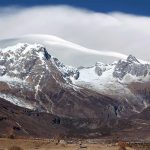
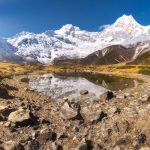
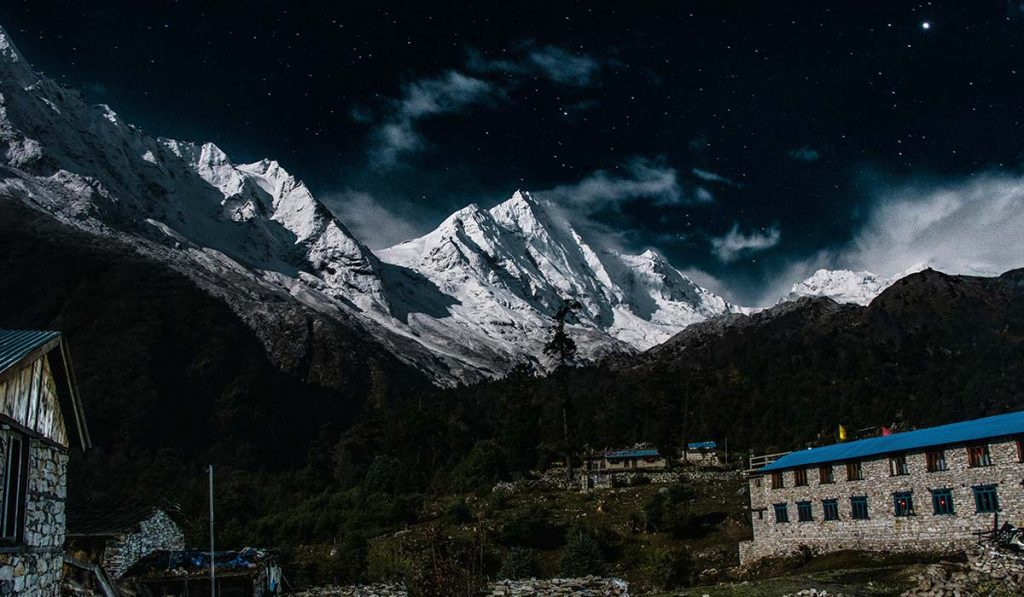
October on the Manaslu Circuit offers the sharpest, most breathtaking views of the entire year. Once the monsoon clears out, it leaves behind fresh snow on the high peaks and perfectly blue, cloud-free skies. Giant peaks like Mount Manaslu, Annapurna II, Himalchuli, Cheo Himal, and Ngadi Chuli look formidable and pristine, especially in that golden early morning light when the air is still.
Cultural Experience
October is when Nepal truly comes alive because of Dashain and Tihar. They are the country’s two biggest festivals. Trekking Manaslu in autumn, during October, provides an intimate view of village life at its peak. It means you will walk past seasonal harvests. At the same time, you will also see homes decorated for celebrations, adding a rich, festive energy to the trail that you won’t simply find in spring. This atmosphere defines the experience of the Manaslu trek in October.
For a broader seasonal comparison, this best time to trek Manaslu guide explains how October compares with spring and winter months.
How Hard Is the Manaslu Trek in October
An October journey on the Manaslu Circuit remains a strenuous high-altitude experience. Though this month offers the most forgiving conditions you will find all year, you should still expect a rugged experience involving steep climbs, rocky terrain, and long days on the trail.
- The Physical Toll: You will be walking for 6 to 8 hours a day for nearly two weeks. The terrain involves steep stone staircases, narrow suspension bridges, and loose scree slopes. Even in the best weather, physical fatigue is a reality.
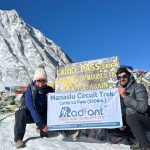
The highlight — and biggest hurdle — remains the Larkya La Pass (5,106 m). It is physically demanding. Thanks to the stable October weather, this month records one of the highest success rates for crossing Larkya La Pass safely. - Altitude Sickness (AMS): The ascent is steady, but once you pass 3,500 meters (Samagaun), the risk of Acute Mountain Sickness increases. October’s clear weather can sometimes tempt trekkers to push too fast. It is vital to spend the traditional two acclimatization nights in Samagaun to allow your body to adjust before tackling the pass.
- October advantage: The real advantage of October is its stability. The trails are dry, river crossings are manageable, and the weather is predictable this month. Compared to winter snow or early spring storms, October offers the best chance of a comfortable crossing of the high pass.

Manaslu Trek October Weather: What to Expect
Understanding the October weather for the Manaslu trek is important for packing and mental preparation. This is the post-monsoon period where the dust has settled, but the winter’s extreme cold hasn’t yet arrived.
Atmospheric Clarity
In October, the humidity levels in the Himalayas drop to their lowest of the year. This results in peak clarity where visibility can extend for hundreds of kilometers. From viewpoints like Syala and Samagaun, the Manaslu massif appears so close and sharp that every icefall and crevasse is visible to the naked eye.
Rainfall and Snowfall
October trekking conditions in Manaslu are the driest of the year. While an afternoon shower is possible in the lower valleys (Machha to Jagat), significant rainfall is rare. Snowfall is typically limited to elevations above 4,500 meters. This usually is the case toward the end of the month. As a result, crossing the Larkya La Pass is more predictable than in March or April.
Temperature Fluctuations
Because the trek spans an altitude range from 700 meters to over 5,100 meters, you will essentially experience three different climates in a single trip.
- Lower Elevations (Machha Khola to Philim: 700m -1,600m): The start of the trek is surprisingly warm. Daytime temperatures are between 20°C and 25°C. Also, it is humid. As a result, you may be trekking in a t-shirt and shorts. Evenings remain mild, rarely dropping below 12°C.
- Mid-Altitude (Namrung to Samdo: 2,600m – 3,800m): As you enter the alpine zone, the air thins and cools. Daytime temperatures in October are perfect for hiking — usually around 10°C to 15°C. However, once the sun sets behind the ridges, the temperature drops sharply. Expect nights to be brisk, often hovering around 0°C to 5°C.
- High Altitude (Dharamsala and Larkya La: 4,400 m – 5,106 m): This elevation is like the refrigerator of the trek. At Dharamsala (High Camp), even in October, nighttime temperatures will drop well below freezing, often reaching -5°C to -10°C. During the crossing of Larkya La Pass, wind chill is a major factor. While the sun might keep the air at 2°C, the wind can make it feel much colder.
| Elevation Zone | Temperatures |
| Lower (700m – 1,500m) | Daytime Temp: 20°C to 25°C Nighttime Temp: 12°C to 15°C |
| Middle (2,500m – 3,500m) | Daytime Temp: 10°C to 15°C Nighttime Temp: 2°C to 5°C |
| High (4,000m – 5,106m) | Daytime Temp: -2°C to 5°C Nighttime Temp: -6°C to -12°C |
The ‘Sun Effect’
In October, the sun is still quite strong. During the day, you will often find yourself trekking in a light base layer or a single trekking shirt. However, the moment the sun dips behind the towering peaks — usually after 3:00 pm in narrow valleys — the temperature plummets instantly.
October Trail Conditions: Navigating the Larkya La Pass
The October experience on the Manaslu Circuit is defined by dry, firm trails. This month offers high-traction trekking compared to the slippery mud of the monsoon or the icy sections found in late winter.
- The Ascent: The Larkya La Pass (5,106m) is the psychological and physical climax of the trek. In October, the trail to the pass is usually a mix of frozen scree and dry rock. There are rarely ‘post-holing’ conditions (sinking deep into snow), which saves significant energy.
- The Descent to Bhimtang: The descent from the pass toward Bhimtang is known for being difficult for your knees. However, if you are in Manaslu in October, then the lack of deep snow makes the rocky moraines easier to navigate. Nonetheless, trekking poles remain essential to manage the 1,500-meter drop in a single afternoon.

The Crowd Factor: Manaslu Trek Peak Season
It is important to be realistic: October is peak season on the Manaslu Circuit. While it is nowhere near as crowded as the Everest Base Camp trail, the teahouses do fill up. In restricted areas like Manaslu, the number of beds is limited.
If you are looking for total solitude, you will need to start your walking days early to stay ahead of the main groups. However, the benefit of the crowd is the social atmosphere — the dining halls are warm, fueled by yak-dung stoves, and filled with stories from international trekkers.
Flora and Fauna in Autumn
The post-monsoon period is a fantastic time for nature lovers in the Manaslu region. The forests of the Manaslu Conservation Area are alive. You can look forward to the following aspects of your Manaslu trek in October.
- Lower Loop: You’ll walk through dense forests of rhododendron, oak, and pine. While the flowers aren’t blooming (that’s a spring event), the foliage is deep green and vibrant.
- Wildlife: October is a wonderful time to spot the Himalayan Blue Sheep (Bharal) near Samdo. If you are lucky, trekkers occasionally report signs of elusive species such as the Snow Leopard at higher elevations. Red Panda sightings are extremely rare, and they are typically limited to lower bamboo forests.
- Birds: Look out for the Danphe (Himalayan Monal), Nepal’s national bird, which often flashes its iridescent feathers across the trail between Namrung and Lho.

Packing Essentials for Manaslu Trek in October
Layering is essential when preparing for your Manaslu trek in autumn, particularly in October. You need to be ready for both a warm sun and a cold pass. Consider the following items to carry with you for the October Manaslu trek.
- The Three Layers: A moisture-wicking base layer, a heavy fleece or ‘down’ midlayer, and a windproof/waterproof outer shell.
- Sleeping Bag: Even though teahouses provide blankets, they aren’t enough for October nights at 4,000 meters. Bring a four-season bag rated to at least -15°C.
- Footwear: Broken-in, waterproof trekking boots are non-negotiable. Also, bring a pair of lightweight camp shoes or Crocs for the evenings.
- Headlamp: Essential for the 4:00 am start on the day you cross Larkya La.
- Sun Protection: The UV rays at high altitude are fierce in the clear October sky. High-SPF sunscreen and polarized sunglasses are mandatory.
Teahouses and Fueling Up for the October Rush
In October, the Manaslu Circuit transforms into a lively trail where the quality of your rest and meals defines your success. Here are some tips on food and accommodation on the Manaslu Circuit while navigating the peak season trek:
Teahouses: The High-Season Reality
With October bringing in the largest crowds of the year, the vibe is high, but the space is low. It means, in major hubs like Lho, Samagaun, and Samdo, beds are a hot commodity, so having your guide call ahead is non-negotiable.
- The Comfort Scale: You’ll start with relatively comfortable spaces in the lower villages (sometimes even a private shower!), but as you climb toward Dharamsala, things get rugged. Expect thin walls and shared toilets, and at the high camp, you might even find yourself in a sturdy tented camp if the stone huts are at capacity.
- The Logistics: Rooms are almost always twin-sharing. While the cost is minimal, the expectation is that you eat your meals at the same teahouse where you sleep.
Fueling Up: Local Harvests and High Calories
Since October coincides with the local harvest, the food is arguably at its best. Supply chains are in full swing, so the kitchens are well-stocked.
- October Flavors: While dal bhat remains your best friend, keep an eye out for fresh mountain potatoes and leafy greens gathered from local plots. If you’re lucky enough to trek during the Dashain or Tihar festivals, you might be treated to Sel Roti — a sweet, fried rice bread that’s a perfect trail snack.
- The Cold Factor: As nights at high altitude can drop to -10°C, make sure to try hot and fluid-heavy meals. They can be Thukpa (noodle soup) or garlic soup — they help with both warmth and acclimatization.

Logistics and Essential Permits
If you are thinking of doing the Manaslu trek in October, you are on the right path, as this is the best time of the year for trekking. You won’t be the only one on the trail. To keep things smooth, you will need to sort your paperwork and team ahead of time.
Manaslu, being a restricted zone, necessitates the presence of a licensed guide and trekking through a registered agency to obtain the Restricted Area Permit (RAP). The previous criteria of a minimum of two trekkers is no longer valid. You’ll also need to grab the MCAP and ACAP permits for the conservation areas you’ll be passing through.
If you want a clearer breakdown of documentation requirements, this Manaslu trek permit guide explains the process in detail.
Having a porter, although not a legal requirement like a guide, significantly enhances your experience on steep October climbs, allowing you to truly appreciate the views rather than simply catching your breath.
Final Thoughts
The Manaslu trek in October isn’t just a hike — it’s a soul-stirring journey through the Himalayas’ rawest corners. Crisp blue skies, steady weather, and a deep dive into local Buddhist culture make every uphill grind worthwhile.
Sure, you won’t have the trail entirely to yourself, but the scale of the massif makes it easy to find your own quiet corner. If you have got the grit and the gear, October delivers those life-changing views that make everything else fade away. It’s pure magic.
FAQs
Is October really the best time for the Manaslu trek, or is it just hype?
It’s the real deal. If you want those ‘postcard’ views of Manaslu without worrying about the monsoon rain or the brutal winter cold, October is your best bet. It’s the most reliable window for a clear crossing of the Larkya La Pass.
Is October the quietest time?
No. But for visibility and safety, it’s unbeatable.
Exactly how is it during the Manaslu trek in October?
You’ll be sweating in a t-shirt in the lower valleys (Machha Khola), but don’t let that fool you. Once you hit the high-altitude stops like Samdo or Dharamsala, the temperature plummets as soon as the sun goes down. Expect your water bottle to freeze overnight if it’s not in your sleeping bag — nights at the top can easily hit -10°C.
Will I be trekking through deep snow in October?
Probably not. You might see a light dusting near the pass, especially toward the end of the month, but October is generally dry. This is exactly why it’s so popular — you are walking on a firm trail rather than sliding on ice or sinking into snow.
Do I need to fight for a bed in teahouses if I choose the Manaslu trek in October?
Manaslu isn’t as busy as Everest, but the teahouses are smaller and fewer. In October, the popular spots in Samagaun or Samdo get cozy fast. It’s not about fighting for a bed, but it is about having a guide who knows how to call ahead and maybe starting your day 30 minutes earlier than the late sleepers.
Can a beginner trek Manaslu in October?
If you have got the grit and you are in decent shape, you can trek to Manaslu in October. This month’s favorable weather conditions significantly reduce the fear associated with the trek. That said, the altitude doesn’t care what month it is. Take your acclimatization days in Samagaun seriously, walk slowly, and drink more water than you think you need.
What’s the vibe like with the festivals?
It’s great. You’ll likely catch the tail end of Dashain or the start of Tihar. You’ll see kids on giant bamboo swings in the lower villages and hear local music. It adds a layer of “real life” to the trek that goes beyond just looking at mountains.