


Manaslu Circuit and Tsum Valley Trek Cost
| Group Size | Cost in USD |
| 1 Person | $ 1800 per person |
| 2-4 Person | $ 1250 per person |
| 5+ People | $ 1150 per person |
Our Manaslu Packages: Manaslu Circuit Trek Nepal (With KTM Hotel), 12 Days Manaslu Trek (Without KTM Hotel, KTM to KTM Itinerary), Just Tsum Valley Trek
If you want to get off the grid in Nepal, the 20-day Manaslu Circuit with Tsum Valley Trek is one of the most authentic options available. While most people stick to the standard route of the restricted region, this itinerary takes a detour into Tsum’s ‘Hidden Valley.’ It’s a sacred Buddhist enclave that only opened to outsiders in 2008, meaning you get to explore centuries-old sites like Mu Gompa and Rachen Gompa without the usual crowds.
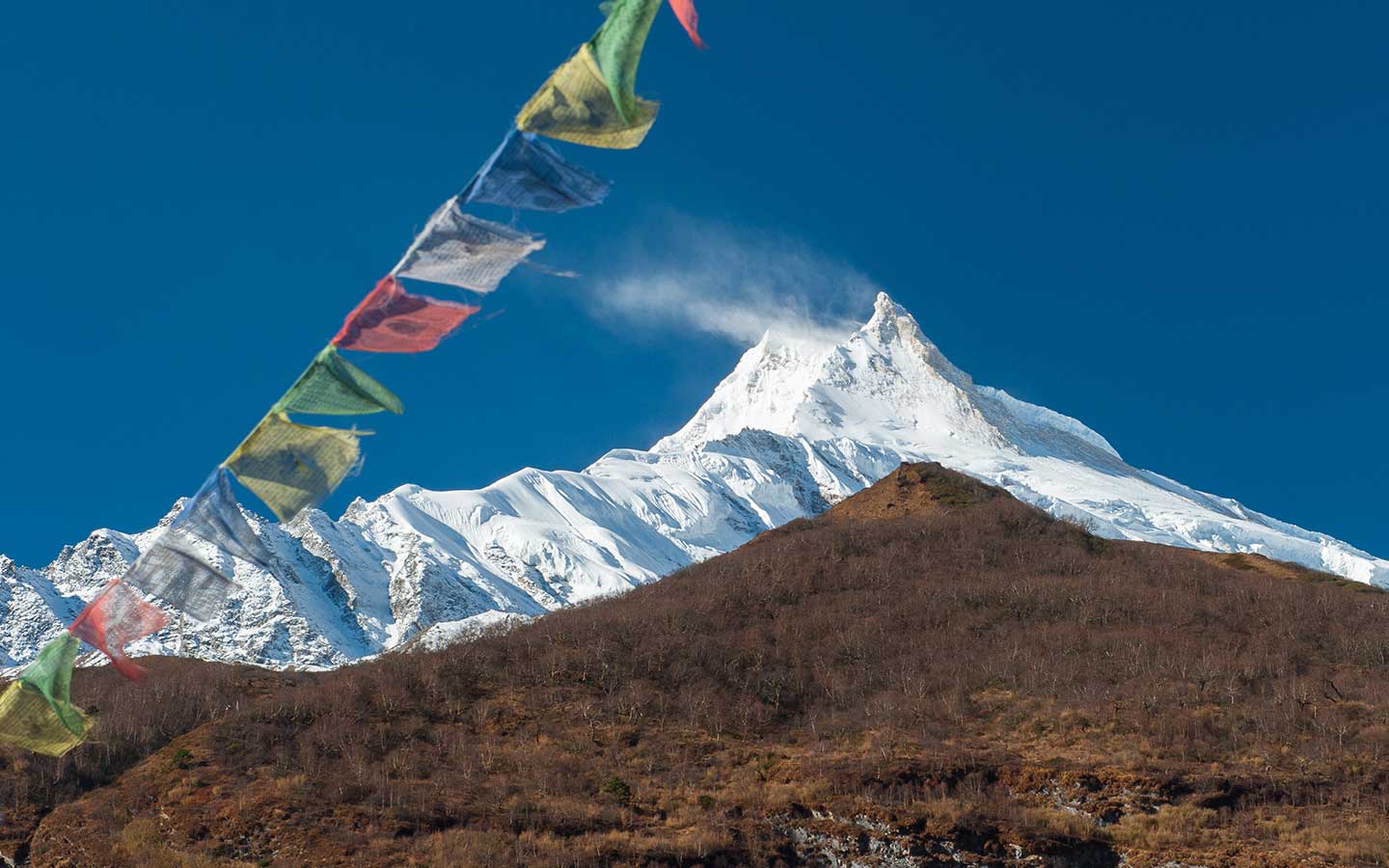
After that, you loop back onto the main Manaslu Circuit. The hike ramps up as you push through glacial valleys toward the 5,106 m Larkya La Pass. The payoff? Unreal, close-up views of Mount Manaslu (8,163m), Annapurna II, and the Ganesh Himal.
Taking 20 days is actually the secret here. It gives you plenty of time to acclimatize safely while experiencing a raw, untouched side of the Himalayas most trekkers completely miss.
Why Choose The Manaslu Circuit With Tsum Valley Trek?
If you are already securing permits for the restricted Manaslu region, extending your route into Nepal’s Hidden Valley transforms your trip from a standard hike into a deeply immersive expedition.
Rather than just racing toward the high mountain passes, this detour lets you experience everyday Tibetan Buddhist culture in its purest form. You get to slow down and wander through peaceful villages, walk beside centuries-old mani walls, and visit active places of worship that remain completely insulated from mass commercial tourism.
Ultimately, this itinerary delivers the ultimate two-for-one Himalayan experience. You get the rugged, high-altitude physical challenge of completing the main circuit, perfectly balanced by a quiet, spiritual journey through one of the most authentic and culturally intact valleys in the country.
Manaslu Circuit With Tsum Valley Trek Cost
Budget roughly USD 1,150 to USD 1,800 for the Manaslu Circuit and Tsum Valley trek, depending on your group size. It costs a bit more than the standard route simply because of the added days. You will be paying for extra food, lodging, and that mandatory Tsum Valley permit.
Radiant Treks‘ fully supported package makes planning easy. We cover your Kathmandu hotels, airport transfers, permits, and local guides, so you can just focus on the trail.
How Hard Is The Manaslu Circuit And Tsum Valley Trek?
This is a strenuous, high-altitude trek. By adding the Tsum Valley detour, you are signing up for more mileage and several extra days on your feet compared to the standard route. You won’t need ropes or technical climbing experience, but you require good endurance.
Here is what really tests your limits out there:
- Long daily hikes: You will be walking 6 to 8 hours most days, navigating steep, rocky, and often unforgiving trails.
- The altitude: Pushing up and over the 5,100-meter mark at Larkya La Pass is tough work, and you will definitely feel the much thinner air.
- Remote environments: You are heading deep into isolated territory where amenities are basic and mountain weather shifts quickly.
That said, we have built this itinerary to keep you safe. With a gradual ascent, strategic overnight stops, and a dedicated acclimatization day in Samagaun, your body gets the time it needs to adjust. Guided at a smart pace, fit and determined hikers can absolutely conquer this route.
Experience The Hidden Culture Of Tsum Valley
If you are heading to Nepal and want to skip the crowded commercial trails, the Tsum Valley trek is something genuinely special. Because foreigners were not allowed until 2008, the Tibetan Buddhist culture here remains intact.
Here is what actually makes the trip worth it:
- Authentic, working villages: You will pass through places like Chumling, Chhekamparo, and Nile, walking right past ancient chortens and hand-carved mani walls.
- High-altitude monasteries: Places like Mu Gompa and Rachen Gompa aren’t just tourist photo-ops; they are active, deeply spiritual hubs for the locals.
- Milarepa’s Cave: You actually get to explore this legendary, centuries-old meditation spot tucked into the mountains.
It’s just you, the mountains, and a remarkably quiet side of the Himalayas.
Accommodation, Meals & Transportation
Here is a quick breakdown of how your daily logistics work so you know exactly what to expect before you hit the trail.
Where You’ll Sleep
You get three nights in a comfortable Kathmandu hotel to rest up before and after the trek. On the trail, you will stay in family-run teahouses. The twin-sharing rooms are very basic, getting even more rustic as you climb toward the Larkya La Pass, but the local hospitality is always incredibly warm.
What You’ll Eat
Expect simple, hearty food to fuel those long hiking days. The absolute mountain staple is Dal Bhat (lentil soup and rice), but teahouses also serve hot noodle soups, fried rice, Tibetan bread, potatoes, eggs, and fresh veggies.
Getting There & Back
The adventure kicks off with a scenic drive from Kathmandu to Machha Khola and ends with a ride back to the city from Tilche. Standard public transport is included in the package, but if you want a smoother ride on those bumpy mountain roads, you can easily upgrade to a private jeep.
Guides, Permits & Group Options
Since Manaslu and the Tsum Valley are restricted areas, the government doesn’t allow independent trekking. You have to book with a registered agency and hike with a licensed guide. That really makes things easier for you. Here is how Radiant Treks make the logistics simple:
- Zero paperwork for you: We handle all the annoying paperwork. We will secure your restricted area permits for both Manaslu and Tsum Valley, plus your conservation passes (ACAP and MCAP), so you don’t have to waste a day in government offices.
- Any group size works: Whether you are heading out entirely on your own, traveling with a partner, or bringing a big group of friends, we arrange the trip to fit exactly what you need.
- Guides who know the way: Our local guides handle everything on the ground—navigation, safety checks, and sorting out the daily schedule—so you can just focus on the experience.
- Save your back (Optional Porters): Carrying a heavy backpack at high altitudes is tough. We can easily hire a porter to haul your main gear so you can actually enjoy the incredible views instead of just staring at your boots all day.

Why Book with Radiant Treks?
- Nearly 20 years of experience—Our founder, Gokarna Khanal, has guided here for over 18 years. We know the Manaslu trails, weather, and locals very well.
- We skip the permit headaches—Restricted areas require a mountain of paperwork. We handle all the permits so you can enjoy the mountains, not be stuck in an office.
- Guides who care—Our local guides point the way, share real history and know how to navigate tricky sections safely.
- A route that lets you breathe—Rushing at altitude is a bad idea. Our 20-day itinerary builds in plenty of acclimatization time so you can actually enjoy crossing Larkya La Pass.
- No big groups—We keep our groups small. You won't feel rushed up the trail, and you can walk at a pace that actually feels right for you.
- Safety actually matters—High altitude is tough. Our guides are trained to spot altitude sickness early, carry first-aid kits, and know exactly what to do if something goes wrong.
- Real local connections—We actually know the families running the teahouses and the monks at the monasteries. You will get to sit down and experience the culture, rather than just snapping a quick photo and walking by.
- Trekking that gives back—We make a point to hire local staff and stay in family-run lodges. We want to make sure your trip actually benefits the remote communities you visit.
- No annoying hidden fees—We tell you exactly what's included right from the start so you don't end up reaching for your wallet every time you turn around on the trail.
- Zero-stress logistics—We have got your back from the second you land in Kathmandu until you fly home. We handle all the behind-the-scenes work.
Itinerary
Welcome to Nepal! Our representative will pick you up from the airport and transfer you to the hotel. The moment you arrive in Kathmandu you will be swept up in the energy of the place, a city where corals of ancient temples meet the lively streets.
After you’ve settled in, we will take you to visit Boudhanath Stupa home to whom monks circle the massive edifice whilst spinning prayer wheels in harmonious time. A short visit to Swayambhunath (Monkey Temple) is possible if you are up for it, with stunning views of the city. In the evening, we introduce you to the famous Thamel, the hub of the Nepal trekking culture, where you get your gear and indulge yourself in great food as you start your adventure.
Today is nothing more than making sure you have in order and all your permits and also ensuring that you have everything that you need for the trek before we head into the mountains.
The special trekking permits for the restricted Manaslu and the Tsum Valley region can be processed at the Tourism Board, we will visit. In the meantime, after a long day in the town of Kathmandu being worshipped, you’ll have a chance to also visit Pashupatinath Temple, Nepal’s most sacred Hindu site where rituals are held near the Bagmati River. Alternatively, we can wander around the UNESCO Kathmandu Durbar Square, full of palaces, intricate temples and great insight into Nepal’s royal past. In the evening we will check your trekking gear and mix with you over a nice meal in Thamel, sorting out any last minute questions.
Drive Duration: 7 to 9 hrs
Our drive, a 7 to 9 hour amazing drive, begins today to Nepal’s countryside. The road along Prithvi Highway passes through dense greenery and along Trishuli River. On the way we pass by Malekhu, a small town famous for its fresh fish markets.
Arughat, once a major trade hub and now gateway to the Budhi Gandaki River valley, is a little further. The more we drive in, waterfalls line the roadside, and the cliffs suddenly become forests of giant rock.
It changes slowly from snow covered mountains in the background to villages at the edge of the mountains that have stone houses still made from traditional stone house materials. We reach Machha khola (880m) by evening, a peaceful riverside town on the other side of the river from where we start walking next morning.
Altitude Gain: 900m to 1,340m
Trek Distance: 22 km
Trek Duration: 6 to 7 hrs
We begin to trek alongside the Budhi Gandaki river and thus the adventure officially commences. As you cross suspension bridges, pass beautiful terraced fields, you will reach Khorla Besi, a Gurung village which is charming and quaint and welcomes trekkers with warm smiles.
We will stop nearby for a nice dip in mineral rich waters in the hot springs of Tatopani. Waterfalls cascade down over cliffs as we go. Further on, we arrive at Doban, a quiet place to stop before the last leg to Jagat (1,410m).
In this village, we are properly entering the Manaslu region, which is completely restricted and influenced by Tibetan Buddhism with prayer stones and mani walls. Establishing yourself for a night is an exciting experience with a pleasant trekking ambience and valley views.
Altitude Gain: 1,340m to 2,240m
Trek Distance: 16 km
Trek Duration: 6 to 7 hrs
Leaving Jagat, the trail takes us through dense tropical forests and riverside along the Budhi Gandaki, living past traditional villages and preferably green terraced fields. The trail past Philim becomes dramatic, chasm wide. It’s an optional side trip to Ekle Bhatti, which is an incredibly resting point with breathtaking views of the valley below.
We go on and find ourselves in the restricted Tsum Valley region, and soon Lokpa (2,240m), our resting place is within sight. This is the first real glimpse of the rugged landscape and the Ganesh Himal range towering above other small villages.
Altitude Gain: 2,240m to 2,386m
Trek Distance: 10 km
Trek Duration: 5 to 6 hrs
On the second day of today, we go further into the magical Tsum valley, again following an interesting route strewn with valleys and waterfalls. We cross several suspension bridges, we cross narrow pathways looking down on dense forests.
There is also a cool spot along the way near Ripchet, to take a short detour to show off the view of the lower valley and distant peaks. It’s wide open now, and we have arrived at Buddhist territory, where we see scattered chortens and mani walls as we approach Chumling (2,386m).
Chumling Monastery is one of the first sacred sites in Tsum Valley and is also at this charming village which gives an understanding into Tibetan Buddhist traditions. Adding to the peaceful atmosphere are the stone-built houses and local farming scenes, and it is a good place for the night to rest.
Altitude Gain: 2,386m to 3,031m
Trek Distance: 14 km
Trek Duration: 6 to 7 hrs
Today is the true trek as we stride into Tsum Valley’s wild wilderness. From Chumling, we cross suspension bridges across fast flowing rivers, through pine and rhododendron forests. Slowly, we gain altitude and pass Gho, a peaceful village where the farming is largely done the old fashioned way.
From the hilltop, there lies a fabulous little viewpoint near Lamagaon, from where the vastness of the valley can be viewed as it is. We eventually arrive at Chhekamparo (3,031m), one of the biggest villages in this area.
We are rewarded with jaw dropping views of Ganesh Himal and Himalchuli and these snow layered giants dominate the horizon. We get to go to local gompas to listen to monks chant their prayers in the evening in the deep Buddhist culture town Chhekamparo.
Altitude Gain: 3,031m to 3,361m
Trek Distance: 10 km
Trek Duration: 5 to 6 hrs
The upper Tsum Valley gets more dramatic and remote as we continue our trip. These ancient mani walls have been beautifully carved with Buddhist inscriptions that gently lead us to the sacred lands we are approaching.
We stop at Milarepa’s Cave, a historic meditation site where the famous Tibetan yogi once meditation and pass by. Ahead lie the peaceful high altitude village of Nile (3,361m) close to Tibet’s border.
With towering cliffs and monastery settlements dissolving into the landscape, the dramatic views of the valley get out of this world as well. Just a short hike away lies Mu Gompa, which represents the heart of Tsum Valley’s spiritual heritage.
Altitude Gain: 3,361m to 3,700m
Trek Distance: 8 km
Trek Duration: 4 to 5 hrs
The day begins with an exciting hike upto Mu Gompa (3,700m), the highest monastery of Tsum Valley. The views get more striking at higher elevations and from here, Ganesh Himal (7,422m), Sringi Himal (7,161m), and Himalchuli (7,893 m) are clearly visible in the skyline.
Buddhist monks age old traditions preserved live at the remote Mu Gompa on a remote hillside. Then we move on to examine ancient murals, prayer halls and some of the peaceful surroundings of the monastery.
We can also make a short side trip to Dephyudonma Gompa, the other sacred site associated with Tibetan Buddhism. Soaking in the serene atmosphere, we descend back to Nile, through boulder studded mani walls on which prayers are carved and great valley views are had before resting for the night.
Altitude Loss: 3,361m to 2,386m
Trek Distance: 24 km
Trek Duration: 6 to 7 hrs
We have to retrace our steps back towards Chumling, moving down through more beautiful landscapes, deep gorges and forest paths. The striking peaks of Boudha Himal (6,672m) and Himalchuli still remain in sight as we walk along the valley keeping these mountains very high above us.
During the hike, we come back to important sites like Milarepa’s Cave, the place the ancient Tibetan saint meditated and took asceticism. The mystical view at the cave also gives an insight into Tsum Valley’s spiritual heritage.
We cross several suspension bridges and rivers and slowly approach Chumling (2,386m), where the tranquil essence of the village awaits. The timeless Buddhist rituals and prayer flags flapping in the wind call for some time to explore Chumling Monastery.
Altitude Loss: 2,386m to 1,804m
Trek Distance: 20 km
Trek Duration: 7 to 8 hrs
From Tsum Valley we exit back to the Manaslu Circuit, cliffs soaring above and thick forest dominating the landscape. The path moves with the pace of Budhi Gandaki River and gives picturesque sights of Sringi Himal (7,161m) and Kutang Himal (6,220m) while moving through steep ridges.
After passing through the quiet little village of Ripchet nestled in the Trakya Mountains with stunning valley views all around, we then go toward Lokpa for a short rest. The area becomes more rugged as we go and there are thrilling cliffment paths and occasionally waterfalls.
After a couple of hours, we reach Deng (1,860m), where we are welcomed by a friendly tea house surrounded by great mountain scenery. You can see the prayer wheels and the carved stone walls around the village and it is obvious that the Tibetan cultural influence is growing.
Altitude Gain: 1,804m to 2,630m
Trek Distance: 19 km
Trek Duration: 6 to 7 hrs
Today we have a steady climb up through heavy forest and some scattered settlements. The peaks become more dramatic as we ascend, and further still, Manaslu (8,163m), Naike Peak (6,211m) and Saula Himal (6,235m) begin to gain height in front of us as silent, distant giants.
As we pass through Ghap we arrive into the Buddhist territory and are blessed with the well inscribed mani walls and monasteries. Bird life is rich along the trail especially around rhododendron forest where it enriches the trek with serenade. We climb up through the quiet trails until we arrive at the Namrung (2,630 m) stop, a beautiful and gorgeous place with splendid views. We prepare ourselves for the high altitude landscapes starting tomorrow and settle in for the night here.
Altitude Gain: 2,630m to 3,530m
Trek Distance: 17 km
Trek Duration: 6 to 7 hrs
The day begins with an ascent through beautiful landscapes with the huge peaks of Manaslu (8,163m), Naike Peak (6,211m) and Himalchuli (7,893m) looming over the skyline. We pass through the beautiful village with the ancient chortens Lihi, and continue to Sho where a line of traditional stone houses stands out against snowy summits.
With altitude the vegetation changes to alpine country. Along the route there are breathtaking views near the small, serene monastery. On the approach to Sama Gaun (3,530m), we come to one of the region’s biggest villages, where Tibetan influence is, culturally, deep. At higher elevations, other than here, we rest and prepare.
Today is important for acclimatization to the altitude, as we visit landmarks locally. Birendra Lake is a beautiful glacial lake set on the foot of Manaslu, it is one of the popular side trips. To reach this lake, you will need to hike for 8 to 9 hours, but the scenery won’t be a disappointment. Alternatively, trekkers can opt for a hike to Manaslu Base Camp (4,800m), as they get close up views of the mountain’s ice slopes.
The village is rich in Tibetan traditions, so another side trip of 5 to 6 hours will lead you to Pungyen Gompa that provides vast Himalayan views with their towering rock masses, and explains some of the spiritual depth of the region. You can spend time with locals at their homestead or you can choose to relax and observe yak herders working before the upcoming challenging days.
Altitude Gain: 3,530m to 3,860m
Trek Distance: 8.5 km
Trek Duration: 4 to 5 hrs
Today the trail is still short but gets us higher up into the higher altitude terrain. As you climb, the biodiversity decreases to rocky terrain and open fields. On the way through to Kyonggma Kharka there are various yak spots along the way.
A stunning ridge provides stunning views of Manaslu, Ganesh Himal (7,422m), Samdo Peak (6,335m). As we enter Samdo (3,875m), we are in a lonely Tibetan settlement at the feet of bare cliffs. Near the Tibetan border, the village makes a short side trip to a viewpoint to glimpse into wild valleys beyond Nepal.
Visiting the Tibetan Border:
Going to the Tibetan border (4,500m) from Samdo requires staying another day in Samdo to walk the 12 km (7 miles) round trip in 6 to 7 hrs there. This extra day gives you a chance to look around without hurrying and gives you a chance to get acclimatized before you continue on.
Furthermore, Samdo is a small settlement influenced by Tibetan culture, located at 3,690m (12,106ft), bordering with a large himalayan landscape. The extra day allows you the opportunity to experience local Sherpa and Tibetan culture, to interact with villagers and see how they live in a very traditional way. The yak pastures are a great place to explore, see mani walls and stunning views of Manaslu, Samdo Peak and the Tibetan plateau.The old trading route used to reach the border is passed to reach barren terrain to finally reach Rui La Pass right on Tibet’s highland. This way you give yourself a day extra and you fully enjoy this unique experience before going on with the trek.
Altitude Gain: 3,860m to 4,460m
Trek Distance: 6.5 km
Trek Duration: 3 to 4 hrs
Today we have encamped near the base of Larkya La Pass, with today’s journey along rough ground with superb views of massive glaciers, as highlights. We cross several streams and wander through the dramatic valley of Larkya Phedi in which we are seemingly surrounded by mountains.
The trek offers breathtaking sights of the Manaslu, Larkya Peak (6,249m), Cheo Himal (6,820m) and Pawar Peak (6,610m) which make it one of the most lovely sections of the whole trail. After Dharamsala (4,460m), or Larkya Phedi, a simple lodge is our resting spot before the pass crossing the next day.
Altitude Gain: 4,460m to 5,160m, then descend to 3,590m
Trek Distance: 16 km
Trek Duration: 8 to 9 hrs
According to the guides and trekkers, the most difficult yet rewarding section of the trek is today. We left early to cross Larkya La Pass (5,106m), the highest point of the trip. As we ascend the landscape becomes rugged of Iceland’s icy moraines and amazing glacier views.
The effort is worth it at the top as we are surrounded by Himlung Himal (7,126m), Cheo Himal (6,820m), Kang Guru (6,981m) and Annapurna II (7,937m) all making up a spectacular Himalayan view.
We soak in the views before descending toward Bimtang (3,720m), passing through frozen lakes and remote high altitude valleys. Spectacular sights are on offer during the descent, with misty ridges and deep snow fields making the drama of the landscape a reality.
Trek Distance: 19 km
Trek Duration: 6 to 7 hrs
From Bhimtang to Gowa, the trek covers dense forest, waterfalls, and solitary villages. Leaving Bhimthang, you head downward past Pungkar Lake, it’s glorious alpine gem and then descend into dense forests of wild rhododendron and pine where you have the chance to see wildlife.
The path passes along the Dudh Khola River with beautiful villages, such as Yak Kharka and Karcher, presenting sights of traditional wooden cottages where yaks graze contentedly. On the way, you will have wide views of Mount Manaslu, Lamjung Himal and Himalchuli, and you will reach an idyllic village of Gowa Altitude 2515m.
Drive Duration: 8 to 9 hrs
The trip from Gowa to Tilije is a short but beautiful walk. You will walk through peaceful forests and cross the Marsyangdi River, with gorgeous terraced hillsides and traditional village views. Tilije, an endearing settlement, is somewhere on the border of high and low valleys, with noticeably warmer climate than the rest of the routes.
You will start the long drive from Tilije to Kathmandu, via which you will spend 8 to 9 hours. You’ll see road winds through various landscapes and you can see beautiful Manaslu, Annapurna and other surrounding hills.
You pass through Dharapani and Besisahar villages, bustling markets, waterfalls then dense forests. As you continue on, the scenery changes to flatlands surrounded by rivers and you arrive back with a welcome to Kathmandu Valley and the city life, temples and stupas.
We transfer you to Tribhuvan International Airport where it is time to say goodbye. Before the flight, if you have time, you could wander through Kathmandu Durbar Square once more or get souvenirs at Asan Bazaar, a lively market. Days in the remote Himalayas and the warmth of Nepal’s culture stays with you as you board your flight home.
Trek Cost Details
Cost Includes
- Pickup on arrival at the airport and transfer to your hotel; airport drop-off for departure
- All ground transportation by public transport (private jeep available at an additional cost of USD 400 per vehicle)
- Three nights’ stay in a 3-star hotel in Kathmandu on a bed-and-breakfast basis
- Sixteen nights of twin-sharing accommodation in teahouses during the trek
- Full-board meals (breakfast, lunch, and dinner), including seasonal fruit during the trek
- All required trekking permits and applicable government taxes
- Services of a licensed, English-speaking trekking guide
- All guide-related expenses, including meals, accommodation, salary, and insurance
- Emergency rescue coordination services (rescue and evacuation costs to be covered by the trekker or their insurance provider)
- Use of a duffel bag, sleeping bag, and down jacket during the trek (to be returned after completion)
- Printed trekking route map and complimentary company T-shirt
- First aid kit and oximeter carried for emergency use
Cost Excludes
- Porter service: $340 (cost can be shared between two trekkers)
- Lunch and dinner during your stay in Kathmandu
- Personal expenses such as snacks, soft drinks, tea, coffee, and alcoholic beverages
- Charges for hot showers, battery charging, and Wi-Fi during the trek
- Tips and gratuities for trekking staff and drivers
- Personal travel insurance (recommended to cover high-altitude trekking and emergency evacuation)
- Kathmandu sightseeing tours or other optional activities
- Additional expenses arising from unforeseen circumstances, including bad weather, flight delays, or natural disasters
MoreFrequently Asked Questions
Trek Overview
The Manaslu Circuit with Tsum Valley Trek is an epic three-week adventure that upgrades the classic route. You will still conquer the dramatic Larkya La Pass, but you will also take an incredible detour into the hidden Tsum Valley. It’s the perfect mix of raw Himalayan landscapes and authentic, off-the-beaten-path Tibetan Buddhist culture.
While the standard Manaslu Circuit Trek focuses mainly on mountain views and crossing the Larkya La Pass, this combined route adds a massive cultural detour. You actually step off the main trail into Tsum Valley to explore ancient monasteries and authentic Tibetan Buddhist villages that regular hikers completely skip over.
Yes, it is. If you have the time, definitely add the Tsum Valley to your Manaslu trek. Tsum Valley is much quieter than the main Manaslu trail. You get to visit peaceful ancient monasteries and meet incredibly welcoming locals. It adds a genuine cultural layer to your trek that makes the whole trip so much more memorable.
Radiant Treks’ itinerary is 20 days. This timeframe gives you plenty of time to truly explore the hidden Tsum Valley before tackling the Larkya La Pass. Plus, taking it slow gives your body the time it needs to adjust to the altitude. This means you can actually explore and enjoy the views. You need not rush to the destination or worry about altitude sickness.
It's basically two amazing trips in one. First, you get to wander through the quiet Tsum Valley, checking out centuries-old monasteries like Mu Gompa. After soaking in that culture, the real physical challenge begins as you tackle the 5,106-meter Larkya La Pass, surrounded by massive, up-close views of Mount Manaslu.
Mount Manaslu is obviously the main star of this trek. But you will also be surrounded by massive peaks the entire trip. You get impressive views of the Ganesh Himal range, Himalchuli, and Cheo Himal. Then, once you finally cross the Larkya La pass, things open up even more and you can spot Himlung Himal and Annapurna II.
This route is for those hikers who are reasonably fit and want a genuine cultural experience, not just big mountains. If you hate crowded trails; are fascinated by remote trails, fewer crowds, Buddhist heritage; and have the stamina for a three-week trip, you will absolutely love this trek.
No, it's incredibly quiet compared to the treks of the Everest or Annapurna regions. Since it's a restricted zone that requires special permits and a guide, foot traffic stays super low. Even right in the middle of peak season, you won't bump into many other groups. It's perfect if you want peaceful, empty trails.
Tsum Valley & Culture
Tsum Valley is mostly renowned for its incredibly untouched landscapes, ancient Buddhist monasteries, and deep Tibetan cultural roots. Hidden up in the northern Gorkha district right next to the Tibetan border, it’s a place that modern development has completely bypassed. Trekkers love coming here to experience the peaceful villages, check out the sacred sites, and see a truly traditional way of life—all backed by huge, stunning views of Ganesh Himal and Sringi Himal.
People call Tsum Valley "Nepal's Hidden Valley" because it remained cut off from the rest of the world for a very long time. Because of its remote location, foreign visitors could not enter the region until 2008. All those years of isolation preserved the valley's unique culture, old traditions, and pristine natural environment. Even now, you will see far fewer trekkers out here than on the mainstream trails.
In Tsum Valley, Tibetan Buddhism is more than a religion. How people actually live day-to-day is very much based on their beliefs. You see the religious influence on the trails with all the prayer flags, stone mani walls, and chortens scattered around. In addition, the monasteries are active spiritual and community hubs. Locals, including the Tsumba people, gather in these places for traditional religious festivals. Because the valley remained isolated for so long, local customs, architecture, and traditions have hardly changed in centuries. It provides you a very real, unfiltered look at a Himalayan culture completely tied to its Buddhist heritage.
These are the two most important monasteries in Tsum Valley. Mu Gompa sits way up near the northern end and is actually one of the oldest and highest in the region. Rachen Gompa is a highly respected nunnery known for its incredibly peaceful vibe. Visiting both gives you a very real look into daily monastic life and deep-rooted Buddhist traditions.
Yes, you can. You are completely free to check out the monasteries and talk with the people who live there. The residents are usually happy to let you walk the grounds and watch their rituals, as long as you're respectful about it. Going with a guide makes a big difference, too. Plus, they can introduce you to people and explain local traditions, which add to your cultural experience.
It mainly involves showing basic respect for the locals and their traditions. Make sure you dress modestly and always ask before snapping photos of people or religious ceremonies. When you visit the monasteries, you will usually need to take your shoes off before heading inside. Out on the trail, remember to always walk clockwise around the stone mani walls and chortens. Ultimately, be mindful of the monks, nuns, and villagers, and try not to interrupt their prayer rituals.
Trek Difficulty & Altitude
It’s undeniably a strenuous trek. Over roughly three weeks, you will be hiking in high altitudes, remote trails, and steep, demanding terrain. Despite the challenge of this journey, the good news is that you won’t need any technical climbing skills. However, strong physical fitness, stamina, and preparation are absolute musts to safely enjoy this rugged Himalayan journey.
Yes, it is definitely more difficult. By adding the Tsum Valley detour, you are adding several extra days on the trail, which means more walking and a higher overall elevation gain before you even reach the infamous Larkya La Pass. There is a major advantage, though: all those extra days give your body much better time to adjust to the altitude. So, while it demands more stamina and time, that built-in acclimatization makes the extra challenge totally manageable.
Expect to hike five to seven hours most days. You will have shorter days to acclimatize, but big pushes like crossing Larkya La Pass take a solid eight to 10 hours. Don't stress—your guide will set a comfortable pace with plenty of breaks to help you adjust to the altitude.
The trek's highest point is Larkya La Pass, at 5,106 meters (16,752 feet). And it is the ultimate physical test to cross this pass. Pushing up to this altitude is a grueling and exhausting climb. One must have very good stamina to conquer this challenge. Nonetheless, the struggle is absolutely worth it—you are rewarded with panoramic views of Himalayan peaks and glaciers before finally heading down.
Fitness & Training
You need a good level of fitness. Expect to hike five to eight hours daily on steep, rocky trails at high altitude in the Manaslu Circuit and Tsum Valley. Prior experience helps but isn't mandatory if you train right.
Start your training about two months before the trek. Aim for three to five workouts every week. For an effective training, you will want a good mix of cardio—like running, biking, or hitting the stair climber—to build up your lungs. Pair that with squats, lunges, and planks to bulletproof your legs and core. Putting in this work early makes a massive difference on the trail, letting you actually appreciate the mountain views instead of just struggling up the hills.
A great pro tip: Practice hiking locally with a loaded daypack so your body gets used to the extra weight on uneven trails.
Yes, as long as you are fit, determined, and thoroughly prepared, you can definitely complete the trek as a beginner. While prior high-altitude experience is a significant bonus, it isn’t strictly mandatory. To set yourself up for a safe and successful trip, hire an experienced guide, pick an itinerary with plenty of built-in acclimatization days, and just stick to a slow, steady pace on the trail.
You actually don't need any past high-altitude experience to take on the Manaslu Circuit and Tsum Valley Trek. However, having a bit of background definitely gives you an advantage. Many dedicated hikers actually choose this route for their first major Himalayan adventure and successfully finish it. If you have never been at these elevations before, your success depends on doing the physical training ahead of time. In addition, picking an itinerary that builds in plenty of days to acclimatize also helps.
Altitude, Acclimatization & Safety
Yes. You will climb to 5,106 meters to reach Larkya La Pass, and this altitude possesses a serious risk of altitude sickness. Honestly, even an excellent level of fitness might not protect you from this condition. Altitude sickness can affect everyone irrespective of their fitness level, age, and health.
A slow and steady one. You can't rush if you want to avoid altitude sickness. The Radiant Treks itinerary keeps daily elevation gains small and enforces proper rest days. Exploring Tsum Valley first is a huge advantage, too. It stretches out the whole climb, ensuring your body actually adapts before you hit Larkya La Pass.
One may suffer from a headache or feel sick, dizzy, or completely exhausted. You might also lose your appetite and sleep. In addition, breathlessness is also possible. Such symptoms usually happen when you climb too fast. They are common signs of Acute Mountain Sickness (AMS). Don't brush it off—it will get worse. Tell your guide the exact moment you feel off so they can help.
Your guide will step in immediately to check you out. Mild cases often improve just by resting and drinking fluids. But if ignored, you risk HAPE (High Altitude Pulmonary Edema—fluid in the lungs) or HACE (High Altitude Cerebral Edema—brain swelling). Both are life-threatening and require heading down instantly. If you can’t walk safely, Radiant Treks will arrange a helicopter evacuation using your travel insurance (if you have one). So, tell your guide the moment you feel unwell!
You definitely can. Pacing is everything on the Manaslu and Tsum Valley trek. Drink lots of water, eat well, and skip the alcohol and cigarettes at higher elevations. Above all, listen to your body. Never push through or keep climbing if you feel sick. Stopping immediately after experiencing symptoms of AMS is the only way to prevent a minor issue from turning into an emergency.
Itinerary & Trek Experience
Your trip kicks off with a drive from Kathmandu to Machha Khola, where the actual hiking begins. You will branch off to explore the remote Tsum Valley, eventually cross the massive Larkya La Pass, and finish walking in Tilche. From there, you will catch a scenic ride straight back to Kathmandu.
You begin every morning with breakfast at your teahouse. The hike begins after the breakfast. Every day, you will need to walk for five to seven hours on the trail. Eventually you arrive at the teahouse for an overnight stay. In between, you stop in local villages for tea and lunch. After the trek ends for the day, you can explore the remaining time to rest, look around, and eat dinner.
Along the route, you will stay overnight in Machha Khola, Jagat, Lokpa, Chumling, Chhokang Paro, Nile, Deng, Namrung, Samagaun, Samdo, Dharamsala, Bhimtang, and Tilche. These aren't just places to sleep—each one gives you a real feel for local mountain culture and the amazing scenery around it.
It’s seriously remote. Tsum Valley wasn't even opened to tourists until 2008, so it still feels completely untouched. You will be hiking right near the Tibetan border, where teahouses are super basic, Wi-Fi is rare, and cell phone service is basically non-existent. If you want a raw, off-the-grid adventure, this trip is exactly it.
You’ll spend about six days exploring Tsum Valley. You turn into the valley at Lokpa on day five and hike all the way up to the famous Mu Gompa. By day eleven, you leave Chumling to merge back onto the main Manaslu Circuit toward Deng.
Yes, crossing Larkya La Pass (5,106m) is one of the best parts of the entire trip. You will start climbing before dawn to catch the safest and most stable weather for reaching the pass. When you finally hit the top of Larke Pass, you get an incredible look at the glaciers and snowy peaks right before heading down to Bhimtang.
You certainly can. Since we pause for an acclimatization day at Samagaun, you will have the perfect window to hike up there. As long as the skies are clear and you have the energy, go for it. The close-up glacier views are stunning, and that extra altitude push is very helpful in preparing your body for Larkya La Pass.
Yes. You get a dedicated acclimatization day at Samagaun on day 14. But you won't just sit in the lodge, though. You will usually take a short day hike to a higher elevation and come back down to sleep. This gives your body time to adjust to the thin air before you cross the pass.
You’ll get amazing views the whole trip, but the absolute best spots are Mu Gompa, the Manaslu Base Camp hike, Pungen Gompa, Larkya La Pass, and the descent to Bhimtang. You will also catch panoramas of Mount Manaslu, Ganesh Himal, Himalchuli, Ngadi Chuli, Cheo Himal, and plenty of other massive peaks.
Yes. If you choose to trek with us (Radiant Treks), we can tweak the schedule to fit your needs. Want an extra rest day, more time in Tsum Valley, a side trip to base camp, or a private jeep? Just ask. We will prepare the itinerary to meet all your requirements.
Permits & Regulations
For this trek you will need to get four different permits. They include the Manaslu Restricted Area Permit (MRAP), the Tsum Valley Restricted Area Permit (RAP), the Manaslu Conservation Area Permit (MCAP) and the Annapurna Conservation Area Permit (ACAP). The restricted area requires you to trek with a registered trekking agency such as Radiant Treks to get the permit. But don’t worry about the bureaucracy; we handle all the paperwork and secure everything before you go.
The Tsum Valley shares a border with Tibet, making it a sensitive area. That is one of the reasons there is limited access in this region. For that, the restricted area permit controls the crowds visiting this region. Eventually, the permit protects this remote valley's untouched nature and local culture from ruin. Your fee also goes into preserving the region.
Guides & Porters
No, it is not possible. Because it's a restricted area, Nepal legally requires all foreigners to hire a licensed guide, whether you are in a group or want to trek independently. And you need to go through a registered agency and this makes life easier. The guides handle the permit paperwork and know the trails.
Yes, a licensed, fluent English-speaking guide is included with your Radiant Trek package. They are there to do more than just show you the trail. Our guides know the area very well and will share local stories, history, and everyday tips with you along the way.
We definitely recommend getting a porter, especially for a long three-week trek. It makes a massive difference when you only have to carry a light daypack—you will save your energy and actually get to enjoy the hike. Usually, one porter carries about 20-25 kg, covering the heavy gear for two people. Plus, it's a fantastic way to provide direct income to the local mountain communities.
Solo & Group Treks
Legally, it is not possible because they are restricted areas. The government doesn't allow independent solo trekking in the Manslu and Tsum Valley regions. You legally have to book through a registered agency and hike with a licensed guide. That being said, if you really want to travel alone, you have a couple of options: you can book a private guide just for yourself, or we can pair you up with one other trekker simply to get the permits sorted.
Yes. If you are traveling alone or with a small group, you can easily join one of our scheduled departures. It helps keep costs down and lets you hike with other people. These groups use the same guides and follow the exact same route as our private treks.
Yes, absolutely. We do many private treks. They are usually the best option for couples, families, or groups of friends who just want to go at their own pace. You get to pick your own start date, we can adjust the itinerary to suit you, and you get the guide all to yourselves for the whole trip.
We purposely keep our groups pretty small. It makes the hike a lot more comfortable and gives it a much better vibe. With fewer people, the guide can actually focus on you, no one feels rushed, and it's easier to get to know everyone on the trail. Of course, if you prefer not to hike with strangers, we can easily set up a private trip just for you.
Accommodation & Food
You will stay in locally run teahouses. The rooms are pretty simple, usually just twin beds with blankets, and you will share a bathroom. As you hike higher, especially around Tsum Valley or the pass, things get even more basic. Still, they are cozy and a great place to rest up after a long day on the trail.
The teahouses serve plenty of hot, freshly cooked food to keep you fueled up on the trail. You will find trekking staples like dal bhat, fried rice, noodles, momo, and soup, plus things like eggs, porridge, and Tibetan bread for breakfast. The menus are actually pretty big at lower elevations, but the choices get a lot simpler as you go higher up. That's just because porters or mules have to carry all the ingredients up from those remote villages.
Yes, absolutely. Vegetarian food is super easy to find along the trail. Almost every teahouse serves things like veg dal bhat, noodles, soups, and potato dishes. Vegan options are definitely doable too, though your choices will shrink in the more remote areas. Just let your guide know about your diet before the trek starts, and they’ll make sure you are well taken care of along the way.
Finding water on the trail is easy, but you shouldn't drink it untreated. Most people just pay a small fee for boiled water at the teahouses. If you want to save money, bring a good reusable bottle, fill up at the village taps, and use your own purification tablets or filter.
You will find shared toilets at the teahouses, though expect them to get pretty basic the higher up you hike. If you want a hot shower, most places offer them for a small extra fee, but don't count on them in the really remote villages. Honestly, the best move is to pack your own toilet paper, hand sanitizer, and a pack of wet wipes to keep things comfortable.
You can plug in your gear at most teahouses, though you will usually have to pay a small fee. Just keep in mind that the electricity gets pretty unreliable as you hike higher up. You will definitely want to pack a reliable power bank to keep your phone and camera running on the trail.
Yes, mostly, but it’s basic. Lower down, villages have reliable hydro power. Higher up, it’s mostly solar, so a cloudy day means limited electricity. You will have simple lights in your room, but don't expect private wall outlets. If you want to charge anything, you will need to use a shared power strip in the dining hall for a small fee.
You can find Wi-Fi at some of the teahouses, but honestly, it's usually quite slow and cuts out a lot—especially as you get higher up. Cell service is also really spotty along the trail. Once you reach the remote stretches of Tsum Valley or get near Larkya La Pass, it's best to just expect to be completely off the grid.
Transportation & Trail Logistics
You will start the trip with a drive from Kathmandu out to Machha Khola, where the trail actually starts. Once you wrap up the trek in Tilche, you will catch a ride back to the city. Depending on your package, we’ll set you up with either a public bus or a private jeep. Honestly, the private jeep is a lot more comfortable and gives you a much smoother ride on those bumpy mountain roads!
For most people, definitely. A private jeep is so much faster and a lot more comfortable than taking a public bus. You have plenty of space for your gear, you won't be stopping every few minutes, and you can hit the road whenever you are ready. It does cost a bit more, but after weeks of tough trekking, most people agree that a smooth, comfortable ride back is completely worth the extra money.
The drive from Kathmandu out to Machha Khola usually takes about 8 to 10 hours, depending on traffic and the current road conditions. Heading back from Dharapani at the end of your trek takes a little longer, usually around 9 to 11 hours. Just a heads-up, the roads can get pretty rough and bumpy in places! But it’s actually a beautiful ride, taking you right through green hills, river valleys, and quiet local villages.
Best Time & Weather
You should plan the trek for spring (March to May) or autumn (September to November) seasons. Both seasons give you great weather, clear mountain views, comfortable temperatures, and solid trail conditions. Spring gives you blooming rhododendron forests, while fall offers super crisp skies. Honestly, they are both absolutely perfect for exploring Tsum Valley and crossing Larkya La Pass of the Manaslu Circuit.
| Season | What to Expect |
| Spring (March-May) | You’ll have mild days, cool nights, mostly clear skies, and blooming rhododendrons everywhere. Down low, temperatures usually range from 5°C to 20°C, but expect them to drop to between -6°C and 5°C as you go higher up. |
| Summer/Monsoon (June-August) | It gets warm and humid with a lot of rain, which means muddy trails and occasionally some landslides. Temperatures hover around 10°C to 25°C at lower elevations and between 0°C and 10°C up in the mountains. |
| Autumn (September-November) | You can expect dry, steady weather with really crisp air and absolutely amazing mountain views. It usually sits between 5°C and 18°C lower down, dropping to around -8°C to 5°C at higher altitudes. |
| Winter (December-February) | It gets seriously cold with snow up high, and Larkya La Pass might even be completely snowed over. Daytime temps down low can hit 10°C, but those higher elevations will freeze at around -15°C. |
Yes, but it’s really for experienced hikers. It drops way below freezing up high, and snow can make Larkya La Pass tough to cross. But with good gear and flexible plans, it’s a beautiful trek without the usual crowds.
The monsoon season is not a good idea because heavy rain makes the trails slippery. In addition, it ruins the views and brings serious landslide risks. While Tsum Valley itself stays fairly dry, you still have to hike through some very wet, muddy lower sections just to get there.
Temperatures become colder as you gain altitude. While daytime conditions are usually comfortable in spring and autumn, nights above 3,500 meters often fall below freezing. Around Larkya La Pass, temperatures can drop to -10°C or lower. And such temperatures can make warm layers and a quality sleeping bag essential.
Packing & Gear
Bring layers, since mountain weather changes fast. You will absolutely need a warm down jacket, waterproof jacket and trousers, sturdy trekking boots, and thermal base layers. Pack gloves, a hat, sunglasses, sunscreen, a reusable water bottle, toiletries, and your medicines. Lastly, a comfortable daypack and a high-quality sleeping bag are total lifesavers up high.
Yes, Thamel in Kathmandu has many gear shops that rent a down jacket, sleeping bag, trekking poles, or whatever else you need. It’s a huge money-saver if you don't feel like spending a lot of cash on expensive gear you might never use again. Just a quick tip: try everything on and check the zippers and seams before you leave the shop so you don't get stuck with a broken jacket up in the mountains!
You definitely want trekking poles—they are knee-savers on those long, steep downhills. You won't need any actual climbing gear, but make sure you bring solid, broken-in boots, warm layers, and reliable waterproofs so you stay dry and comfortable out there.
Bring a four-season sleeping bag rated for -10°C to -15°C. Teahouses do provide blankets, but they simply aren't thick enough once you reach higher elevations. A warm sleeping bag is essential to avoid freezing at night and get some sleep.
Pricing, Booking & Cancellation
The size of the group matters a lot in determining the price for this trek. At Radiant Treks, a solo trekker starts from USD 1,800, while groups of two to four pay USD 1,250 per person. If there are five or more of you, that drops to USD 1,150 per person. Just keep in mind that a private jeep or porter service will cost a bit extra on top of that.
The package includes airport transfers, three nights' hotel accommodation in Kathmandu with breakfast, teahouse accommodation during the trek, all meals on the trail, trekking permits, ground transportation, a licensed English-speaking guide, government taxes, a first-aid kit, and the use of a sleeping bag, down jacket, duffel bag, trekking map, and company T-shirt.
Not included are your international flights and Nepal visa fees, plus lunch and dinner while you are in Kathmandu. You will also need to arrange your travel insurance, and if you want a porter, that's booked separately. Personal expenses, drinks, hot showers, Wi-Fi, and charging fees are on you as well, along with tips and any optional sightseeing. We also don't cover any delays caused by bad weather, natural disasters, or unexpected events.
Beyond your main package cost, budget some extra cash for things like drinks, trail snacks, hot showers, Wi-Fi, charging your devices, and tips. Upgrading to a private jeep or hiring a porter will also cost a bit more.
To trek the Manaslu Circuit and Tsum Valley with Radiant Treks, you need to pay 20% of the total trekking cost. That amount will let us arrange your permits, transport, and teahouse rooms in advance. You can pay the remaining balance once you reach Kathmandu or clear it all in advance.
At Radiant Treks, we accept cash, wire transfers, and payment through cards online for bookings. Please note that using a card means you need to pay four percent as a processing fee. Nonetheless, you can easily settle your final balance with cash or card once you get to Kathmandu, right before the trek begins.
Your 20 percent deposit is non-refundable. If you have paid in full and need to cancel a week before the trek, then the 30 percent fee is not refunded. However, if a real emergency pops up, you can easily postpone your trek to a later date. You will only need to cover any price changes or small processing fees for the new dates.
Travel Planning & Practical Information
Yes, most foreigners visiting Nepal need a visa unless you are an Indian citizen. Getting it on arrival at Kathmandu's airport is easy. Alternatively, you can apply at the Nepal embassy in your country beforehand. Just make sure your passport is valid for six months, and do a quick check on the latest rules for your country before you fly.
Get travel insurance with a policy that covers high-altitude trekking and emergency helicopter rescue. It should also cover standard medical and trip cancellations. For your safety, Radiant Treks actually requires you to have this set up before we hit the trail.
Nope. Once you leave Kathmandu, ATMs are not easily available. And they are practically non-existent on the trekking trail because you are hiking in remote regions of Nepal. So, it is wise to withdraw all the rupees you will need for the trek in Kathmandu.
Forget about using cards on the trail. None of the teahouses or little shops out there have card readers. You will need physical cash for absolutely everything—meals, drinks, and snacks—so just make sure you pull out enough Nepali rupees in Kathmandu before we leave.
The most important thing is to respect local people, their culture and nature. For that, bring a reusable bottle so you aren't burning through plastic. Also, take back your trash with you, and stick to the main paths. Just be polite around the local monasteries and shrines, and try to spend your cash at family-run teahouses to directly support the communities up there.
Essential Manaslu Circuit with Tsum Valley Trek Packing List
When you pack for the Manaslu Circuit with Tsum Valley Trek, you need to be ready for remote Himalayan conditions. Unlike more commercial trekking routes, you will spend over two weeks in isolated mountain villages where shops are limited and replacing forgotten gear is difficult. Temperatures can be different between lower valleys and the high-altitude crossing of Larkya La Pass. That is why packing smart, lightweight layers is more important than packing extra clothes.
The plan is to be warm, dry, comfortable and self-sufficient but without carrying unnecessary weight. Here is the ultimate packing list to get ready for one of the most rewarding off-the-beaten-path adventures in Nepal.
Clothing
Layering will help you stay comfortable throughout the trek. Mornings can begin below freezing at higher elevations, afternoons may be surprisingly warm under the sun, and evenings quickly become cold once temperatures drop.
Base Layers (2-3 Sets)
These sit right against your skin to help control your body temperature while you hike.
- Thermal tops and bottoms: Go with merino wool or a good synthetic blend. They keep you warm without feeling overly bulky.
- Moisture-wicking fabrics: Completely avoid cotton—it holds onto sweat and takes forever to dry.
- Lightweight construction: Make sure these layers are comfortable enough to wear all day. At the same time they should keep you dry.
Mid Layers (2-3 Pieces)
This is your main insulation for chilly days on the trail and cold evenings hanging out in the teahouses.
- Fleece jacket or pullover: Perfect for throwing on during rest stops and after the sun goes down.
- Light insulated jacket: Gives you that extra punch of warmth without making it hard to move your arms.
- Breathable materials: Pick something you can easily pull off and stuff in your bag when a steep climb makes you sweaty
Waterproof Outer Shell (1 Set)
Mountain weather changes fast around Manaslu, so you need to be prepared.
- Waterproof trekking jacket: Your main shield against unexpected downpours, snowstorms, and biting mountain winds.
- Waterproof trekking pants: An absolute lifesaver if you get caught in a sudden downpour or snowstorm.
- Windproof shell with a hood: Traps your body heat on super exposed, windy sections like Larkya La Pass.
Down Jacket (1 Piece)
A solid puffy jacket is easily one of the most important things you’ll pack.
- Warm down or synthetic jacket: Perfect for freezing mornings, chilly teahouses, and higher altitudes.
- Compressible design: Make sure it folds down easily so it doesn’t take up all the room in your daily backpack.
- Hooded version: Highly recommended to lock in heat around your head and neck when the temperature drops.
Trekking Shirts
These are your daily go-to shirts on the trail.
- 3-4 quick-drying shirts: Bring a mix of short and long sleeves to adapt to the changing weather.
- Breathable fabrics: Keeps you from overheating on those long, steep climbs.
- UV protection (optional): Really nice to have to prevent sunburns on bright, clear days up high.
Trekking Pants
Since you’ll be hiking for a few weeks, comfort is everything.
- 2-3 lightweight trekking pants: Get something with a bit of stretch so you can move and step easily.
- Convertible pants (optional): Great if you want the option to zip them off into shorts on hot afternoons at lower elevations.
Head & Hands
Keeping your extremities protected is key to staying comfortable as the weather shifts.
- Warm beanie: An absolute must-have to save your ears during frosty early starts and chilly teahouse evenings.
- Sun hat or cap: Keeps that intense Himalayan sun off your face during the day.
- Thermal liner gloves: Perfect to take the chill off your hands on milder days.
- Insulated waterproof gloves: You’ll absolutely need these for the high-altitude days and when crossing the pass.
- Buff or neck gaiter (1–2): A total lifesaver for blocking out cold winds, trail dust, and dry mountain air.
Footwear
Happy feet make for a comfortable trek. Don’t underestimate how much your shoes matter on these rocky, uneven trails.
Trekking Boots
Get a good pair and start wearing them long before you fly out.
- Waterproof hiking boots: Crucial for keeping your feet dry when stepping through streams or snow.
- Strong ankle support: You’ll definitely want this to avoid twisting anything on the rocky paths.
- Well broken-in: Please don’t bring brand-new boots to the trail—your blistered feet will regret it!
Camp Shoes
You’ll want to rip your heavy boots off the second you reach the teahouse.
- Lightweight sandals or sneakers: Something incredibly comfortable to wear around the lodge while your feet recover.
- Easy to slip on: Perfect for those late-night bathroom runs or just hanging out in the dining hall.
Trekking Socks
The right socks are your best defense against blisters.
- 4-5 pairs of hiking socks: Pack the pairs that have excellent extra cushioning and moisture-wicking fabric. Keeping your feet dry is the absolute best way to avoid nasty blisters on the trail.
- 2 pairs of warm wool socks: Save these specifically for sleeping or for those freezing days up high.
Gaiters (Optional)
These can be super helpful depending on the time of year you go.
- Waterproof gaiters: Great for keeping deep snow, mud, and annoying little rocks out of your boots.
Bags & Storage
Keeping your gear organized makes life so much easier when you’re moving to a new teahouse every day.
Duffel Bag
The duffel bag is your main piece of luggage, which your porter will usually carry for you.
- 60-80 L waterproof duffel: This size is the best if you want plenty of space so that you can comfortably put all your trekking clothes and heavy gear.
- Durable material: Pick something that is sturdy. It needs to easily survive being carried by porters and getting tossed around on rough, rocky mountain trails every single day.
Daypack (20-30L)
This is the bag you’ll actually carry yourself on the trail each day.
- Comfortable straps and hip belt: Crucial for taking the weight off your shoulders during long hike
- Rain cover: Make sure to keep one easy to reach so your gear doesn’t get completely drenched if a surprise rainstorm rolls in.
- Room for the daily essentials: It should be just big enough to comfortably stash your water bottles, trail snacks, camera, and whatever extra layers you peel off as you warm up on the hike.
Dry Bags & Packing Cubes
These are an absolute game-changer for staying sane on the trail.
- Separate your clothes: Makes packing and unpacking in tiny teahouse rooms much easier.
- Waterproof storage: Perfect for keeping your electronics, passport, and important documents completely dry.
Sleeping Gear
Teahouses provide a basic bed and blanket, but you’ll definitely want your own insulation.
Sleeping Bag
A total necessity for those freezing mountain nights.
- Rated for -10°C to -20°C: Make sure it can handle serious cold at higher elevations.
- Four-season design: Provides extra warmth and reassurance, especially for treks in colder months.
Sleeping Bag Liner
A super simple extra that makes a huge difference.
- Fleece or silk liner: Adds a few degrees of extra warmth and keeps the inside of your sleeping bag smelling fresh.
Toiletries
Pack light here—you really only need the essentials, and you won’t find much to buy in the remote villages anyway.
Personal Hygiene
Keep yourself clean without hauling around a heavy washbag.
- Toothbrush and toothpaste
- Small biodegradable soap
- Travel-size shampoo
- Quick-dry microfiber towel: Great because it dries super fast in the cold mountain air.
- Hand sanitizer
- Wet wipes: Your best friend for “showerless” days.
- Toilet paper (2–3 rolls): Teahouses generally don’t provide these supplies, so always carry your own!
These basics will keep you feeling fresh, even when hot showers are nowhere to be found.
Skin Protection
Mountain conditions can be surprisingly harsh.
- SPF 50+ sunscreen
- Lip balm with SPF
- Moisturizer or hand cream
The combination of strong UV rays, wind, and dry air can quickly damage exposed skin.
First Aid & Medication
Carry a small personal medical kit, even if your guide also has one.
Personal Medications
Bring enough for the entire journey.
- Prescription medicines
- Copies of prescriptions if required
Altitude & Pain Relief
Helpful for common trekking discomforts.
- Diamox (if recommended by your doctor)
- Paracetamol
- Ibuprofen
Stomach & Cold Medication
Digestive issues can happen on any trek.
- Oral rehydration salts
- Anti-diarrheal medication
- Cold and cough medicine
Blister & Wound Care
Treat small problems before they become major ones.
- Adhesive bandages
- Blister plasters
- Athletic tape
- Antiseptic cream or wipes
Hydration & Snacks
Proper hydration is one of the best ways to support acclimatization.
Water Storage
Carry enough water between villages.
- Reusable water bottles (2 litres total)
- Hydration bladder (optional)
Water Purification
Avoid relying on bottled water.
- Water purification tablets
- Portable water filter
- UV purifier
These allow you to refill safely while reducing plastic waste.
Trail Snacks
Maintain energy between meal stops.
- Energy bars
- Trail mix
- Chocolates
- Dried fruit
- Electrolyte tablets or powder
Accessories & Electronics
Small items can be very helpful on long trekking days.
Trekking Poles
Highly recommended for this route.
- Adjustable trekking poles
- Comfortable wrist straps
They reduce strain on your knees during steep climbs and descents.
Headlamp
A must-have for every trekker.
- LED headlamp
- Spare batteries
Useful during early morning starts and evenings in tea houses.
Electronics
Prepare for limited charging opportunities.
- Mobile phone
- Power bank (20,000 mAh recommended)
- Charging cables
- Universal travel adapter
- Camera (optional)
- Spare memory cards and batteries
Electricity is available in many villages but usually comes with an additional charging fee.
Comfort Items
Small additions that improve your overall experience.
- UV-protection sunglasses
- Earplugs
- Journal and pen
- Playing cards or a small book
- Ziplock bags
- Camera cleaning cloth
Documents & Cash
Keep all important documents together in a waterproof pouch inside your daypack.
Essential Documents
You’ll need these throughout the trek.
- Passport and photocopies
- Manaslu Restricted Area Permit
- Manaslu Conservation Area Permit (MCAP)
- Annapurna Conservation Area Permit (ACAP)
- Tsum Nubri Rural Municipality Permit (if required for your itinerary)
- Passport-size photos
- Travel insurance covering high-altitude trekking and emergency helicopter evacuation
Cash
There are no reliable ATMs once you leave the Kathmandu–Arughat/Machha Khola area.
Bring sufficient Nepalese Rupees to cover personal expenses, including
- Hot showers
- Device charging
- Snacks and drinks
- Souvenirs
- Tips for guides and porters
- Emergency purchases along the trail
Since the Manaslu region is much more remote than Everest or Annapurna, carrying enough cash before starting the trek is essential, as digital payments and ATM access are extremely limited.
Real Stories from our TripAdvisor Page
Curious about what travelers say about Radiant Treks? Discover genuine experiences on our Reviews Page.
Manaslu Circuit and Tsum Valley Trek Route Map


