
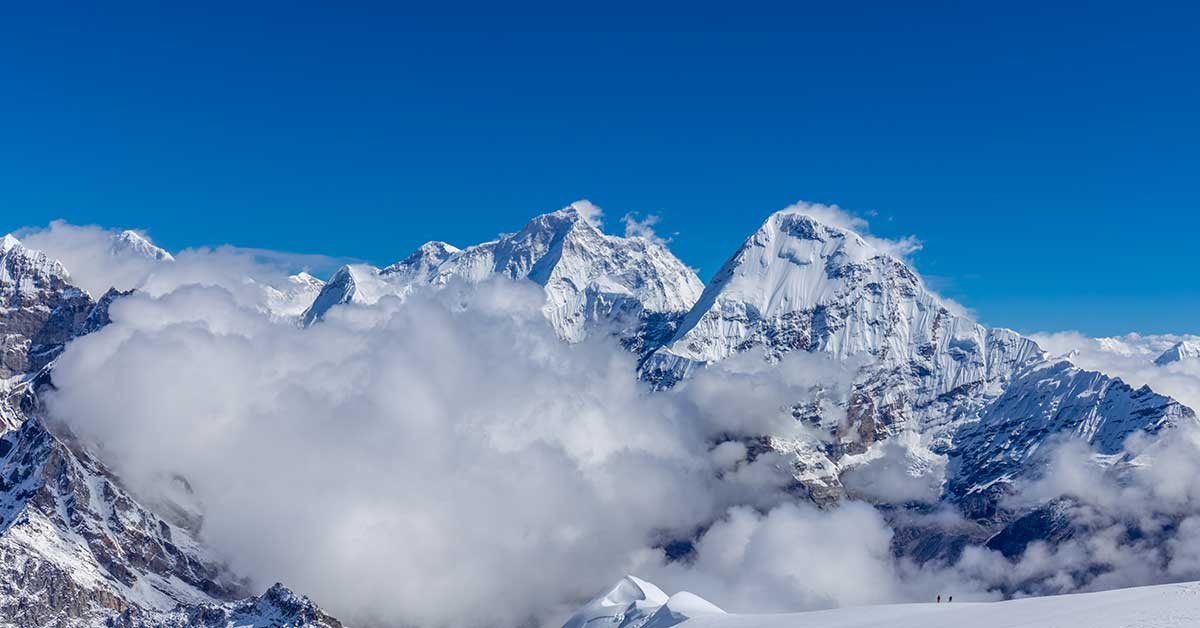
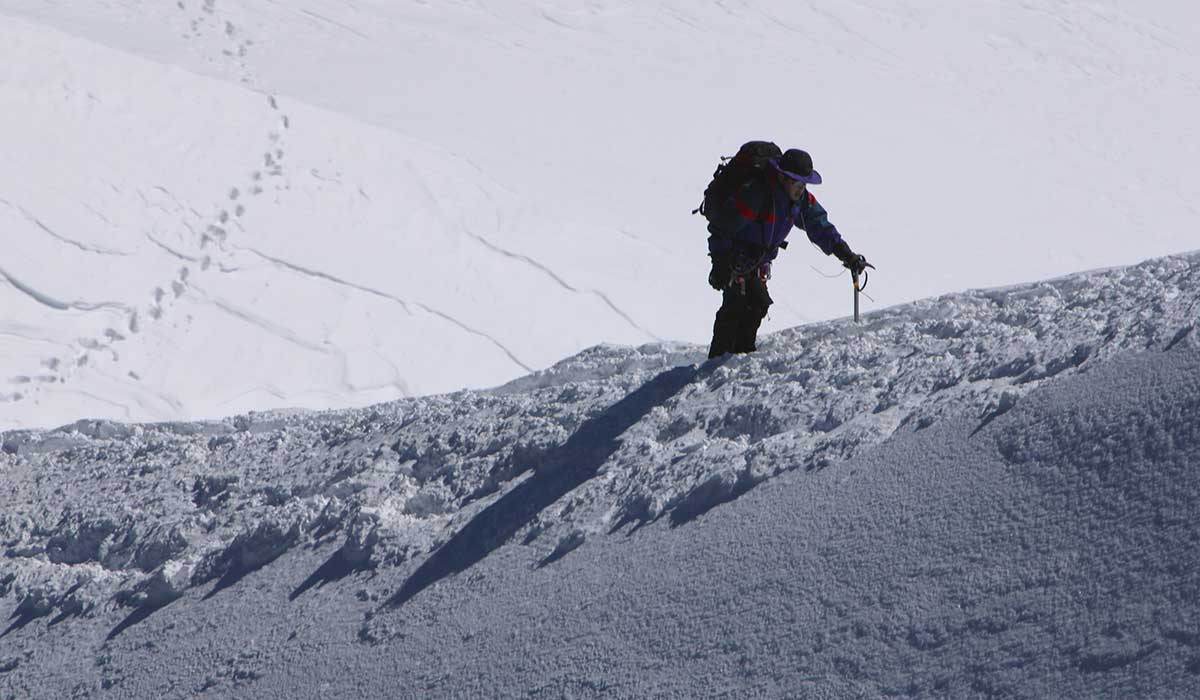
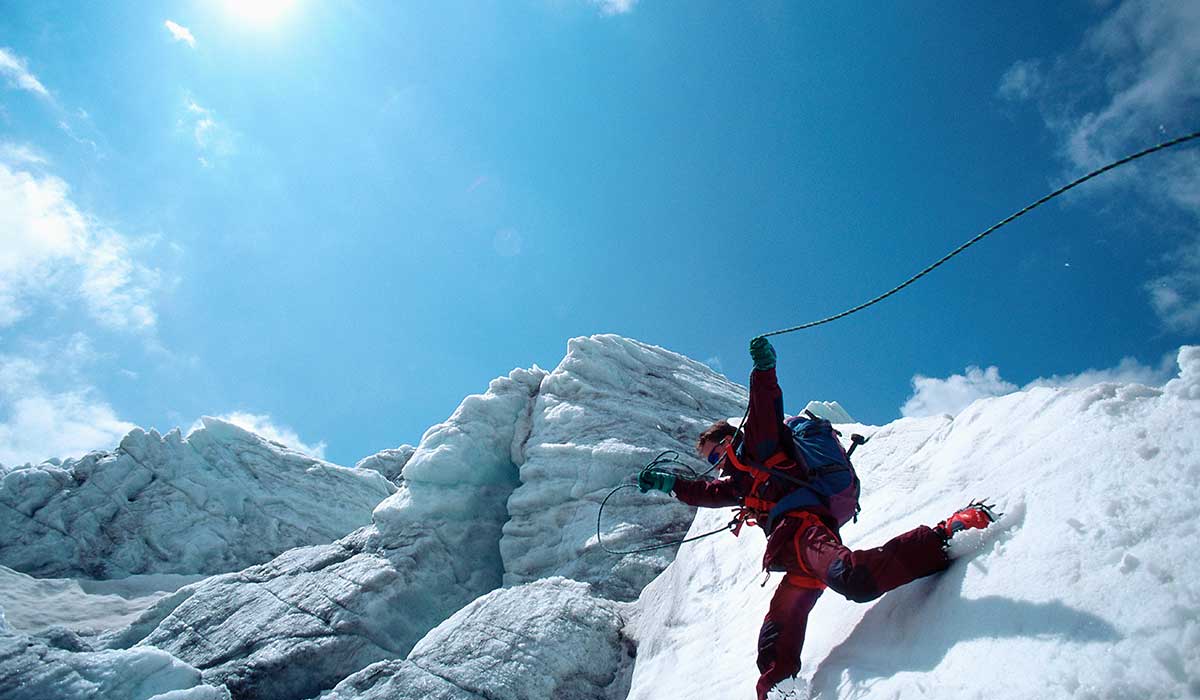
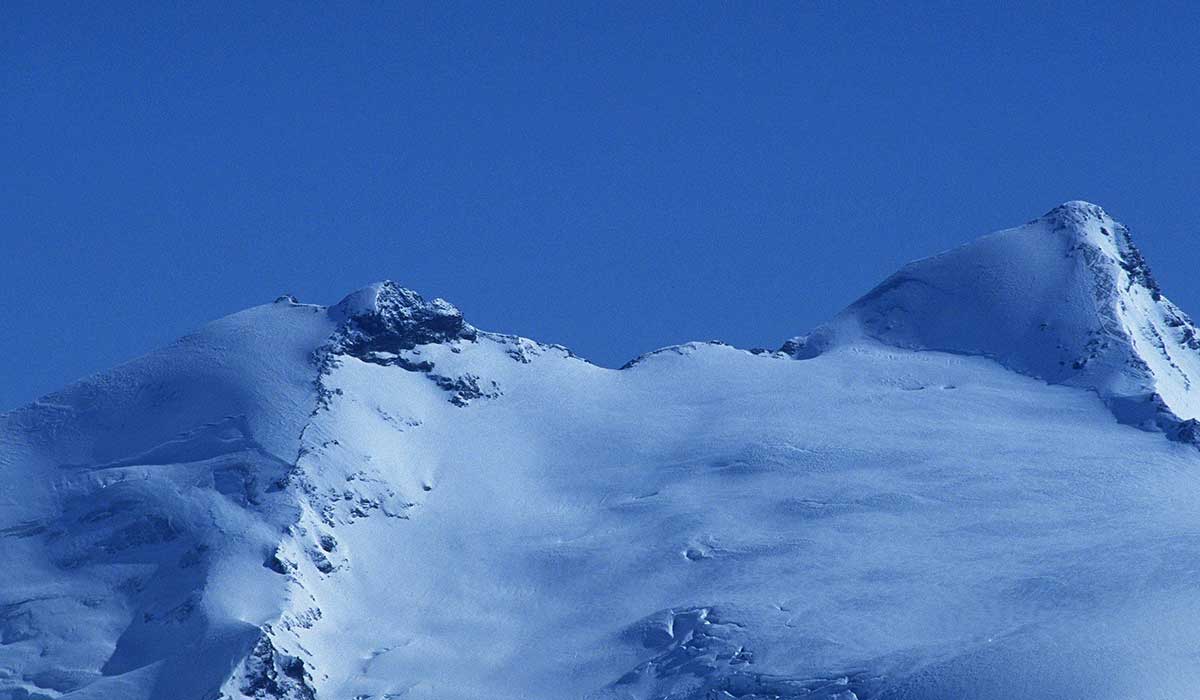
Mera Peak trekking is known as one of the best Himalayan adventures, since it gives you amazing views, new cultural experiences and the tough climbing of Mera Peak (6,461m). The adventure starts in Lukla, bringing trekkers to the Khumbu region and taking them from busy settlements to the heart of the Hinku Valley.
The hike continues to Chutanga, an important point for adapting to the environment and then crosses the impressive Zatrwa La Pass (4,610m) into the untouched wilderness of Thuli Kharka. On the way down to the valley, trekkers are welcomed by Kothe’s forest of rhododendrons, its rich wildlife and its notable place in trading. After climbing Thaknak, you arrive at high-altitude glacier-filled regions and can receive spiritual teachings from the Lungsumgba Monastery.
As the expedition continues, ice-climbing starts at Khare (5,045m) to support climbers in adapting to the high altitude before reaching Mera High Camp (5,800m). You now start your final effort, hiking under Himalayan skies and enjoying amazing views of Everest, Makalu, Lhotse and Kanchenjunga.
Going from meeting the local people in the Sherpa villages to reaching the top of Mera Peak, this trek is both an adventure and a success.
Highlights during Mera Peak Climbing
- Experience the excitement of touching down at Lukla (2,860m), well known as an thrilling high-altitude airfield with a runway of just 527 meters.
- Get acclimatized at Chutanga (3,020m), among the beautiful rhododendron forests.
- Pass over the Zatrwa La Pass (4,610m) and enjoy your first view of the Hinku Valley and its surroundings.
- See the beautiful surroundings of Kothe (3,600m), where many different Himalayan animals and high cliffs are found.
- Go to see the historic Lungsumgba Monastery near Thaknak (4,350m), where ancient engravings mark a number of old trekking routes.
- Take in the amazing change of scenery to glacial areas as you reach Khare (5,045m), the final place where you can stay before your summit attempt.
- Walk on the Mera Glacier, going over its frozen surface as you climb to Mera High Camp (5,800m).
- Get a beautiful view of the sunrise and see many big Himalayan mountains from the Mera high camp.
- Get a unique experience by summiting Mera Peak (6,461m) for some of the best views of Everest, Makalu, Lhotse, Cho Oyu and Kanchenjunga.
- Travel back down the Hinku Valley, following the same beautiful route you used when going up and enjoy your thoughts of the adventure.
Mera Peak Climbing Itinerary
You start your Mera Peak trekking in Nepal’s capital Kathmandu where we will meet up with you in Tribhuvan International Airport and transfer you to your hotel in Thamel. It’s a lively area that’s a trekker’s heaven complete with shops stocked with high altitude gear, cozy cafes and historical temples. Before we meet for a trek briefing you will have time to settle in and explore.
For a cultural experience of Kathmandu, a walk through Durbar Square will delight with ancient palaces and temples testifying to Nepal’s artistic royal splendor. The view from and tranquil surroundings of Boudhanath Stupa let you sink into Tibetan Buddhist tradition, while a visit to Swayambhunath (Monkey Temple) provides views of the entire valley. If time permits, a day trip could be made to the Pashupatinath Temple to learn more about Nepal’s very spiritual heritage.
That evening we’ll go over the Mera Peak climbing itinerary, focusing on altitude adaptation, safety and trek logistics. You’ll get to dine with other climbers, ask last minute questions, eat a traditional Nepalese dinner and spend the night getting ready for the adventure. Everything is set and tomorrow the journey into the Himalayas begins.
Today is all about getting finalized on trek preparations, you are going to gear and mindset before you go into mountains.
In the morning, you can have your breakfast and we’ll take you to Thamel’s trekking shops to help you check your equipment, see that you have the basics like crampons, ice axes, insulated puffy layers and high altitude boots. We will help you with advice for altitude acclimatization, hydration and emergency protocols from our experienced climbing guides.
Kathmandu is the place for cultural exploration beyond the logistics. Wanting some quiet and relaxed time, visit the tranquil Garden of Dreams located right in the middle of the city. Nepal’s finest pagoda style temples and finely carved woodwork are seen during a visit to Patan Durbar Square outside of Kathmandu.
For those interested in mountaineering history, National Museum is a place for expounding the history of past Himalayan expeditions, helping to shed more light on the legacy of Nepal’s greatest climbers.
By the evening, we have to get every detail buttoned up, permits, logistics and packing checked. They also organise a final briefing to mentally and physically prepare you for the trek ahead. Tomorrow, we have an early morning flight so it is time for an early night in full preparation for a sensational start of Mera Peak Trekking.
Today, we begin the real adventure when we take a scenic mountain flight to Lukla (2,860m) with views of the legendary peaks of Nepal above and the famed Tenzing-Hillary Airport below. We briefly rest and do some final gear adjustments, setting off on our journey towards Chutanga (3,020m).
The trekking trail comes through Chaurikharka Village which takes you with plenty of introducing to the traditional Sherpa homes and terraced farmlands of the rich Himalayan culture.
As we continue on the air becomes crisp and dense rhododendron and pines cover us in a stunning natural setting. Along the way there are Buddhist prayer wheels and intricate mani walls, walls carved with small boxes containing prayer texts that provide spiritual blessings on the journey ahead. Besides that, you will get to see Kongde and Numbur mountains too which are the early previews of the Himalayan grandeur higher up.
By gradual ascent it is possible to adapt to altitude in the proper manner, so that it is easy to climb up to the higher points gradually. Arriving at Chutanga by late afternoon we stay the night in a cozy teahouse. The option of a warm meal is what awaits you, while you relax and get ready for next days Mera Peak climbing itinerary. Tomorrow we are going to go deeper into the mountains, go higher up and face the more challenging terrain.
About Lukla
Lukla is the key starting point for Mera Peak trekking, Everest expeditions and other climbs into the greater Himalaya. Situated at 2,860 meters, this is the only reliable access to the Khumbu region, since no roads connect Kathmandu to this remote mountain area.
Sir Edmund Hillary had the Tenzing Hillary Airport built in 1964 to honor the first Everest ascent and give trekkers a direct route into Nepal’s high altitude wilderness. What sets the stage for every trek into the Himalayas is the airport’s 527 meters long runway and extreme weather conditions.
Once in town, trekkers are immediately immersed in the Sherpa culture, prayer flags, mani walls and monasteries are littered throughout the valley and reflect deep spiritual traditions. Warmth and hospitality can be felt in lodges and teahouses, last minute gear shops will guarantee that you have all that you need for Mera Peak climbing terrain.
The true trekking adventure starts as trekkers step on the trails of Lukla, taking the footsteps from a busy life to the calm and rugged landscape.
About Chutanga
At 3,020 meters, Chutanga plays an important role in acclimatization on the Mera Peak trekking itinerary. This was traditionally a seasonal yak grazing ground, used by Sherpa communities who travelled between higher up and lower down in the Himalayas. Its location, secluded, with its dense rhododendron and pine forest, was an ideal place to rest stock of livestock before heading into the upper reaches of the Hinku Valley.
There are historic legends and tales that the trail that leads to Chutanga is an ancient trade route followed by early Himalayan traders who used to pass between Nepal and Tibet. These paths were used by local Sherpas to transport salt, wool and traditional medicines, reinforcing the economic and cultural exchanges between mountain communities.
Trekkers on their way come across scattered mani walls, prayer wheels and Buddhist shrines, a reflection of the Sherpa people’s profound spiritual bond with the landscape.However, Chutanga still is an important stop for trekkers before starting the climb for the summit. There is historical significance and insight into traditions and survival practices amongst high altitude communities which can be enjoyed in peaceful surroundings. From here the trail leads onwards to Zatrwa La Pass, a key crossing which separates the lowland forests from the exposed alpine landscapes beyond.
We leave Chutanga today and make our way to the Thuli Kharka (4,300m) and over the Zatrwa La Pass (4,610m), the first major ascent of this climb.
The climb is initially an ever upward uphill trail traversing some rough alpine landscape that serves as a clue as to the rising altitude with its thinning air. Moving upward only makes the views even more spectacular, as we have the grand Himalayan Himals of Numbur Himal, Kongde Ri and Karyolung Peak presented clear from all obstructions.
Being able to reach Zatrwa La Pass is the first high altitude achievement on the Mera Peak climbing roster. The dramatic scenery of Hinku Valley, from the top, unfolds beneath, revealing deep into the trek route.
From there on, the descent is gentler and the trail leads through this lush terrain and past rhododendron forests and small yak pastures, arriving at Thuli Kharka. A cozy teahouse brings well deserved rest, warm meals and a peaceful night before venturing deeper still into the Himalayas.
About Thuli Kharka
At 4,300m, Thuli Kharka is an important acclimatization point in the Mera Peak trek, a transitional zone between the lower altitude forests and the exposed alpine terrain beyond.
In Nepali, ‘Thuli Kharka’ means ‘Large Pasture’ and refers to its role as a grazing ground on which Sherpa communities grazed yaks and livestock. Herders had moved between altitudes for centuries, taking advantage of this huge open space to give their animals a place to stay as seasons changed.
Situated slightly beyond the Zatrwa La Pass (4,610 m.) an important Himalayan crossing between the Khumbu and Hinku Valleys. This pass was historically used both for trade but also spiritual routes for travelers to stop and pray at sacred landmarks. Remnants of scattered mani walls and prayer flags remain along parts of the trail, as the local people have maintained the deep Buddhist traditions.
A perfect acclimatization spot before summiting high, Thuli Kharka affords breathtaking views of Mera Peak, Kusum Kanguru and the towering ridges of Hinku Valley. This is an important halt along the way to Mera Peak climbing terrain and the teahouses here provide trekkers warmth and sustenance. More than a waypoint, it’s a place with cultural significance and natural beauty, a place where tradition and adventure go together.
About Zatrwa La
At an elevation of 4,610 meters, Zatrwa La, is an important mountain pass that divides the Khumbu region from the Hinku Valley, a major entry way into the remote, rugged mountains of the Mera Peak trekking. Traditionally, this pass is a vital route for yak herders, mountaineers and local traders to move between settlements in the Everest region and isolated valleys beyond.
Home to challenging ascent via steep trails threading through rocky outcrops and high altitude ridgelines, Zatrwa La, is known to be difficult to traverse. The scenery changes dramatically as trekkers ascend before barren alpine slopes, although prayer flags flutter at the summit showing respect to the mountain spirits. Descending into the Hinku Valley is filled with the most breathtaking Himalayan views, with Mera, Kusum Kanguru and Karyolung among the peaks to be seen.
From the salt bazaars of Tibet to the villages deep within the Nepal Himalaya, Sherpa traders had passed through this bleak pass for centuries, carrying salt, wool and food supplies. The route is also of spiritual importance and many trekkers pause near Buddhist mani walls and shrines to make offerings for safe passage. Crossing Zatrwa La is a major milestone on the Mera Peak climbing itinerary today, as it represents the real entry into Nepal’s unspoiled wilderness.
From Thuli Kharka, as the sun breaks across the morning, we drop into stunning Hinku Valley past a reclaimed wilderness and unexpectedly through remote corners of highland settlements.
As the trail makes its way through dense forests of birch, rhododendron and pine it is a refreshing change from the rocky alpine terrain of the previous couple of days. Cascading mountain streams, hidden caves and, at times, yaks grazing on the hillsides continue to add an element of adventure to the trail, while also reminding us of the region’s deep rooted Himalayan culture.
As you trek up, views of Mera Peak become more discernible and your excitement increases with each step as you approach the base of the summit. It’s the tranquility and untouched beauty of the valley well suited for the Mera Peak trekking which makes this section of the trek so special.
We arrive at Kothe (3,600m) and settle into a welcoming teahouse where we stay the night and swap stories with fellow trekkers. It’s a great place to stop, recharge and prepare to climb higher and higher than the next day’s climb.
About Kothe
Located at 3,600 meters, at the end of the Hinku valley, Kothe is a pretty village and an important stop on the Mera Peak trekking itinerary. It is surrounded by thick pine, rhododendron and bamboo forest, a welcome change from the rocky alpine landscapes of the previous days.
Kothe has served historically as a resting place for Sherpa herders and Tibetan traders traveling between high altitude settlements. An important route for salt and wool trade to the remote villages in Nepal was once the valley that connects the Everest region.
Today, the simple traditional charm of Kothe still exists and there are simple teahouses offering warmth and hospitality to trekkers. The deep spirituality of local people is revealed through prayer wheels and Buddhist inscriptions on the mani walls which give an informed look at the Himalayan way of life.
The trek to Kothe is beautiful, with paths along the banks of the Hinku River, with snow covered peaks like Mera, Kusum Kanguru and Kyashar looming sharply on the skyline. Trekkers, as they descend into the valley, notice changes in biodiversity with lush greenery, small waterfalls and occasional sightings of Himalayan wildlife including musk deer and Himalayan monals.
During evening in Kothe, folk congregate in teahouses, share tales and prepare for the ascent to Thaknak, a place with less hospitable and more glacial terrain.
Today we head steeply into the heart of the Mera Peak climbing itinerary with an ascent towards Thaknak (4,350m). The path winds along the banks of the Hinku River, slowly pushing its way into higher altitudes where the country turns from green with forests, to white with bare glacier fed valleys.
On the way, we come across the ancient monastery of Lungsumgba, a sacred site where trekkers usually stop for prayer so that the climb would be successful. This site overlooks the early routes of Himalaya explorers and they combine past journeys with our present adventure, as seen in the rock carvings here.
Going further ahead the terrain opens up beautiful glacial views with the Charpathe Himal beyond towering as a huge peak. Crisp air and tall ice formations announce to us that our arrival to higher elevations are getting closer and need to pace ourselves and mindfully acclimatize.
After reaching Thaknak we take a warm teahouse and spend an evening discussing the next phase of Mera Peak Trekking, getting to Khare and preparing for summit day. The distance of the climb is nearer and the anticipation to overcome the challenges ahead comes.
About Thaknak
Located at 4,350 meters, Thaknak is an important acclimatization stop within the Mera Peak trek itinerary and the gateway from lush green forests of the Hinku Valley to the icy wastes ahead.
The name ‘Thaknak’ is from its historical function as a seasonal yak grazing site for Sherpa herders who brought their livestock from the colder months. It became then an indispensable refuge for traders and climbers, a shelter before further ascent along higher altitudes.
The area surrounding Thaknak is rugged with rocky moraines and glacier fed rivers washing down from towering peaks. Among the most famous of the landmarks here is the Lungsumgba Monastery, an ancient shrine from the Buddhist era with inscriptions that describe here historic Himalayan climbing routes. The traditions of mountaineers who prayed for blessings before their expeditions draws many trekkers to pause here as well.
In addition to its cultural importance, the views from Thaknak on the Charpate Himal are breathtaking, with ridges and icefalls of snow capped mountain providing an arresting backdrop behind the trek.
At this point the air is noticeably thinner and it’s important to adapt to altitude before moving up towards Khare, the last inhabited place before the high camp of Mera Peak. Thaknak boasts teahouses that can offer you a warm resting place while they serve you energy packed meals for the next leg of the trek that will soon become tougher.
Next, we are going to Khare (5,045m), the last settlement before the final push toward Mera Peak High Camp. Leaving Thaknak we travel from glacial valleys to rugged alpine terrain where enormous ice formations come to dominate the landscape. The air gets thinner with every breath, forcing us to keep up a steady pace as we get deeper and deeper in the high altitude area.
The trail on the way gives a fantastic view of Mera Peak’s North Face and it’s exciting to see the summit ahead. Changing terrain also allows us to get a closer look at Himalayan glaciers, including the vast Mera Glacier which we begin to follow. We trek over moraines and icy ridges, into Khare, a small, important stop for climbers acclimatizing.
Once in the teahouse, the evening is spent reviewing the Mera Peak climbing itinerary along with safety protocols and making sure all the gear is aligned properly for the last leg. Tomorrow is our acclimatization and training to carry the climb to a successful summit attempt and the anticipation for tomorrow builds.
About Khare
At 5,045 meters, Khare is the last human settlement before one makes the high altitude ascent to Mera peak. It becomes the base for acclimatization and preparation for climbing Mera Peak. It sits perched in a backdrop of dramatic glacial ridges and towering Himalayan peaks, providing trekkers the last chance to settle before stepping onto the icy climb up to High Camp.
Khare used to be a seasonal stop to the yak herders and traders who gradually over the years transformed it into a staging ground for Himalayan expeditions. Situated at the edge of Mera Glacier, it is the ideal stopover before climbers move from trekking to full scale mountaineering. Moraines, exposed ridges and deep ice formations all indicate the entry into extreme alpine conditions, a stark and rugged place.
Among Khare’s most interesting features are its climbing training sites, where mountaineers can practice on crampons, ice axes and harnesses prior to the final ascent. Nearby, trekkers can find traces of old Sherpa trade paths which traders would use to travel back and forth between Nepal and Tibet centuries back.
Located only a few hours away, the tea houses here have energy rich meals and last seconds of warmth and comfort before one sets off toward Mera Peak High Camp. Khare is the last inhabited place, marking both an ending and a beginning, trekking is over, true Himalayan climbing has begun.
Today is important for acclimatization purposes and to make sure we adapt through altitude and adjust different climbing techniques. We practice steady breathing, hydrate the body and lightly move to help the body adjust to less oxygen and to enhance endurance.
We start with ice climbing where our guides teach you the skills needed to move on glacial terrain including cramponing, ice axes and rope use. These skills are practiced to build confidence around summit day and that every climber is comfortable with the key movements needed to perform well in higher altitudes.
Beyond technical preparation, Khare has the breathtaking scenery. There are great views of neighboring peaks, including Kyashar, Kusum Kanguru and Mera La Pass when exploring the area. While sitting in camp for the evening, we wrap up gear checks, organizing our harnesses, layers and our high altitude essentials. We take a rest early after dinner as we are ready for the next part of the Mera Peak trekking itinerary to High Camp, one step closer to the summit.
From Khare, we continue our climb towards Mera High Camp (5,800 m) through the Mera Glacier which has icy ground and is more demanding. It involves real pacing at altitude where each step matters to conserving energy for the summit day. The trek is stunning and you feel like you are heading right into the huge Himalayan landscape and past Mera Peak.
The further up we get, the more adventurous we feel. A series of glaciated ridgelines, icy slopes and high alpine plateaus bring us to the remote High Camp, just below the last ascent. We spend here a basic, strategically positioned camp from where we make preparations to summit. The last push of the briefing is the evening briefing focusing on timing, weather conditions and ascent strategies.
We retreat to our tents after an early dinner and rest for what is probably the most important day of the Mera Peak climbing itinerary, the summit day. We know tomorrow, we will stand atop Nepal’s highest trekking peak and there is real anticipation at that knowledge.
About Mera High Camp
The final resting point before the final summit push up is Mera High camp, located at 5,800 meters along an exposed ridgeline, looking down at huge glacial fields. Situated at a remote camp, this tented camp is something to write home about as Everest, Lhotse, Makalu, Cho Oyu and Kanchenjunga stand across the horizon in all their majesty.
Mera High Camp traditionally served as a temporary expedition camp for early mountaineers to base out of while attempting routes in the Hinku Valley. Unlike other settlements, it only exists for climbers and provides hardly any shelter as it is located at extreme altitude. The camp is a final rocky but rewarding stop before the peak.
When trekkers get to base camp, they prepare themselves for thin air and freezing temperatures and ensure proper acclimatization before attempting to summit. Khare to High Camp is transitioning and consists of moving steadily through glacial fields, tracking ice ridges and crevasses and meticulously monitoring where your path might cause you to fuss through it.
By nightfall climbers bed down in tents, in preparation for an early day’s climb, hoping that the eventual reward will be the very top of the Mera Peak at 6,461 meters.
We are now at the best moment of our Mera Peak adventure and that’s summit day. In the early morning, starting from High Camp (5,800m), we put on our crampons, ice axes and harnesses for the final phase upward. We begin the route by climbing gently through the glacier which grows steeper as we come closer to the summit ridge. We have to use good footwork and keep a steady pace on ice, so climbing is safe and goes smoothly.
When we almost reach the final climb, the first light from the sun reveals majestic views of Everest, Lhotse, Cho Oyu, Makalu and Kanchenjunga in the Himalayas. The feeling when you reach the summit of Mera Peak (6,461m) is hard to beat, especially because you get to take in the tallest mountains in the world above you.
As soon as we appreciate what we’ve achieved, we begin to go downhill, slowly following the same path as we get lower. Once in Khare, we celebrate the achievement, have a wonderful meal and relax after a spectacular day of climbing the Mera Peak.
Being flexible is very important in trekking at high altitudes and today is available as a reserve day in case of unforeseen problems. If needing more time due to the weather or a need to acclimatize more is necessary, this day helps us climb safely and when the weather is best.
Should the expedition finish as expected, the unplanned day gives participants a chance to go sightseeing. You can have a slow walk around Khare and enjoy seeing the nearby glaciers and peaks such as Kyashar and Kusum Kanguru. Alternatively, trekkers can spend time with Sherpas to understand local traditions, tips for surviving at high altitude and what happened on famous climbing trips.
Before continuing, remember that rest and a well-hydrated body is very important no matter how your day pans out. When evening comes, we start getting ready to go farther down to Thuli Kharka on the next day’s trek.
When we reach Khare, we turn around and head down to Thuli Kharka (4,300m), reliving some of the experiences from the Mera Peak trek with new eyes. After seeing impressive glaciers, the road goes up and over rugged ridges, yak grazing land and rhododendron forests, showing the change from high to low elevations.
You will return along the Hinku Valley and see calm streams falling down and beautiful unspoiled wilderness. Because the air in the Himalayas is very crisp and refreshing, people can explore places below the highest peaks. While going through small villages during the journey, we notice how Sherpa people still uphold their traditions and customs for safety in the mountains.
On getting to Thuli Kharka, we rest in a comfortable teahouse, remembering how proud we are of climbing Mera Peak. As darkness falls, the mood becomes more festive and weaker trekkers celebrate with their peers, following their big achievements. Tomorrow begins the final part of our trek and we get closer to the city of Kathmandu.
We keep climbing down as we hike out of Thuli Kharka and head to Lukla, having to cross the Zatrwa La Pass (4,610m) again. After leaving the breakfast spot, the path rises steadily through the alpine ridges, where you can take in the last sights of Mera Peak, Everest, Cho Oyu and Makalu.
Spotting Lukla Valley below as we get to Zatrwa La shows that the Mera Peak trekking trip is almost at its conclusion. The change in elevation is gentle and it turns out to be a peaceful return to the greenery of the forests with loads of rhododendron and Sherpa villages dotting the way. Stepping from the wilderness up high to the bustle of the city is pleasant and signifies the successful finish of your adventure.
We reach Lukla, rest in a nice lodge and celebrate completing our ascent of Mera Peak. After coming back from the expedition, everyone enjoys talking about the experience, sharing memories and enjoying a shared meal. Almost done with our trip, we set up for our lovely flight back to Kathmandu tomorrow.
Immediately after breakfast, we take a flight from Tenzing-Hillary Airport back to Kathmandu and get one last view of the Himalayas. The last part of the flight brings a final opportunity to admire the tall peaks, deep valleys and inspiring mountain range we’ve overcome.
After landing, we take you to your hotel in Thamel and you will appreciate the city’s comforts which might feel surreal after spending days on the remote mountains. Once we drop you off, you can do whatever you like, if you desire to rest, shop or visit locations such as Patan Durbar Square or Boudhanath Stupa.
For the last evening, we join to have a farewell dinner and discuss our amazing Mera Peak trek. After finishing the expedition, friends share their wonderful moments and settle in to leave the amazing Nepalese scenery behind.
We proceed to Tribhuvan International Airport today to finish your trip by getting you on your flight home. Adventure, challenges and unforgettable sights have been constant these last two weeks, starting with reaching the top of Mera Peak and going through various valleys and high passes.
When you step on the plane, the experience of climbing Mera Peak will stay in your mind, a trip that showed your strength, showed you beauty and achieved one of your trekking goals in Nepal. Whenever you come back, the Himalayas will be glad to see you.
Real Stories from our TripAdvisor Page
Curious about what travelers say about Radiant Treks? Discover genuine experiences on our Reviews Page.
Mera Peak Climbing Route Map


