Overview
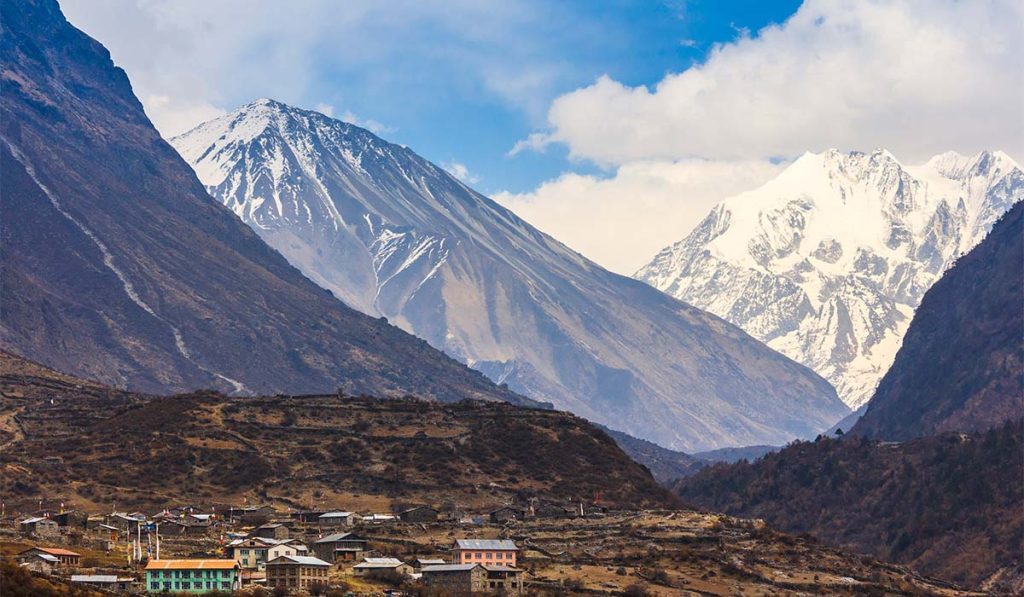
If you are searching for a Himalayan adventure that delivers jaw-dropping scenery without the extreme demands, the Langtang Valley trek often comes up as the perfect moderate choice. But what does moderate really mean here?
In simple terms, Langtang is challenging enough to feel like a proper achievement, yet achievable for most people who prepare sensibly.
The highest point most trekkers reach is Tserko Ri at 5,033 meters. It is high enough for stunning 360° views of Langtang Lirung and the surrounding peaks, but lower than the 5,300 to 5,500-meter passes on the bigger circuits.
You will walk 5 to 7 hours per day on average, while facing steady uphill climbs through rhododendron forests, bamboo groves, rocky staircases and glacier moraines.
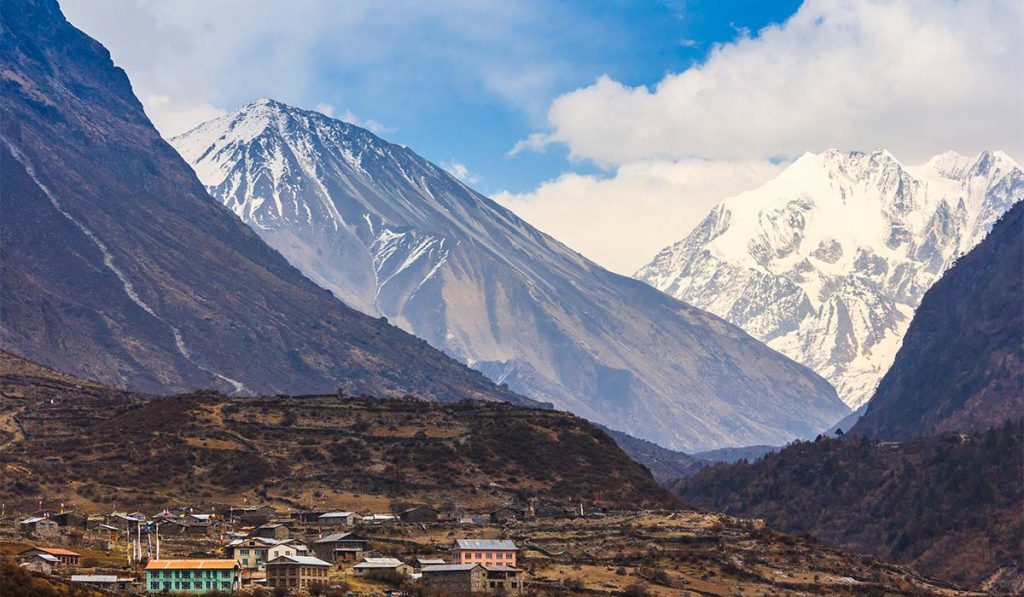
The full trekking portion usually takes 8 to 10 days (including the drive from Kathmandu to Syabrubesi and back).
Meanwhile, you sleep in comfortable teahouses every night, so there’s no camping in the cold, and the trail is well-marked with no technical climbing. That said, the combination of continuous ascents, cold mornings above 3,500 meters, and the remoteness (no rescue jeeps once you leave Syabrubesi) means you need decent fitness and mental grit.
For regular hikers or gym-goers, Langtang feels rewarding rather than punishing. Complete beginners or those who rarely walk more than a few kilometres can still succeed. But they need to train beforehand and take the steep sections slowly.

So, how difficult is the Lantang trek? It is genuinely moderate. The trek is tough in places, but incredibly doable and worth every step.
Contact Radiant Treks and confirm the Langtang Valley trek as your next destination in the Himalayas of Nepal.
Highlights
- A genuinely moderate trek that feels achievable with basic preparation
- Steady altitude gain with one of Nepal’s most forgiving elevation profiles
- Daily 5 to 7-hour walks through forests, meadows and alpine landscapes
- Steep lower-section climb from Syabrubesi to Lama Hotel, the trail’s first real test
- Comfortable teahouses and hot meals keep overall difficulty manageable
- Weather shapes the challenge, as the trek is easiest in spring and autumn
- Uneven and rocky paths, but no technical sections; trekking poles make a big difference
- Tserko Ri ascent, nearly at 5,000 meters, is demanding but optional and rewarding
- Fitness needs focus on stamina, uphill pacing and handling long descents
Elevation Profile: Is Altitude Challenging?

Many trekkers worry about altitude when they first look at the Langtang Valley trek, but the truth is the elevation profile here is one of the most forgiving in the Nepal Himalaya.
You start low at Syabrubesi and gain height steadily over several days, which gives your body time to adjust.
Compared to the Everest Base Camp Trek (5,364 m) or the trek to Thorong La Pass on the journey leading to the Annapurna Circuit (5,416 m), Langtang feels far less intimidating.
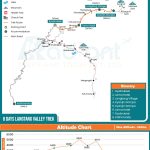
Here’s the actual elevation you will encounter on the classic 8 Days Langtang Valley trek as well as on the extended 10-day itinerary.
Key Elevation Stops on the Langtang Valley Trek
| Location | Altitude |
| Syabrubesi | 1,503m (Warm and lowland, so no issues) |
| Lama Hotel | 2.4870m (First taste of cooler air) |
| Langtang Village | 3,430m (Noticable thin air but rarely problematic) |
| Kyanjin Gompa | 3,865m (Highest overnight stop and good acclimatization night) |
| Kyanjin Ri | 4,773m (Steady and steep climb) |
| Teserko / Tsergo Ri | 5,033m (Steep trail, demanding hike) |
How Hard is the Altitude?
Above 3,000 meters, most people feel a bit more puffing on the uphills and may get a mild headache or tiredness. That is normal and usually passes after a good night’s sleep.
The key advantage of the Langtang trek is that you spend two or even three nights around 3,800 to 3,870 meters at Kyanjin Gompa, which is perfect acclimatization before attempting Tserko Ri, also popular as Tsergo Ri.
The hike to Tserko Ri is the only time you push close to 5,000 meters. And because you return to Kyanjin the same day, you are not sleeping at that height.
With proper pacing, plenty of water, and listening to your body, serious altitude sickness is uncommon on this route.
Daily Walking Hours: How Long Will You Trek Each Day?

Most days of the Langtang Valley trek average a very manageable 5 to 7 hours, which leaves plenty of time for photos, tea stops and soaking in the views.
Here is a realistic breakdown of the classic route on the basis of the daily trek duration:
Syabrubesi to Lama Hotel: You need to walk for 6 to 7 hours. It is the toughest ascent of the trip as you need to climb steadily uphill through lush forest.
Lama Hotel to Langtang Village: It is also of 6 to 7-hour walk on the trail featuring a mix of steep sections and gentle valley walking.
Langtang Village to Kyanjin Gompa: Walk for 5 to 6 hours. It is a shorter day compared to previous days and is perfect for arriving early and exploring the area.
Acclimatization day at Kyanjin Gompa: You go on a 5 to 6-hour-long hike to Tserko Ri and return during this day set aside for acclimatization. The ascent and descent are through the steepest trail, but this section is the most rewarding of this trek.
Return days: You need to walk mostly downhill for 5 to 6 hours daily. And the descent is easier on the lungs, but bring trekking poles for your knees.
Terrain and Trail Conditions
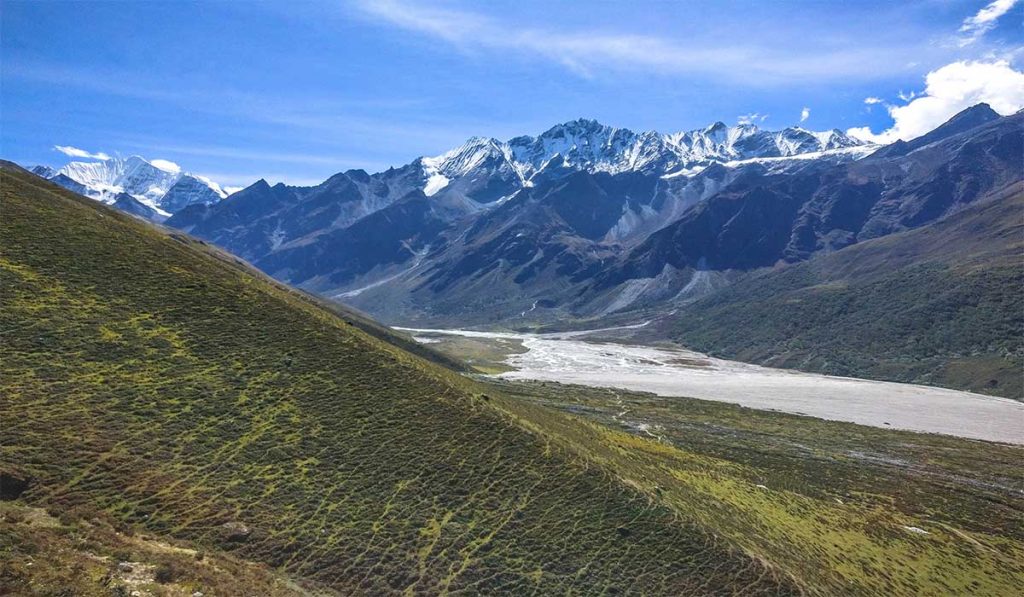
The Langtang Valley trek throws a bit of everything at you — it’s rarely flat, but it’s never technical either.
To get an idea of the Langtang trek difficulty, you need to understand the condition of its terrain and trail.
Dense Forest and Steep Climbs (Lower Region)
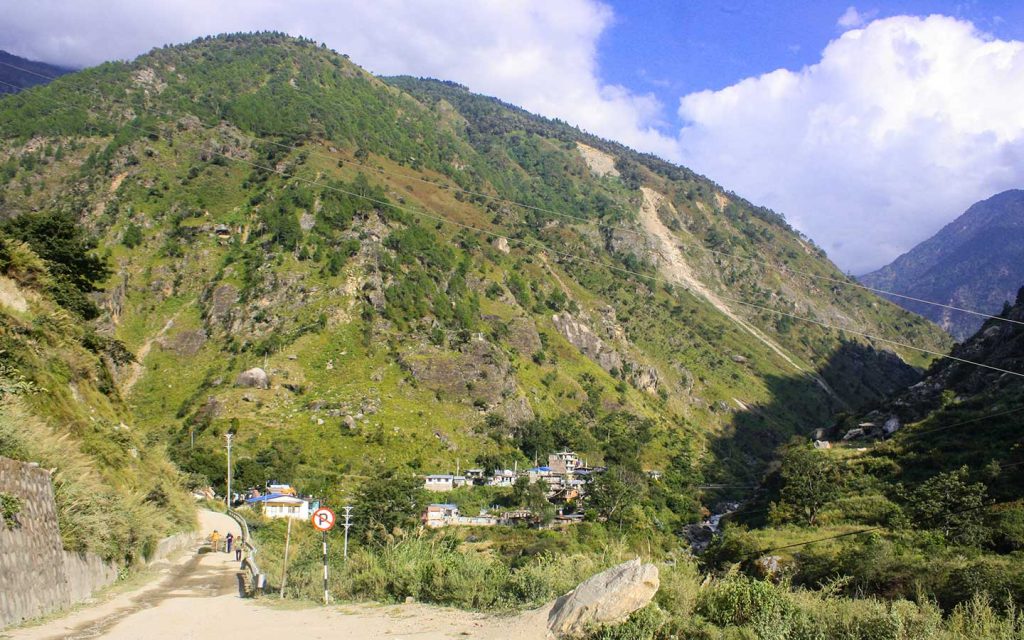
Right out of Syabrubesi and up to Lama Hotel, the path launches into one of the steepest forest ascents in all of Nepal’s popular teahouse treks. You switch back through dense pine, oak and blooming rhododendron forests. This is a mix of dirt path and stone steps. There is an elevation gain of over 1,000 meters in a single day. So, you must be prepared to face this challenge. Nonetheless, the trek in the lower region is sweaty, relentless work but shaded and beautiful.
Rocky Paths and Open Meadows (Middle Region)
Once you clear the forest, the valley widens and the trail turns rockier. Think uneven stone paths, short climbs and lovely open meadows where yaks graze. The gradient eases and you start getting those classic Langtang views. You can see the snow peaks ahead of you, and the river is roaring below.
Moraines and High-Altitude Trails (Upper Region)
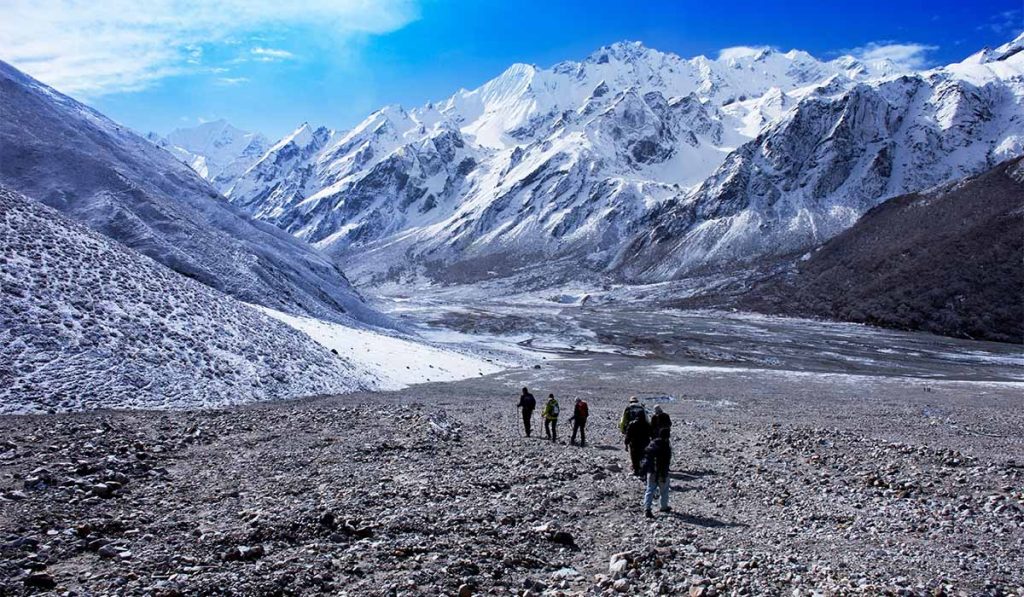
From Langtang Village to Kyanjin Gompa, you are in an alpine territory. The landscape turns dramatic. You are walking on glacial moraine now — loose rocks, dusty paths and the valley floor feels wide and wild. The inclines are gentler on paper, but the thinner air makes every step count.
Tserko Ri Ascent
If you go for the 5,033m viewpoint at Tserko Ri, expect a steep, loose and rocky slog straight up the ridge. It’s a challenging ascent but the 360° panorama of Langtang Lirung, Yala Peak and half of Tibet is worth every gasp.
Does Weather Make Langtang Trek Harder?

Yes, the weather can make the Lantang trek difficult, but only if you pick the wrong season. For the easiest, most enjoyable Langtang experience with minimal weather hassle, book the spring and autumn seasons.
Spring and Autumn: Easiest Conditions
These are the golden windows because the spring (March–May) and autumn (September-November) offer favorable conditions for trekking in the Langtang.
Days are sunny and warm (15 °C to 20 °C at lower elevations, 10 °C to 15 °C around Kyanjin Gompa). Likewise, nights are cool but rarely below -5 °C in the teahouses.
Similarly, skies are crisp, mountains stay crystal-clear for weeks and trails remain dry. Rain is rare, leeches non-existent, and snow is usually confined to the peaks.
Monsoon: Wet and Slippery
Heavy afternoon rain turns the lower forest section into a muddy, leech-filled area, making the Langtang Valley trek quite challenging in monsoon.
In the months from June to August, trails become slippery, landslides occasionally block the path for a few hours and clouds hide the peaks most days.
However, this trek is still perfectly doable. But expect wet boots and fewer photos, and extra effort on the climbs. If views are your priority, skip these months.
Winter: Cold and Quiet
Daytime temperatures are fine (5 °C to 12 °C), but nights at Kyanjin Gompa can drop to -10 °C to -15 °C inside the dining room until the stove is lit. Higher trails, especially Tserko Ri, often have snow or ice in months from December to February. As a result, this can make the final ascent slower and sometimes impossible without microspikes in winter.
Lower down, the trail stays mostly clear. The reward? Empty lodges, snow-capped peaks and sunrise light that photographers dream about.
Required Fitness Level
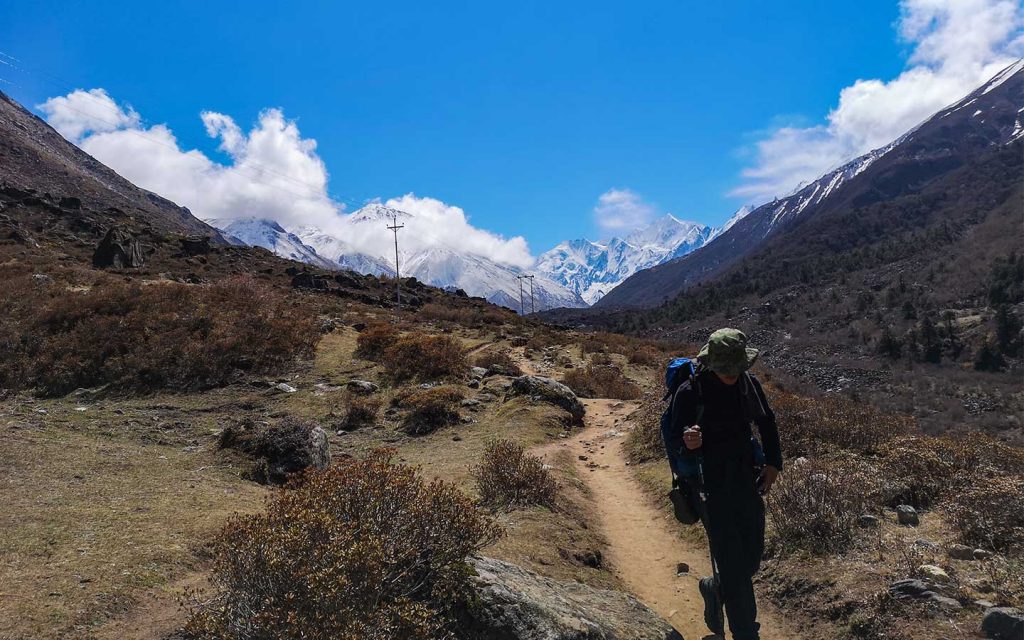
If you are reasonably active and willing to train a bit, then you are fit enough for the Langtang Valley trek.
Here’s what you really need:
- Good cardiovascular stamina — being able to walk briskly for an hour without stopping
- The ability to keep moving for 5 to 7 hours a day with breaks
- Comfort on both uphill and downhill (the descents are often harder on the knees)
- Strong enough ankles and knees to handle uneven and rocky paths
- A regular walking habit in the months before you come (weekend hikes or 8 to 10 km walks, ideally with some hills)
Based on the difficulty level of the Langtang Valley trek, it is suitable for:
- First-time Himalayan trekkers who train a little
- Weekend hikers and active travelers
- Anyone short on time who still wants real mountain scenery without the weeks’ commitment of the Everest Base Camp Trek 12 Days or the Annapurna Base Camp trek.
However, this trek may be challenging for
- Completely inactive individuals
- Those with knee problems (descents are tough)
- People sensitive to altitude
The good news? With 6 to 8 weeks of steady walking, gym and cardio, almost anyone in good health can get themselves ready.
Food and Accommodation: Do These Affect Langtang Trek Difficulty?
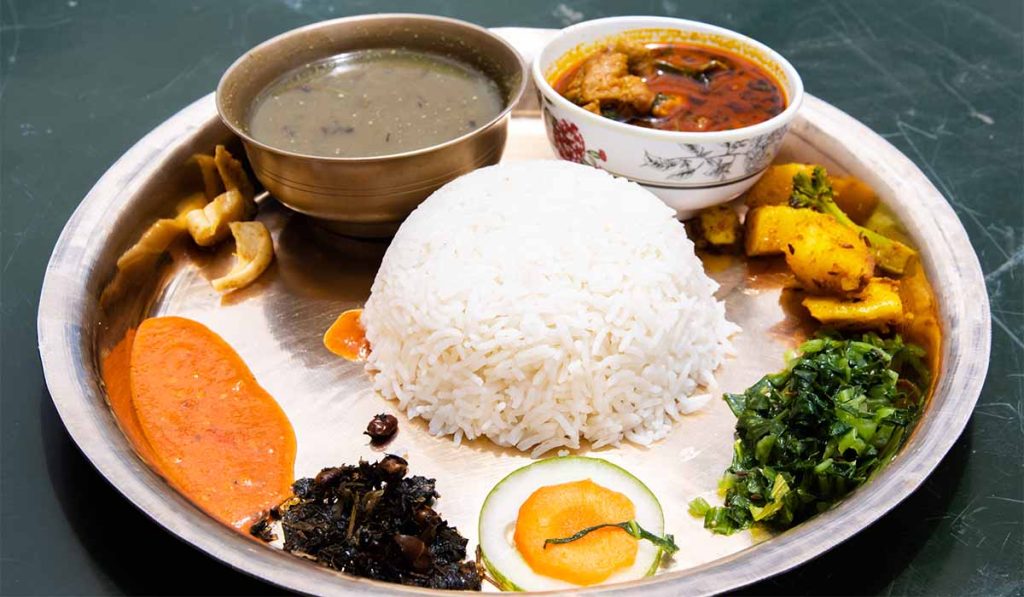
Absolutely, as food and accommodation services available along the Langtang Valley make this trail more approachable than many other Himalayan treks. Comfortable beds, hot meals and no heavy backpack make a huge difference to how difficult is the Lang trek. You finish tired, but you recover fast and wake up ready for the next morning’s adventure.
Accommodation Facilities
Every single night you sleep in a proper teahouse with a real bed, thick blankets and a warm dining room heated by a yak-dung or wood stove.
There is no need for camping or frozen tents and cooking in the rain. As soon as you arrive at your designated teahouse, you can take off your boots, change into dry clothes and sit with a hot ginger lemon honey.
At Kyanjin Gompa, the rooms are simple, but the dining halls are cozy and often have glass windows with the best views of Langtang Lirung.
Food Options
Food is plentiful, fresh and designed to keep you moving. The famous dal bhat (rice, lentil soup, curry, pickles) comes with free refills — exactly what your legs need after a day’s climbing. You’ll also find Sherpa stew, garlic soup (great for altitude), momos, fried rice, noodles, eggs any style and endless pots of hot tea or coffee. Portions are generous, vegetarian options are everywhere and the cooks are used to tired trekkers.
Because reliable teahouses line the entire route, you only carry a daypack. Your porter takes care of the heavy stuff.
How to Prepare for the Langtang Valley Trek Difficulty?
Train physically, be strong mentally and pack right so that you are ready to face the difficulties of the Langtang Valley trek.
Physical Training
It should start 6 to 8 weeks before departing for the trek. You don’t need to become an athlete, but you do need to teach your body what’s coming.
Weeks 1 to 4: Brisk walk or jog 45 to 60 minutes and 4 to 5 times per week. Add a longer walk of about 3 hours with hills during the weekend.
Weeks 5 to 8: Include at least one hike per week with an elevation gain of 500 to 1,000 meters. Carry a light daypack weighing 5 to 7 kg on these sessions because it mimics exactly what you will do on the trail.
Mix in cardio: Go for activities like cycling, swimming or stair-climbing 2 to 3 times a week to build lung power. This is essential for the climbs to Lama Hotel and Tserko Ri, among other places.
Strength: Simple bodyweight squats, lunges and planks twice a week. It will keep your legs and core solid for the uneven terrain during the trek.
Mental Preparation
Langtang has long uphill days. Practise pacing yourself — walk slowly on training hikes even when you feel strong. Remind yourself that the goal is to reach the teahouse with energy left for momos and mountain views, not to race.
Essential Packing List

Carry only what actually matters and remember that good gear turns a challenging trek into a comfortable one. Pack light — your porter carries up to 15 kg, you only need a 20 to 30 L daypack.
Do the work beforehand, pack smart, and Langtang will reward you with memories (and photos) that last a lifetime.
Clothing
- Moisture-wicking base layers and T-shirts
- Warm fleece mid-layer
- Down jacket (essential for Kyanjin nights)
- Waterproof Gore-Tex jacket and pants
- Quick-dry trekking pants (zip-offs are perfect)
- Warm hat, gloves, buff, thermals for sleeping
Footwear
- Well broken-in waterproof trekking boots (ankle support is crucial)
- 3 to 4 pairs of good merino socks and lightweight camp shoes/sandals
Must-Have Items
- Trekking poles (save your knees on descents)
- 2 to 3L water system (bottle and bladder)
- Headlamp and power bank
- Sunglasses, high SPF sunscreen and lip balm
- Personal medication and basic first-aid (include Diamox if your doctor advises)
- Sleeping bag liner (teahouse blankets are warm, but a liner adds comfort)
Langtang Trek with Guide and Porter: Does It Reduce Difficulty?
Yes, it reduces difficulty dramatically and lets you finish smiling instead of limping. Hiring a guide and porter doesn’t just make the trek safer, but it genuinely drops the difficulty level by a full grade.
A licensed guide walks with you, controls the pace on steep climbs, watches for early altitude symptoms, finds the best teahouse rooms, orders food and translates with locals. When the trail is icy or the weather turns, they know shortcuts and safe alternatives instantly.
A porter takes your main duffel (up to 15 to 20 kg) and leaves you with just a light daypack with items like water, jacket and camera. That single change cuts physical effort to a great extent. As a result, your legs stay fresher on the long ascent to Lama Hotel and during that push to Tserko Ri.
For first-timers, solo travelers or anyone with moderate fitness, the guide and porter combo is the smartest investment you will make. You enjoy the mountains instead of fighting them.
Also, remember that a licensed guide is mandatory during any trek in Nepal.
Is the Langtang trek difficult for beginners?
Yes, it is moderately challenging for beginners, but they can conquer it with sufficient training.
Every season, Radiant Treks also guides dozens of first-time trekkers who have never been to the Himalaya before. And almost all of them reach Kyanjin Gompa with big smiles.
Langtang is perfect for beginners because of the factors listed below.
- Moderate altitude (never sleeping above 3,870 meters)
- Well-marked and non-technical trail
- Comfortable teahouses every night
- Short itinerary or either 8 days or 10 days
- Stunning scenery and Tamang culture from day one
That said, it’s not a walk in the park. The steep forest climb on day 2 and Tserko Ri catch people out if they arrive unfit.
The advice for beginners: Train with hills for 4 to 6 weeks, hire a guide (or guide and porter) and walk slowly.
How Difficult Is Langtang Trek Post 2015 Earthquake?
The Langtang region was heavily affected by the 2015 earthquake, yet this has not impacted the difficulty level of the trek. Today, the trail, villages and lodges have been rebuilt with improved safety standards.
Current Conditions
- The trekking route is safe and well-restored
- Teahouses are rebuilt and fully operational
- Bridges and pathways are maintained regularly
- The trail now has more open views due to the changed landscape
- Trekkers often find the Langtang people warm, resilient and welcoming
Final Verdict
The Langtang Valley trek is moderately difficult. As a result, people with average fitness and preparation are able to complete it without major problems. The most difficult sections are the steep forest climb and the optional ascent to Tserko Ri.
Nonetheless, you will enjoy this trek if you want a short but rewarding Himalayan journey. It does not require you to reach extremely high passes.
But at the same time, it offers beautiful scenery and rich Tamang culture. In addition, it is also a less-crowded alternative to Everest and Annapurna treks.
FAQs

Is the Langtang trek hard?
It’s moderately challenging but this trek is manageable for most people if they have basic fitness.
Do I need prior trekking experience?
Not necessarily. Beginners can complete it with a few weeks of training.
What is the highest point on the trek?
Most trekkers reach Tserko Ri, which is close to 5,000 meters.
Will I face altitude sickness?
Mild symptoms can happen, but the gradual ascent makes serious issues rare.
How many hours do we walk each day?
Expect around 5 to 7 hours of steady walking.
Are the trails technical?
No, they are not. You need to traverse rocky and uneven trails but they are not technical.
Which is the most difficult part of the trek?
The forest ascent to Lama Hotel and the optional climb to Tserko Ri.
What’s accommodation like?
It is simple but comfortable and you stay in teahouses with warm meals every night.
When is the best time to trek?
Spring and autumn offer the easiest weather and the clearest views.
Does hiring a guide make it easier?
Yes. A guide handles pacing, safety and navigation. And this lowers the overall effort you need to make during the trek.