Manaslu trek food and accommodation are simple, authentic, and more than sufficient for trekkers exploring this remote Himalayan region. While the Manaslu trail is famous for its dramatic mountain scenery and quiet villages, understanding what you will eat and where you will sleep is just as important as preparing for the walk itself.
The Manaslu Circuit trek is less commercialized than Everest or Annapurna. That means you should not expect luxury lodges or long restaurant-style menus. Instead, you will stay in locally run teahouses that provide basic but comfortable rooms and freshly prepared meals. As you gain altitude, facilities become more modest and menu options slightly narrower — but the essentials are always available.
In this guide, you will learn exactly what to expect from Manaslu trek food and accommodation, including room standards, meal options, daily costs, electricity access, and how services change as you move higher into the mountains.
Manaslu Trek Accommodation: Rooms, Comfort, and Facilities
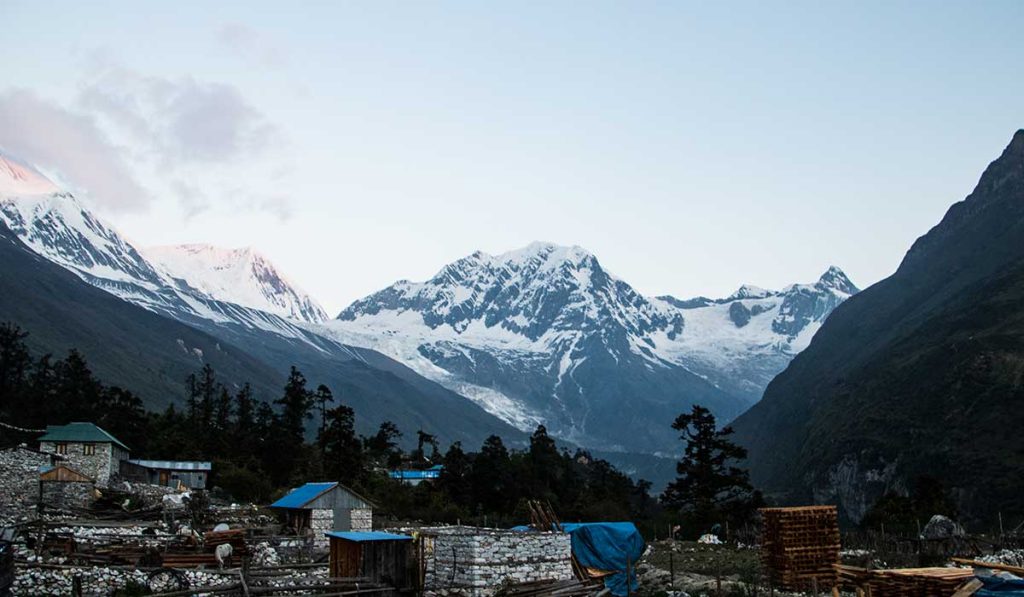
Manaslu trek accommodation is straightforward and practical. You won’t find luxury hotels here, but you won’t be struggling either. Every major stop along the trail has teahouses where trekkers can eat, sleep, and rest before continuing the next day.
Most Manaslu trek accommodations come in the form of small, family-run teahouses. The rooms are simple — usually two single beds, a thin mattress, a pillow, and a blanket. The walls are often wooden or stone, and you may hear other trekkers moving around at night.
In the lower villages, rooms can feel slightly more comfortable because supplies are easier to transport. Beyond Samagaun and Samdo, things become more basic. Fewer materials reach these remote settlements, so expectations need to adjust.
Heating is normally limited to the dining hall, where everyone gathers in the evening around a central stove. Bedrooms are not heated, and nights can get very cold. A proper sleeping bag makes a big difference, especially at higher altitudes.
What makes these places memorable isn’t comfort — it’s the atmosphere. The hospitality is genuine, and that’s part of the experience.
Who Is the Manaslu Trek Suitable For in Terms of Comfort?
If you are okay with simple mountain lodges, you’ll be fine on the Manaslu trek. Rooms are basic. Bathrooms are shared. The only heated place in the evening is usually the dining room.
People who have trekked in the Annapurna Circuit or other remote parts of Nepal usually don’t find it difficult. It’s similar — just quieter and less developed.
If this is your first high-altitude trek, the main thing is knowing what to expect and understanding the overall Manaslu trek difficulty level. You won’t have luxury comfort, and some days the facilities feel rough. But if you are going for the mountains and not for hotel-style comfort, the setup works. Most trekkers adjust within a day or two.
Overall, Manaslu trek accommodation is ideal for trekkers who value authenticity over luxury comfort.
What to Expect Inside a Manaslu Teahouse
Teahouses in Manaslu trek are simple mountain homes, and they have been adapted to host trekkers. Remember that they are not luxury hotels. What they offer is shelter, warmth (at least in the common areas), and a place to recharge after a long day on the trail.
When you arrive, there’s usually no formal check-in process. The owner or manager will show you to a room, and that becomes your space for the night. It’s straightforward and uncomplicated.
Inside a typical Manaslu trek accommodation, you can expect:
- Twin beds with a thin mattress
- A pillow and blanket
- Wooden or stone walls
- A small window (sometimes very small)
- No heating inside the bedroom
The rooms are not big; rather, they are compact and practical. Likewise, the room’s walls are made of plywood and thus are not soundproof. You may hear other trekkers moving around or talking in another adjacent room. The real heart of the teahouse is the dining hall. This is where:
- A central stove provides warmth
- Trekkers gather for meals
- Devices are charged (for a fee)
- Conversations naturally happen
It’s often the warmest and most welcoming part of the lodge. After sunset, most people stay in the dining hall until bedtime because bedrooms get cold quickly — especially above 3,500 meters.
The simplicity of teahouses is part of the Manaslu experience. They may lack luxury, but they offer reliability and genuine mountain hospitality.
Bathroom and Hygiene Facilities on the Manaslu Trek
On the Manaslu trek, you can use basic bathrooms that become more modest as you gain altitude. In the lower villages, especially in places with road access, some teahouses may offer:
- Western-style toilets
- Running water
- Occasionally, attached bathrooms
However, as you move higher into the mountains, shared bathrooms become the norm. On most of the trail, you can expect:
- Shared toilets
- Squat-style (Asian) toilets at higher elevations
- Limited running water
- Water stored in buckets for flushing
Cleanliness varies slightly from lodge to lodge, but in general, the facilities are functional and maintained as well as possible given the remote conditions. It’s important to remember that all supplies — cleaning materials, water, even plumbing parts — have to be carried in by mule or porter.
Hot showers are available in many villages, but they are not included automatically. Typically, the cost rises with altitude and is paid separately. In colder or more remote settlements, hot water may depend on solar heating or limited fuel supplies.
For hygiene, it’s wise to carry:
- Your own toilet paper
- Hand sanitizer
- Wet wipes
- Basic toiletries
These small items make a big difference during the trek. And once you accept that you are in a remote Himalayan region, the facilities feel reasonable and manageable.
Manaslu Trek Food: What You Will Eat on the Trail
Food available on the Manaslu trek is simple, filling, and designed to keep you going in a high-altitude environment. Overall, Manaslu trek food focuses on warmth, nutrition, and reliability rather than luxury dining.
Most teahouses serve a mix of Nepali, Tibetan, and basic Western-style dishes. The menu tends to be longer in lower villages and shorter as you gain altitude. That’s mainly because everything — rice, vegetables, cooking oil, even salt — has to be transported into the mountains by mule or porter.
Common meals on Manaslu trek include:
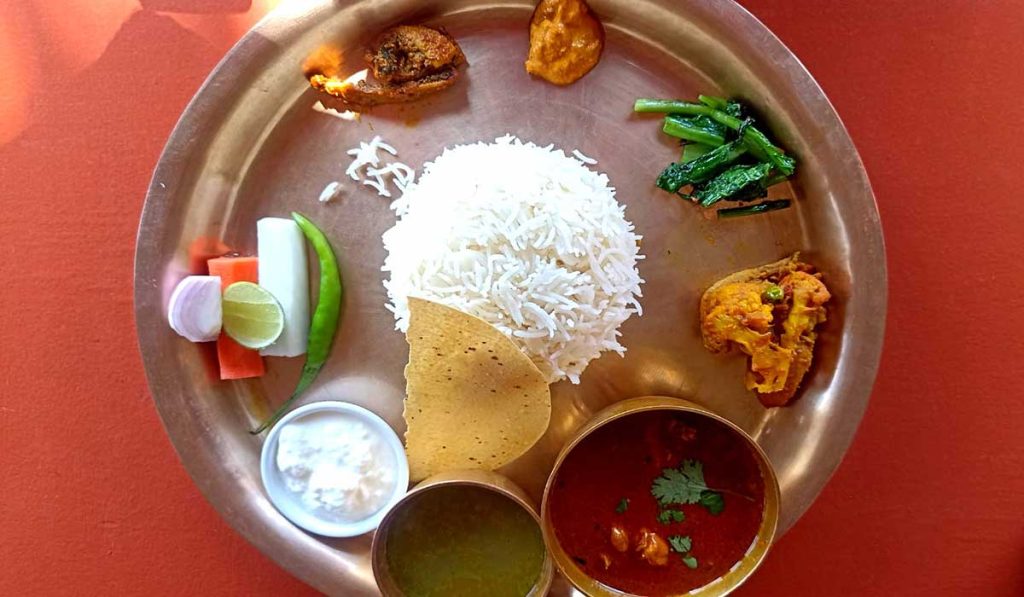
- Dal bhat (rice, lentil soup, vegetables)
- Fried rice
- Noodles or chowmein
- Thukpa (noodle soup)
- Momo (dumplings)
- Pasta or spaghetti (mostly in lower areas)
- Potato-based dishes
Dal bhat is by far the most reliable choice. It’s nutritious, energy-rich, and often comes with free refills. Many trekkers end up eating it almost daily because it provides steady fuel for long walking days.
As you climb higher — especially beyond Samagaun — menu options naturally become more limited, but there is always enough food to meet trekking needs.
What’s Available For Breakfast?
You get simple yet satisfying options for breakfast during the Manaslu. It’s usually served early, between 6:00 am and 8:00 am. Since mornings in the mountains can be cold, a warm meal makes a noticeable difference before heading back onto the trail.
The menu is fairly consistent across most teahouses, especially in the lower and mid-altitude villages. As you climb higher, choices may narrow slightly, but you will still have enough options to start the day properly.
Common breakfast items include:
- Tibetan bread served with jam, honey, or peanut butter
- Toast or chapati with eggs
- Omelets (plain, vegetable, or cheese)
- Pancakes (plain, banana, or chocolate)
- Porridge or muesli
- Paratha (often with potato or egg filling)
Tibetan bread is one of the most popular choices. It’s freshly fried, slightly crispy on the outside, soft inside, and filling enough to keep you going for several hours.
Tea and coffee are always available in the morning. Many trekkers prefer milk tea or black tea to stay warm before setting off.
Breakfast prices vary depending on altitude, but they generally increase as you move higher. Even so, portions are generous enough to provide solid energy for the day’s hike. Breakfast is one of the most important meals on Manaslu trek, as it sets the tone for long days of walking.
Lunch and Dinner on the Manaslu Trek
Lunch on the Manaslu trek usually takes place wherever you stop that day. There isn’t a fixed lunch stop — it depends on how far you are walking and how fast your group moves. You’ll see the same dishes appear on most menus:
- Dal bhat
- Fried rice
- Noodles
- Thukpa
- Momo
- Potato dishes
Dal bhat becomes the default choice for many trekkers. It’s steady, filling, and keeps your energy level stable. And if you’re still hungry, you can usually ask for more rice or lentils.
Dinner feels different from lunch. It’s slower. By 6 or 7 in the evening, everyone is back at the lodge. The dining room fills up, and people settle around the stove.
As you climb higher, the menu shrinks. In villages like Samdo and Dharamsala, don’t expect a long list of choices. Supplies are limited. Everything has been carried up. But there will always be something hot to eat.
And at the end of a long mountain day, that’s what matters.
Vegetarian or Non-Vegetarian: Manaslu Trek Food Choice
You’ll find both vegetarian and non-vegetarian options along the Manaslu trek, but most experienced trekkers slowly shift toward vegetarian meals as they go higher.
It’s not a rule. It’s just practical. Meat has to be carried up the trail like everything else. In lower villages, supply is more regular. But once you move beyond Namrung and especially past Samagaun, storage becomes more difficult. Refrigeration isn’t always reliable, and fresh deliveries aren’t daily. That doesn’t mean meat is unsafe everywhere — just that you need to use common sense.
At altitude, vegetarian meals typically offer a safer option. They are also easier on the stomach when your body is adjusting to thinner air.
Common vegetarian choices include:
- Dal bhat with vegetable curry
- Vegetable fried rice
- Veg momo
- Thukpa with vegetables
- Potato dishes
- Tibetan bread
Non-vegetarian options may include:
- Chicken curry
- Meat-filled momo
- Egg dishes
- Sometimes yak meat in certain villages
Eggs are generally fine throughout the trek and are one of the more reliable protein sources.
Many trekkers start the journey eating everything and naturally simplify their diet as the days go on. By the time they reach higher villages, most are choosing what feels light, warm, and dependable rather than what sounds exciting on the menu.
What to Drink
Water is available at every teahouse, but it’s not coming from a treated municipal supply. Most villages rely on natural springs or mountain streams. Because of that, trekkers usually drink:
- Boiled water from the lodge
- Filtered water using personal bottles
- Water treated with purification tablets
Boiled water is the most common option. It costs a small amount per liter, and the price increases gradually with altitude. Some trekkers carry filtration bottles so they can refill from safe sources along the way.
Tea is everywhere on the trail. You’ll see:
- Black tea
- Milk tea
- Ginger tea
- Lemon tea
- Green tea
- Tibetan butter tea
Hot drinks feel especially comforting in the evenings when temperatures drop. Garlic soup is also popular and often recommended for acclimatization, but its benefits are based more on traditional belief than on medical guarantee.
Soft drinks and bottled beverages are available in many villages, but they are more expensive higher up and not the best choice for hydration. Staying hydrated on the Manaslu trek isn’t optional. It’s one of the simplest ways to reduce the risk of altitude sickness and keep your energy steady. The air gets drier as you climb, and you lose more fluids than you realize — especially after hours of walking uphill.
Alcohol is sold in most settlements, including local raksi and beer. But drinking at altitude isn’t wise. Alcohol dehydrates you, affects sleep quality, and makes acclimatization harder. Most trekkers either avoid it completely or save it for the final night.

Manaslu Trek Food and Accommodation Cost
The general cost of food and accommodation on the Manaslu trek, including the Manaslu trek food cost, helps trekkers plan their overall budget. This will help them set a realistic budget for the trek. Prices that determine Manaslu trek accommodation costs and meal expenses usually depend on factors including altitude, season, and transport difficulty. That is because most supplies are carried into the mountains by mule or porter.
As you move higher along the route, both meals and rooms gradually become more expensive. This increase reflects the remoteness of the villages rather than improved comfort or luxury.
Average Room Cost Per Night (Twin Sharing)
- Lower villages (Machha Khola, Jagat): around USD 5-USD 8
- Mid-altitude villages (Namrung, Lho): around USD 6-USD 10
- Higher villages (Samdo, Dharamsala): around USD 10-USD 15
Approximate Meal Cost Per Plate
- Lower elevations: USD 4-USD 7
- Mid elevations: USD 6-USD 9
- Higher elevations: USD 8-USD 10
Dal bhat is usually the most cost-effective and filling option. The price of other dishes, such as noodles, fried rice, and soups, depends on the use of ingredients.
Additional Service Charges
Some services are charged separately in most teahouses:
- Hot shower: USD 2-USD 5
- Charging electronic devices: USD 2-USD 4
- Boiled drinking water: Price increases with altitude
- WiFi access (where available): Small fee
On average, the Manaslu trek daily budget for food and lodging increases gradually as they move higher along the Manaslu route.
Many organized trekking packages, like that of Radiant Treks, include food and accommodation within the overall trip cost, which helps simplify daily budgeting and logistical planning.
Manaslu Trek Food and Accommodation: What to Expect in Major Stops
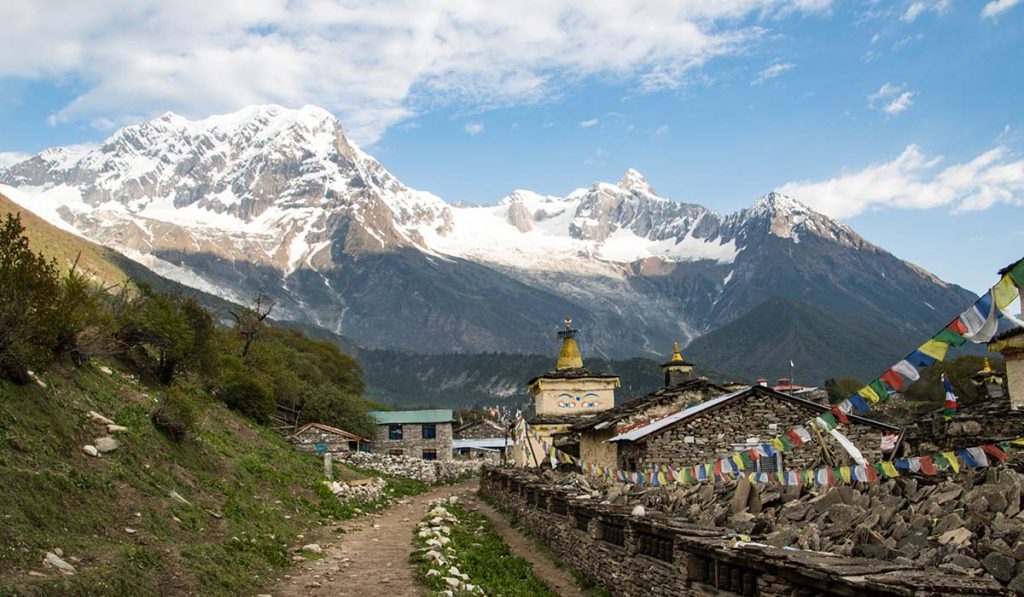
Food and accommodation on the Manaslu trek gradually change as you move higher. The difference isn’t dramatic from one village to the next, but over several days, you’ll clearly notice the shift in menu variety, room comfort, and pricing. Overall, both Manaslu trek accommodation standards and Manaslu trek food variety reflect the increasing remoteness of the trail.
Here’s what you can generally expect along the route:
Diverse Options at Machha Khola
This is a lower-elevation village with road access. Because supplies can reach here more easily, teahouses tend to offer slightly more menu variety. In this place, the trailhead of the Manaslu trek, rooms feel a bit more spacious compared to higher settlements. In addition, you may find better shower facilities.
Likewise, food options are broader here. You may find pasta, pizza, and even bakery-style items on menus.
Comfortable But Traditional Jagat and Deng
As the trail begins climbing steadily, Manaslu trek accommodation remains comfortable but starts to feel more traditional. Rooms are simple and practical. The menu still offers a good variety, though it’s usually less extensive than in the lower villages.
Dal bhat, noodles, fried rice, and momos become the most dependable choices.
Improved Facilities at Namrung and Lho
Some teahouses in these villages, which sit higher and offer beautiful mountain views, are slightly more developed than Machha Khola. A few of the teahouses here may provide improved facilities such as attached bathrooms — though this is not guaranteed. Menu options are still solid, but fresh vegetables may be more limited depending on supply timing.
Comfortable Manaslu Trek and Food Services at Samagaun
It is one of the larger and more comfortable stops on the trek. Because many trekkers spend an extra acclimatization day here, the village has relatively better Manaslu trek food and accommodation services. Food choices remain varied, and bakeries may even be available during peak seasons. Accommodation is still simple but generally reliable.
Remote and Exposed Samdo
By the time you reach Samdo, the landscape feels more remote and exposed. Facilities become noticeably more basic. Menu options narrow, and meals focus on what is practical to prepare at high altitude. Rooms are functional, and nights become colder.
Basic Services at Dharamsala (Larkya Phedi)
Conditions here are basic because this is located at an extreme altitude — after all, it is one of the highest overnight stops before crossing Larkya La Pass. Expect simple rooms, limited menu choices, and cold nights here. As a result, hot showers and WiFi facilities may not always be available. Usually, it depends on the weather and supply conditions.
Electricity, Charging, and WiFi on the Manaslu Trek
Electricity is available along most of the Manaslu route, but like all aspects of the Manaslu trek food and accommodation services, electricity operates on a practical mountain system rather than modern infrastructure.
In lower villages, power usually comes from small hydro systems. Higher up, especially beyond Samagaun, many lodges rely on solar panels. That means cloudy weather can affect charging availability.
You won’t usually find charging points inside your room. Instead, there is typically a shared area in the dining hall where everyone plugs in their phones and power banks. In the evening, it can turn into a small crowd of cables and adapters near one wall.
Charging isn’t free. Teahouses charge per device, and the price goes up slightly with altitude. It’s not expensive, but it adds up over several days.
WiFi exists in some villages, mainly lower down. The connection is often slow and sometimes drops completely. Higher on the trail, don’t expect reliable internet. There may be days when you’re completely offline — and most trekkers end up appreciating that.
A power bank is one of the most useful items you can carry on this trek. It removes the pressure of finding an outlet every night and gives you flexibility if the lodge’s solar system isn’t producing much power.
Electricity is there — just in a limited, shared, mountain version of it.
Food Safety and Hygiene on the Manaslu Trek
Food safety on the Manaslu trek is generally not a major concern, but it does require common sense. You are in a remote mountain region where everything — including cooking oil and cleaning supplies — is carried in. That changes how things work.
Most meals are cooked fresh once you order them. Kitchens are simple but active. You will often see food being prepared right there. Hot, freshly cooked dishes are usually the safest option.
- A few practical habits make a big difference:
- Eat food that is fully cooked and served hot
- Avoid raw salads at higher altitudes
- Wash or sanitize your hands before meals
- Drink boiled or properly filtered water
As you move higher, vegetarian meals tend to be the safer choice. Meat has to travel long distances, and refrigeration is not always reliable in remote villages. Many trekkers naturally switch to dal bhat, vegetable curries, noodles, and soups after a few days.
Stomach issues are not common, but they can happen anywhere in the mountains if hygiene slips or water isn’t treated properly. Carrying basic medication and being careful with what you consume is simply part of trekking responsibly.
Overall, food and accommodation on the Manaslu trek are managed well considering the remoteness, in accordance with the trekking standards outlined by the authorities concerned, including the Nepal Tourism Board. With a bit of awareness, most trekkers complete the journey without any food-related problems.
Seasonal Differences in Manaslu Trek Food and Accommodation
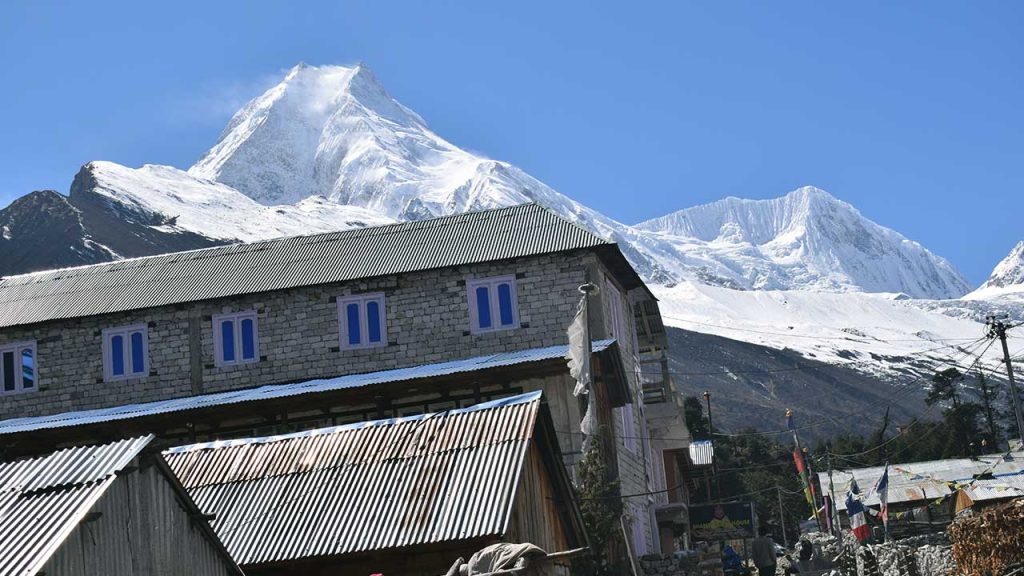
Food and accommodation on the Manaslu trek are available in all major trekking seasons, but what you experience can shift depending on the time of year. The basic system of teahouses remains in place and intact. However, you may find a change in the variety of the menu, room availability, and overall due to the change in weather and foot traffic.
Spring (March-May) and Autumn (September-November)
Spring and autumn are considered the best times to do the Manaslu Trek. During these months:
- Nearly all teahouses along the route are open
- Food menus are at their widest variety
- Fresh vegetables are more consistently available
- Transport of supplies runs more smoothly
- Rooms can fill up quickly in villages like Samagaun and Samdo
Because these seasons attract the highest number of trekkers, booking — especially during peak weeks—helps avoid last-minute room shortages. These months offer the widest variety of Manaslu trek food and the most reliable teahouses in Manaslu trek.
Winter (December-February)
Winter trekking is possible but comes with colder and harsher conditions, particularly above 3,500 meters.
- Some teahouses in higher villages may close temporarily
- Menu options become more limited
- Water pipes may freeze in extreme cold
- Bedrooms become significantly colder at night
Hot food is still available where lodges are operating, but flexibility is important. A proper sleeping bag and layered clothing from your Manaslu trek packing list become essential rather than optional.
Monsoon (June-August)
The monsoon season brings fewer trekkers to the region. While the upper sections of the trek receive less rainfall than lower elevations, conditions can still affect logistics.
- Teahouses remain open despite the rains
- Early sections of the trail may be muddy
- Supply transport may be slow due to heavy rains
- Food options on the menu can be slightly reduced
Despite these seasonal differences, the overall system of food and accommodation on the Manaslu trek continues to function year-round. As such, you need not worry about the availability of basic services. Instead, expect changes in the level of comfort, crowd size, and menu diversity.
Manaslu Trek Food and Accommodation: Final Thoughts
Manaslu trek food and accommodation are simple, reliable, and well-adapted to the remoteness of the region. You should not expect luxury in terms of these services. However, you can look forward to clean bedrooms, hot and nutritious meals, and a functioning teahouse system at every major stop. As altitude increases, the food options available on the menu may narrow down, and facilities may become more basic. But you need not worry as a trekker because the essentials remain consistent.
Understanding these realities helps you prepare for the trek properly. With realistic expectations, Manaslu trek food and accommodation support a safe and rewarding Himalayan journey.

FAQs
What are the rooms actually like on the Manaslu trek?
They are basic rooms usually featuring two single beds, a mattress, a pillow, and a blanket. There is no heating inside the room. The dining hall is usually the only warm place in the evening.
Do I need a sleeping bag?
Yes, especially above 3,500 meters. Nights get cold, and the blankets provided may not be enough on their own.
What do people usually eat every day?
Dal bhat becomes the regular choice for many trekkers. It’s filling and steady. You’ll also find noodles, fried rice, soups, and momo.
Is meat safe to eat?
It depends on the village and season. Many trekkers switch to vegetarian meals higher up because they are simpler and easier to digest.
How expensive is the Manaslu trek food and accommodation up there?
It gets more expensive the higher you go. Everything is carried in, so prices reflect the cost of transport.
Can I shower during the trek?
Yes, in many villages, but you will have to pay an extra amount for that. At higher stops, hot water can be limited.