
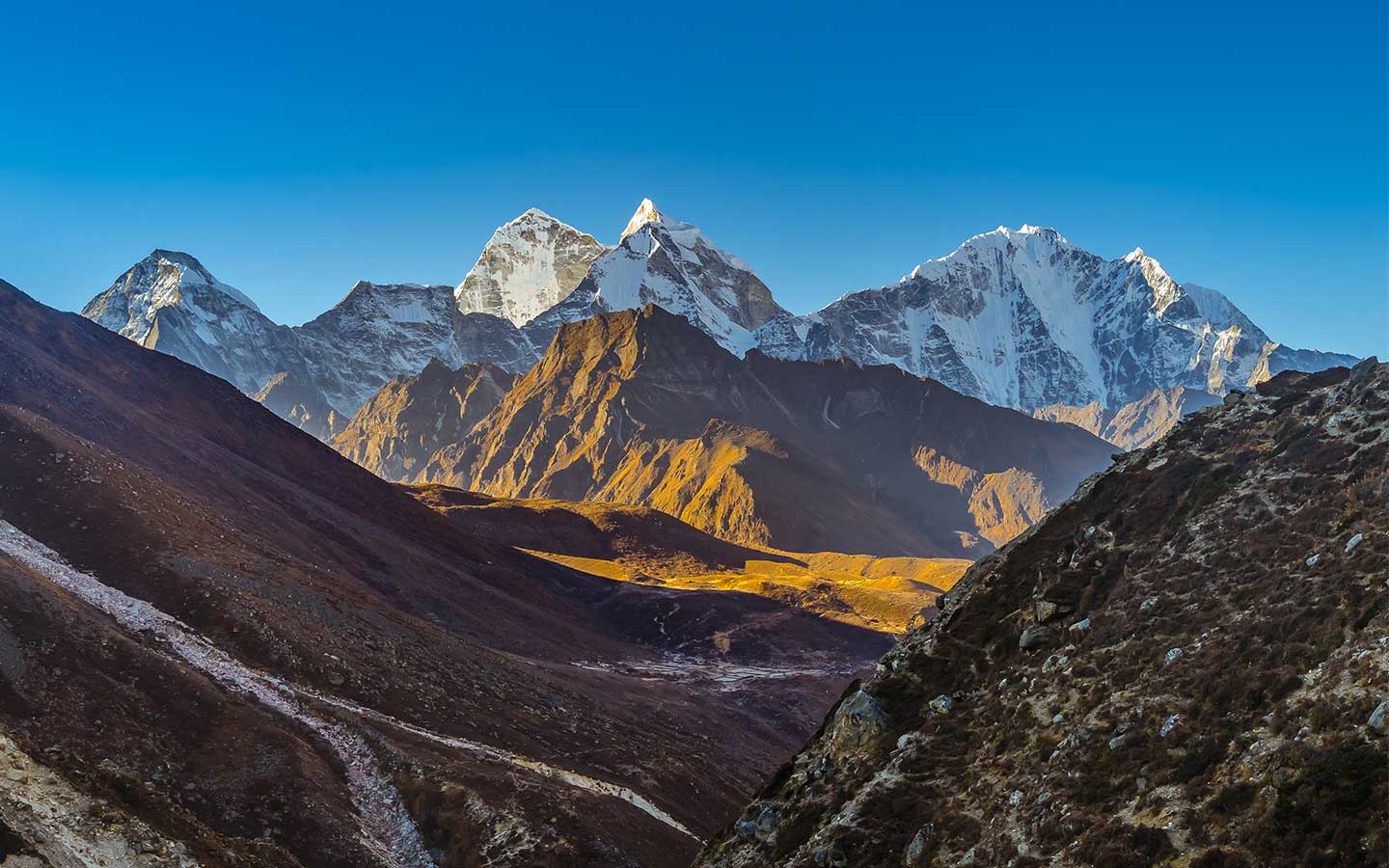


Overview
The Everest Base Camp trek is a 130km (80-mile) round-trip journey through Nepal’s Khumbu Valley, leading you to the foot of Mount Everest — the world’s highest peak at 8,848m. It’s one of the most iconic treks on earth, and for good reason.
Radiant Treks is a founder-led Everest specialist that offers this 15-day package. The company is run by Gokarna Khanal, who spent 18+ years working from porter to guide to founder in the Khumbu region before starting the company himself—so this isn’t a generic package; it’s built on real trail experience.
Our full-board EBC trek strikes a balance between acclimatization, dependable logistics, and an authentic Himalayan experience. You will start with a hotel stay in Kathmandu, fly into Lukla, then trek through Namche Bazaar, Tengboche, Dingboche, and Lobuche before reaching Base Camp (5,364m) and Kala Patthar (5,545m) for sunrise views of Everest.
Along the way, you will pass Sherpa villages, monasteries, and prayer-flag trails. Best trekked in spring and autumn, the EBC hike is moderate to challenging in terms of difficulty. And it doesn’t require prior climbing experience.
This package includes licensed guides, teahouse stays, meals, permits, altitude monitoring, and emergency evacuation support — with transparent pricing and flexible, customizable itineraries.
Want to upgrade your package?
We have: Everest Base Camp Trek with Helicopter Return or Luxury Everest Base Camp Trek with the best accommodation available in Kathmandu and Everest region.
You can also choose our 12 Days Everest Base Camp Trek (Kathmandu to Kathmandu Itinerary).
Why Choose This 15-Day Full-Board Everest Base Camp Package?
This 15-day Everest Base Camp itinerary is built for trekkers who want to focus on the trail and do not want to handle the logistics themselves. So, if you choose this package, here’s what we take care of for you:
We Handle the City Chaos: Land in Kathmandu, and someone’s already there to pick you up—airport transfers and 3 nights of hotel accommodation are sorted, so you are not stuck haggling over a taxi fare or hunting for a room after a long flight.
Zero Permit Stress: Your Sagarmatha National Park Permit and Khumbu Pasang Lhamu Rural Municipality Permit are arranged well before you land. That means no waiting around at checkpoints and no last-minute paperwork headaches once you’re already on the trail.
Built-In Recovery Time: Those first two days in Kathmandu aren’t just sightseeing filler—they give your body a chance to adjust to the time change and give you room to rent any last bit of gear before the real trek begins.
The Full Classic Route: You get the complete journey — Lukla to Namche Bazaar, Tengboche, Dingboche, Lobuche, and on to Base Camp and Kala Patthar — with a guide who’s walked this exact route dozens of times.
Looking for something shorter or lighter on the budget? Our 12-Day Everest Trek (Kathmandu to Kathmandu) trims the schedule for trekkers on a tighter timeline.
15-Day Everest Base Camp Trek Cost Explained
The 15-day Everest Base Camp package starts at $1,350 per person for groups of 5 or more, rising to $1,750 for solo trekkers. Shorter itineraries start around $1,190, while the luxury version of this EBC trek can run up to $3,390.
The price difference between our packages is based on the same factor as always: how much is handled for you. Your Kathmandu hotel is pre-booked and paid for, your Lukla or Manthali flights are arranged in advance, and a full day is set aside purely for trek preparation. That means once you land, your only job is to trek — not to manage the details around it.
Difficulty Level: A Moderate-to-Challenging High-Altitude Trek
Is the Everest Base Camp trek hard? It’s rated moderate to challenging, and here’s what actually makes it that way:
- Climbing above 5,000m drops oxygen levels noticeably, making even flat sections feel harder than they look.
- You’ll walk 5 to 7 hours a day on trails that shift from stone steps to loose, rocky terrain the higher you go.
- Temperatures fall well below freezing once you pass Dingboche, especially at night.
- The route has no technical climbing, but the number of consecutive high-altitude days is significant.
- Weather in the Khumbu region can shift fast, sometimes within the same afternoon.
- Evacuation from higher points like Gorak Shep takes real time if something goes wrong, which is part of why acclimatization matters so much.
You don’t need prior mountaineering experience to complete this trek, but you do need reasonable fitness, and you need to respect the altitude.
Why Our Itinerary Gives You a Real Shot at Reaching Base Camp
We don’t skip the rest days. Namche Bazaar on Day 5, Dingboche on Day 8—these aren’t filler days; they are the reason most of our trekkers actually make it to the top.
We don’t rush the climb. Instead of squeezing in extra distance to save a day, we keep the daily targets sensible. A slow and steady walk genuinely beats a fast and reckless hike up here.
Your guide is watching, not just walking with you. At every stop, they are checking how you are doing, catching early warning signs before they turn into real problems, and adjusting the pace if someone in the group needs it.
EBC Trek Preparation Day
On Day 2 of your trip, you and your guide spend the entire day getting ready — no sightseeing pressure, just going through everything before Lukla.
Gear gets checked properly. Boots, layers, cold-weather gear — if something’s missing, like a down jacket or a sleeping bag, we lend you ours. You bring it back after the trek.
You get to actually ask questions. A lot of the battle at altitude is mental, not physical. Having a full day to talk through what’s coming, with someone who’s done this dozens of times, makes a real difference once you’re actually out there.
Food and Sleeping for 15 Days
Kathmandu (Days 1, 2, and 14): You’ll stay in a 3-star hotel and will get a room on a twin-sharing basis. There will also be facilities for hot showers, Wi-Fi, and full-board meals—a comfortable base before and after the trail.
On the Trail (Days 3-13): You will stay in local teahouses, sharing a room with another person, and the accommodations will become more basic as you climb higher. Lower villages like Phakding and Namche offer relatively cozy rooms; by the time you reach Gorak Shep, expect simple beds and shared, often squat-style, bathrooms.
What You’ll Eat: Full-board meals are included throughout—breakfast, lunch, and dinner. Dal bhat (rice, lentils, and vegetable curry) is the most reliable option at altitude, made fresh daily. Menus also offer noodles, momos, and pasta, though it’s worth sticking closer to simple, plant-based meals the higher you climb.
Getting to the Trailhead: Kathmandu to Lukla
The Standard Way: Your package includes a round-trip flight between Kathmandu (or Manthali) and Lukla—a short, scenic 30-35 minute flight that also serves as the official start of your trek.
The Reality: Lukla flights are famously weather-dependent. Delays happen, especially during peak season, which is precisely why we build a buffer day into the schedule and handle rebooking for you if a flight gets pushed.
The Peak-Season Shift: During spring and autumn, flights often operate out of Manthali Airport in Ramechhap instead of Kathmandu to manage air traffic. If that applies to your dates, we arrange the road transfer to Ramechhap as part of your package — one less thing for you to think about.
Guides, Porters, and Group Size
Guides (Included). Most treks are led by our founder, Gokarna Khanal, or by someone he’s trained personally—18+ years of firsthand experience on this exact route, licensed and fluent in English.
Porters (Optional): Porter service is available for $240, shared between two trekkers. While not mandatory, most trekkers find it makes the daily walk noticeably easier.
Group Size: For larger groups, you will typically be supported by both a senior and a junior guide, along with porters matched to your group size—so there’s always someone experienced nearby. Having multiple staff members also allows the group to walk at a comfortable pace without anyone feeling rushed or left behind. In addition, this approach maintains high safety standards in remote mountain terrain.
Solo Traveler? No problem. You can trek with a private guide or join other trekkers booked for similar dates if you’d prefer company on the trail. Joining a small group is a fantastic way to reduce costs. It also lets you meet fellow travelers from around the world and enjoy the experience together while still receiving the same level of professional guidance and support.
Take a virtual flight over the Himalayas and explore the unseen details of the EBC Trek route in 3D before starting the actual journey.
Why Choose Radiant Treks for the Everest Base Camp Trek?
- Real mountain experience: Our founder started as a porter and spent years working up to a guide. We run things based on real, firsthand experience.
- Guides who know the trail: You’ll hike with licensed guides who have done the Everest route dozens of times. They know the pacing, the stops, and how to handle changes.
- All rides booked: We take care of your airport pickup, the drive to Manthali, and your Lukla flight before you even arrive. You don’t have to deal with any of the travel logistics.
- Beds are confirmed: We book your Kathmandu hotel and all the trail teahouses way ahead of time.
- All trail meals included: Your breakfast, lunch, and dinner are covered. Just show up, eat, and fuel up for the hike.
- No-rush pace: We build in proper rest days so you can hike at a normal, steady speed. It gives your body a real chance to adjust to the altitude.
- Our team is taken care of: We cover all guide salaries, insurance, food, and lodging. There are no awkward, hidden crew costs for you on the trail.
- No waiting in permit lines: We collect all your trek permits and paperwork ahead of time. You just walk right through the checkpoints.
- We lend you the heavy gear: You need not waste money buying a down jacket, sleeping bag, or duffel. Borrow ours for free.
- First-aid & emergency backup: Your guide carries a full medical kit and knows how to use it. If anything goes wrong, then we can call in a chopper fast for evacuation.
- Zero hidden fees: What you see is precisely what you pay—no surprise costs.
- Trip keepsakes: Once we get back, you’ll get a custom t-shirt and a trek certificate to take home.
Itinerary Details
Taking your first flight to the capital city of Nepal, Kathmandu, you dip into the colorful cultural heart of this country. We transfer you into your accommodation where you’ll have the opportunity to explore the iconic landmarks such as Swayambhunath Stupa or Durbar Square, whilst absorbing Nepal’s inherent heritage.
You can rest for the upcoming days or stroll around the country to engage with locals and cultural traditions. This is the official start of your Everest Base Camp Trek itinerary.

You will prepare for the trek today. Our Everest Base Camp Trek guide will brief you about the trek, and the gear check needed for the Everest trekking. Later, if you are free, you can wander through Thamel, Kathmandu’s lively tourist hub of trekking shops, cafes, markets, and so on. Many trekkers use this time to rent gear, which helps lower the initial Everest Base Camp Trek cost compared to buying everything new.
There are cultural explorations at Pashupatinath Temple and peaceful places like the Garden of Dreams. This is a low effort day, so prepare yourself and the mentality for the EBC trek.
Elevation Gain: 350 meters (Lukla to Phakding)
Duration: 3 to 4 hours
Distance: 130 km (From Kathmandu)
You start your trek with a flight from Kathmandu to Lukla. Flight to Lukla airport, also called the gateway to the Everest region offers the stunning first glimpse of Mount Everest. If you are in peak trekking seasons like spring and autumn, you can take a flight to Manthali airport first and then to Lukla to avoid the traffic, this Lukla flight diversion during peak season helps manage air traffic congestion. This Lukla to Everest Base Camp Trek section officially begins as you land. You gradually make your way towards Phakding, a beautiful Sherpa village.
It is a fairly easy trek where you can take in the views of mountains and high altitude surroundings. You’ll have views of tall peaks and have an exciting moment when crossing over the Dudh Koshi River with suspension bridges. Phakding is a perfect beginning for trek to Everest, putting you at ease with cozy teahouses and a serene riverside atmosphere.
About Phakding:
Phakding is a charming Nepali village on the EBC Trek, at an altitude of 2,610m. It had been historically a rest point for traders and pilgrims before becoming an indispensable stepping stone for trekkers because of its perfect location and moderate height.
Here, you get to see the lovely views of the Dudh Koshi River, prayer flags on the suspension bridges, and beautiful dense forests. The mani walls with Tibetan inscriptions and terraced farmlands are some of the most beautiful things to see. You have a chance to see the yak and donkey caravans.
The welcoming Sherpa community in Phakding makes the visit more attractive with comfortable teahouses, and traditional cuisines. It is a memorable stop on the Everest trekking route because of its cultural richness and natural beauty.
Elevation Gain: 850 meters
Duration: 5 to 6 hours
Distance: 10 km
Walking alongside Dudh Koshi River, you will ascend gradually from Phakding to Namche Bazaar. There’ll be lots of suspension bridges like the Hillary Suspension Bridge and beautiful pine and rhododendron forests. The trail gives you a clear look at Everest and all of the towering peaks including Thamserku. Soon after some ascents, you will reach the lively Namche Bazaar, a Sherpa village perched on a mountainside. This is an important stop in the Everest Base Camp trek itinerary for acclimatization. You will spend the night here, and explore markets, cafes, and shops, and interact with local people around. It is a tourist hub of the Khumbu region with thrilling views of Everest.
About Namche Bazaar:
Namche Bazaar is a lively town in Nepal’s Khumbu region, which also serves as a gateway into Everest at 3,440m (11,286ft). It was traditionally a trading post where locals would trade their yak cheese, butter, and salt for agricultural goods from lower altitudes, as well as into Tibet. It was also an important hub for merchants and locals where they could exchange goods.
Sir Edmund Hillary and Tenzing Norgay’s 1953 Everest expedition changed Namche. After their expedition, Namche developed to meet the needs of visitors as trekking and climbing became popular, providing places to stay, bakeries, and shops. It also became the administrative center for the Khumbu region, and likewise the headquarters for the Sagarmatha National Park.
It has a Sherpa Museum, and Namche Monastery, where you can have markets selling local goods and trekking gears. Near the Khumjung village, a small monastery with a Yeti scalp and Hillary’s School are seen. Namche is a must visit destination with rich history and amazing views.

Today will be our first needed acclimatization day to have a rest before reaching higher altitudes on the EBC trek. Today, you won’t be lying around in one place, rather you will explore to adjust your body to a low amount of oxygen.
You will first hike to Everest View Point Hotel where you can get amazing views of Everest, Lhotse, and Ama Dablam. You will also have a chance to visit the Sherpa Museum, a place to have some insight into the area’s mountaineering history . This is a classic day for anyone on a guided Everest Base Camp Trek.
About Hotel Everest View
Hotel Everest View in Sagarmatha National Park, located at 3,880m (12,730ft), is a unique location that provides a 360 degree view of the Himalayas, including Mount Everest. It opened in 1971 and today sits as the highest placed hotel in the world listed in the Guinness Book of World Records (2004). The idea for the hotel surfaced in 1968 when Takashi Miyahara was mesmerized by the Everest range from Syangboche.
It was a monumental task to build the hotel out there in such a remote location. Porters and helicopters helped to transport the materials, and the Sherpas from the local area helped with construction. The hotel, designed by Japanese architect Yoshinobu Kumagaya, sits beautifully between its surroundings.
It provides wide views of Everest, Lhotse, Khumbutse, Nuptse, Thamserku, Kangtega, Changtse, and Ama Dablam. The place is filled with rhododendron forests, fir trees, and shrubs, that gives the sense of beauty.
Elevation Gain: 600 meters
Duration: 5 to 6 hours
Distance: 10 km
After leaving Namche Bazaar, the trail takes you through rhododendron forests and charming villages to incredible views of Everest, Nuptse, and Lhotse. At the midway point, the journey reaches Tengboche, where the famous Tengboche Monastery, the spiritual center of its region, is located. This spiritual site is a favorite for many on the Everest Base Camp hike.
The monastery is at an elevation of 3,867 meters (12,687 feet) and provides wonderful views of Ama Dablam and Everest. It’s a serene and spiritual experience adding the monks’ evening prayers to the day. It is also a common spot for celebrating festivals such as Mani Rimdu, Holi, and Maghe Sankranti, which you can experience if lucky. Tengboche is a source of natural beauty and cultural richness and comes into the trek highlight.
About Tengboche
Tengboche also known as Thyangboche is a picturesque village in the Khumbu region and is known for its view of Mount Ama Dablam, Everest, Lhotse, Nuptse, Thamserku, and Chamlang. It’s a great stopping place on the EBC trek, located between Namche Bazaar and Pheriche.
What’s famous about Tengboche trek is the Tengboche Monastery. The Tengoche Monastery is also called Dawa Choling Gompa, located at 3,867 meters. This monastery or gompa is the largest in the Khumbu region built back in 1916. It is most significant for the culture and spirituality due to the Guru Rinpoche “precious one” who lived there, making it one of the most popular monasteries.
Worshipping to Guru Rinpoche, Mani Rimdu festival is celebrated during the first week of November. This festival is celebrated by masked dances, prayers, and feasts.
Tengboche monastery was built in 1916 by Tibetan Lama named Lama Sangwa Dorje. Unfortunately, the monastery was destroyed by fire in 1980s, but it was rebuilt again in 1992, and is currently a spiritual spot for Sherpa and tourists.
The tranquil atmosphere, surrounded by beautiful pine forest and rhododendron blooms, and the closeness to majestic Himalayan peaks attract many visitors , who are a part of EBC trek, here
Elevation Gain: 500 meters
Duration: 5 to 6 hours
Distance: 9 km
This trek from Tengboche to Dingboche gets you through an amazing rhododendron forest, with air reeking of nature’s bounty. The bridges from one side to the other of the Imja Khola Valley are sturdy suspension bridges that gently sway above the river below, adding a note of adventure to your trek.
The trail continues, becoming steeper until you pass yak pastures and main walls to divide farmland. Dingboche is a peaceful and remote area, where you get a fabulous view of Ama Dablam, known as the ‘Shark’s Fin,’ with the pyramid-shaped mountain’s peak towering over the horizon. Reaching Dingboche marks the point of your Everest Base Camp Trek itinerary.
About Pangboche Village
Pangboche Village, located at 3,985 meters in the Khumbu region provides amazing and the most beautiful scenery of the Himalayas. It is located in the Imja Khole Valley, approximately 3 kilometers northeast from Tengboche where you can see surrounding towering peaks such as Ama Dablam, Everest, Thamserku, Cho Oyu, and Lhotse. It’s picturesque place that has high mountain meadows and bright rhododendron forests blooming red, pink, and white.
Pangboche is also known for its Pangboche Monastery, a religious spot founded in 17th Century is the oldest Sherpa monastery in the Khumbu region. Pangboche is also the base camp for Mount Ama Dablam, where trekkers can enjoy the beauty of pyramid shaped Ama Dablam.
In the early morning, you can see the golden hues of the sun rays over the peaks and sunsets that make the surrounding glow. Since it is located in Sagarmatha National Park, a UNESCO world heritage site, you can see various wildlife like Himalayan Tahr, musk deer, snow leopards. There also lovely bird like Himalayan Monal, and pheasants. It is one of the most sacred spot where trekkers can enjoy and reflect on their adventure.
About Dingboche
Dingboche, a pretty Sherpa village at 4,410m, which is one of the most commonly visited stops during the trek to Everest Base Camp. It is famous for its lovely views of huge peaks like Ama Dablam, Lhotse, Island Peak. The impact of Dingboche is due to its being the last major settlement on the route between which trekkers can rest and acclimatize.
Sherpas also make this village a cultural hub. The stone walled fields give a flavor of local life here. After reaching Dingboche, you can choose to undertake acclimatization hikes to both Nangkartshang Peak, and Chhukung Ri, where 360 views of Himalayan giants are provided. The facilities included internet cafes, libraries, accommodation, and Hotel Good Luck, a popular choice at Dingboche.
Today, you will acclimate to the altitude, and enjoy the environment of Dingboche. You can take short hikes up to Nagarjun Hill, where the views of the Khumbu Valley will bring an amazing moment.
Dingboche is a lovely, quiet village of stone built houses with yak herders sometimes seen tending to their animals. Village life here’s simple, and you can see the local’s everyday life. We had a delicious meal at a tea house and talked with fellow trekkers. Resting here is vital for maintaining a healthy Everest Base Camp Trek elevation profile.
Elevation Gain: 600 meters
Duration: 5 to 6 hours
Distance: 9 km
From Dingboche to Lobuche, the trail becomes rougher, across rocky ground and glacier moraine. On the way, you’ll stop by the Thukla Pass Memorial, where there exists the memorial of climbers who didn’t make it to summit Everest.
Lobuche provides the stunning view of Khumbu Glacier and as you proceed, you feel the Everest drawing nearer. Even if Lobuche is small, you need to rest here before the push of the Everest Base Camp hike.
About Lobuche
Lobuche is a small village in the Khumbu region of Nepal, near Mount Everest. It was traditionally used as a summer residence of Himalayan herders, and it still has strong cultural value. Lobuche is also largely popular for mountaineers due to its climbing peaks such as Lobuche East, first submitted on April 25, 1984 and Lobuche West in 1955.
It’s an important stop for trekkers who want to reach Everest Base Camp, with stunning views from surrounding Himalayan peaks including Nuptse, Pumori and Everest.
You will also pass by the famous Thukla Pass Memorial. At 4,600 to 4,800 metres, the Thukla Pass memorial commemorates climbers and Sherpas who died trying to reach the summit of Everest. Stones, plaques, mani stones and prayer flags are at this site bearing witness to the lives lost in pursuit of the summit.
Scott Fischer is an American mountaineer who died in 1996, one of the most notable commemorations. It is a memorial to these people’s bravery, ambition and sacrifice. A reminder of the extreme risks, and the unpredictable weather, taken on by those trying to conquer the world’s highest peak.
Elevation Gain: 500 meters (Lobuche to Gorak Shep)
Duration: 7 to 8 hours
Distance: 15 km (round trip)
Today you will trek from Lobuche to Gorak Shep, an adventurous day before the last settlement before you reach the highlight of the Everest Base Camp Trek. The route is hard, with crumbling stones, and glaciers are tough, but views up to Eveset and Nuptse make it worthwhile. On your way to Gorak Shep, you will begin to feel as if you are at the base of the highest peak in the world.
You rest for a while and go directly to Everest Base Camp. Finally, reaching the famous Everest Base Camp, the trail rapidly becomes increasingly rocky as you traverse more and more moraines and glaciers. Being at the destination of the Everest Base Camp is Trek a surreal and triumphant experience. You will see the beautiful surrounding mountains like Lhotse and Nuptse and the famous Khumbu Icefall.
After enjoying the breathtaking view for a while, you’ll start trekking back to Gorak Shep, where you can rest and reminisce about your achievement.
About Gorak Shep: Sitting at 5164 meters (16,942 ft) on an ancient lake bed, Gorakshep is a small village which is the last stop for trekkers on the way to Everest Base Camp. It holds several basic lodges for trekkers and mountaineers with facilities of only simple beds and beddings.
Although Gorakshep has expanded considerably over the last few years, it is still offering only primitive services in comparison to the more developed Namche Bazaar. Usually visitors come here for one night before Everest Base Camp and regardless of where they are from the wide view of Everest, Nuptse, Pumori makes for a great time for most.
Elevation Loss: 1200 meters (Gorak Shep to Kalapathar)
Duration: 7 to 8 hours
Distance: 16 km
You start an early morning hike to Kalapathar, the highest altitude on the trek. This is often considered the visual highlight of the EBC trek. You can face issues related to altitude sickness here, so take proper rest. This hike up the steep hill to Kalapathar’s summit starts before dawn, where you’ll have wide views of Mount Everest, Lhotse, Nuptse, and the surrounding Himalayan range.
The golden rays of the early morning sun will be over the mountain ranges, giving one of the most mesmerizing moments of the trek.
You soak in some of the views and start descending towards Pheriche. The trail becomes easier as you descend to the valley, instead of the harsh high-altitude terrain. When you descend, you pass through rhododendron forests, and by the time you get to Pheriche, you feel like the landscape has become more inviting and more restful after a few very strenuous days.
About Pheriche: Pheriche is a traditional Nepali village in the Khumbu region, set up as a resting place for trekkers and climbers heading down from Everest Base Camp. The village’s growth is dependent on trekking tourism with guest houses, a health clinic and trek shops that provides visitors with the area’s cultural and natural beauty.
It has various health clinics operated by Himalayan Rescue Association, and is also popular for fun activities like rock climbing, paragliding, and rafting.
Elevation Loss: 545 meters
Distance: 19.5 km
Duration: 7 to 8 hours
On today’s trek, you return to Namche Bazaar, a familiar spot that feels like a sweet home after the hard days at higher altitudes. The return leg of the Everest Base Camp Trek itinerary brings you down the valley, through peaceful forests, and several suspension bridges as you walk. The Dudh Koshi goes along the trail of your descent.
You will go through the same route again, getting some of their traditions and cultures within you. Have your fatigue taken care of by resting in this beautiful atmosphere filled with cafes, shops, and markets.
Elevation Loss: 500 meters
Duration: 7 to 8 hours
Distance: 19 km
The trek’s final steps start as you return to Lukla. It’s a steep path down the dense forests, alongside river crossings and the same amazing views of the Himalayas. Before you start from Namche, get souvenirs of your preference that serve as a memory of this great achievement. But keep in mind that these personal extras are not part of the standard Everest Base Camp trek cost. Reaching to Lukla, you have marked the end of your trail and completed the awesome trek to Everest Base Camp.
About Lukla: Lukla is a tiny town in Nepal’s Khumbu region, and the entry point into Mount Everest. Lukla’s history goes back to the early 1960’s when Sir Edmund Hillary, the first person to summit Everest, built the Tenzing Hillary Airport making the town the center of trekkers and climbers.
Located at an altitude of 2,860 meters, the short runway of only527 meters makes the airport one of the most exciting in the world, with often difficult weather conditions that sometimes lead to a delay. Pilots are particularly excited about the airport’s approach given how the airport passes through steep mountain ranges landing with a sharp incline or descending with a steep approach.
Wide views of Everest, Lhotse, Nuptse, Lobuche, Kusum Kangaru, Kange Ri, and Pikey Peak are the main highlights from Lukla, which is a legendary airport in the world. It is a lively village and the starting point for Everest trekking and Gokyo Lake Trek, which gives a taste of Sherpa culture. Lukla is full of adventure, culture and mountain views combined together bringing an unforgettable experience to trekkers.
Elevation Loss: 1460 meters
Flight Duration: 35 minutes
Distance: 130 km
You take yet another flight back to Kathmandu from Lukla. This is a time to take in the final views of the Everest, Nuptse, Lhotse, and Sherpa villages such as Namche Bazaar, Tengboche, and Dingboche. You feel a sense of accomplishment returning after completing one of the world’s most iconic treks.
After you arrive in Kathmandu, rejuvenate at the local spas of Thamel. You can also gather souvenirs and visit the night streets of Thamel. Here, we officially complete our EBC trek, a once in a lifetime experience.
On the 15th day, the last day of our Everest Base Camp Trek itinerary, Radiant Treks’ team will bid farewell to you. Today you will depart to your home land, or stay a while more in Nepal extending your time here, and visit a few more of the memorable places of the country.
Trek Cost Details
Cost Includes
- Private airport transfers for pick-up on arrival and drop-off on departure
- Three nights' accommodation at a 3-star hotel in Kathmandu
- 11 nights' stay in teahouses or hotels along the trekking route, twin-sharing basis
- Full-board meals (breakfast, lunch, and dinner) including one seasonal fruit
- Experienced and professional guide
- Emergency rescue services included; actual rescue costs must be covered by the trekker or insurer
- Salaries, equipment and insurance coverage for guides
- Round-trip flight between Kathmandu/Manthali and Lukla
- Drive to and from Manthali for Lukla flights if needed
- Trekking gear: duffel bag, sleeping bag, and down jacket (should be returned to the company after the trek)
- Company-branded T-shirt
- First-aid kit (carried by the guide)
- Trek completion certificate to celebrate your achievement
- Everest Base Camp Trek Permit: Sagarmatha National Park Permit and Khumbu Pasang Lhamu Rural Municipality Entry Permit
- Printed Everest Base Camp Trek route map
- All applicable government taxes and official charges
Cost Excludes
- Porter service at extra cost of $240 (to be shared among two trekkers)
- Everest Base Camp Trek insurance (look for policy which covers emergency rescues and high-altitude trekking)
- Personal expenses during the trek, including hot showers, device charging, Wi-Fi
- Drinks of all types (tea, coffee, mineral water, soft drinks, alcoholic drinks, etc.)
- Extra baggage charges for flights (maximum 15 kg, including hand luggage for Lukla flights)
- Personal trekking gear and equipment
- Tips for guides and porters
- Sightseeing or guided tours in Kathmandu
- Costs arising from unforeseen circumstances such as extreme weather, natural disasters, political events or flight delays
Frequently Asked Questions
Everest Base Camp Trek Overview
This is the hike to the foot of Mount Everest. On the way, you will walk through Sherpa villages, cross high suspension bridges, pass old monasteries, and walk alongside glaciers before reaching base camp at 5,364 meters. Trekkers also head up to Kala Patthar (5,545 meters) for the absolute best close-up views of Everest.
You don't need any climbing skills or mountaineering gear for this trek—it’s a walk, not an expedition. With decent fitness, good preparation, and time to adjust to the altitude, it’s one of the most rewarding adventures in the Himalayas.
The standard Everest Base Camp Trek takes about 12 to 15 days from the time you land in Kathmandu to when you fly home. The actual hiking part usually lasts 11 to 12 days, depending on your route and how you space out your altitude acclimation.
If you are short on time, you can find shorter itineraries that feature a helicopter return from different sections of the trek. Meanwhile, trekkers looking for a longer adventure often add side trips to the Gokyo Lakes.
Everest Base Camp is in Nepal’s Khumbu region—it sits inside Sagarmatha National Park, at 5,364 meters. To get there, you need to fly into Lukla and hike up through classic Sherpa towns like Namche Bazaar, Dingboche, and Lobuche. The trail follows the Dudh Koshi River valley. You start in green forests before climbing straight into rugged and high-altitude glacial terrain.
The EBC trek is a moderate-to-challenging endeavor. It isn’t a technical climb, but you are hiking 5 to 7 hours a day on steep, rocky trails.
The hardest part isn’t the distance, though—it’s the altitude. Once you get past Dingboche, the thin air makes it harder to breathe and slows you down.
Yes. Many first-time trekkers do the Everest Base Camp Trek without previous high-altitude trekking experience. The trick is preparing your body a few months before the trek with cardio or stair-climbing to build leg stamina. As long as your itinerary has proper acclimatization days built in, you'll be fine.
The highest point of this hike is Kala Patthar at 5,545 meters (18,192 feet). While Everest Base Camp itself sits a bit lower at 5,364 meters, hikers head up Kala Patthar because it gives them the absolute best views of Mount Everest's summit.
Actually, you can barely see the summit of Mount Everest from Base Camp because the massive Nuptse ridge blocks the view. You mostly just see the Khumbu Icefall. For that classic, unobstructed view of Everest, you have to hike up Kala Patthar, a viewpoint above Gorakshep that most trekkers hike to early in the morning.
The best parts are definitely the mountain views and diving into Sherpa culture. You’ll hit classic stops like Namche Bazaar and Dingboche, cross sketchy suspension bridges, and see the Tengboche Monastery. But the real highlights are a wild flight into Lukla, actually standing at Everest Base Camp, and catching the sunrise over Everest from Kala Patthar.
Expect to hike around 5 to 7 hours a day. Some days are shorter, but pushing through higher spots like Lobuche, base camp, and Kala Patthar feels much longer because the thin air slows you down. The rule is to keep a slow, steady pace and take breaks.
The trek follows well-established mountain trails, but the terrain changes throughout the journey. You start with forests, stone steps, and suspension bridges, but higher up, it gets rocky, dusty, and totally exposed. Depending on when you go, you will hit ice or loose scree near the glaciers. So, solid trekking boots are a must.
The Everest Base Camp trek with Radiant Treks takes you to South Base Camp in Nepal, at 5,364m, reached on foot through the Khumbu Valley. There's also a North Base Camp in Tibet, sitting slightly lower at around 5,150m, which is accessible by vehicle but requires stricter Chinese travel permits. South Base Camp is the more popular route for trekkers since they reach it the traditional way, on foot, through Sherpa villages, rather than by road.
No, you won't come anywhere near it. The "Death Zone" is the name climbers give to anything above 8,000 meters, where there's so little oxygen in the air that your body simply can't function there for long, no matter how fit you are. It's a real concern for people summiting Everest itself, but it has nothing to do with the Base Camp trek. You will top out at Kala Patthar, 5,545 meters, and Base Camp itself sits a bit lower at 5,364 meters—both a long way below that 8,000-meter line. That doesn't mean altitude isn't something to take seriously up there; it absolutely is, which is precisely why the itinerary builds in proper rest days at Namche Bazaar and Dingboche before you climb any higher. But the Death Zone itself? That's someone else's problem, not yours on this trek.
Best Time, Weather & Temperature
Spring (March to May) and Autumn (September to November). The weather is usually more stable during these seasons. Likewise, skies stay clearer, and mountain views are much better. Flights to Lukla are also more reliable during these times of the year.
- Spring: Mild temperatures, blooming rhododendrons, greener trails, and very good mountain views. Days are usually comfortable for walking, but nights still feel quite cold once you get higher up the trail.
- Autumn: Clear skies, dry trails, and some of the best mountain views of the year. This season is also the busiest time of year on the trail, especially through October and November.
The weather on the Everest Base Camp Trek changes a lot with both season and altitude. Lower villages like Phakding and Namche are usually less cold, but temperatures drop quickly once you start moving higher toward Lobuche, Gorakshep, and Kala Patthar. Early mornings and nights are always the coldest part of the day.
Seasonal Weather and Temperature on the Everest Base Camp Trek
| Season | Weather & Temperature |
| Spring | Great walking weather, usually between 10°C and 20°C during the day. The lower forests are really green and full of blooming rhododendrons. It still freezes at night higher up, often hitting around -5°C. |
| Autumn | Cool, crisp, and dry, with days around 8°C to 18°C. This is your best option for completely clear mountain views. Nights get pretty freezing at high altitudes, easily dropping below 0°C. |
| Winter | Very cold with plenty of snow and icy trails higher up. Days stay chilly between 0°C and 10°C, while nights are brutal, sometimes plummeting down to -20°C. |
| Monsoon | Expect lots of rain, cloudy skies, and muddy, slippery trails on the lower sections. The valleys stay warm at 12°C to 22°C during the day, while the nights higher up are around 0°C to 5°C. |
Daytime temperatures on the Everest Base Camp Trek are usually comfortable in spring and autumn, especially in lower villages like Phakding and Namche. It gets much colder once you move higher toward Lobuche, Gorakshep, and Kala Patthar. Nights and early mornings are always the coldest part of the trek.
Yes. Temperatures often go below freezing once you get higher on the EBC trail, especially around Gorakshep and Kala Patthar. During colder nights, it is normal for water bottles left outside the sleeping bag to freeze. Winter temperatures can become much harsher, particularly in exposed areas above Dingboche. Winter temperatures can sometimes fall close to -20°C in exposed areas.
Most trekkers deal with at least some wind once they get higher on the Everest Base Camp trail. Snow is more common during winter and colder months. This is especially true around Lobuche, Gorakshep, and Kala Patthar. During monsoon season, the lower parts of the trail can get muddy after rain.
The weather in the Everest region can change completely without warning. You can easily start the morning with clear, sunny skies and end up dealing with heavy clouds, wind, or snow by the afternoon. This becomes a common pattern, especially once you get higher up the trail. Lukla is especially famous for this kind of unpredictable weather, which is the exact reason why flights get delayed or canceled so often during the trekking season.
It is generally safe because light rain or snowfall is fairly normal on the Everest Base Camp Trek. Usually, it does not stop people from walking. Some sections get slippery, especially higher up near Lobuche and Gorakshep, so trekkers normally just move more carefully. Heavy winter snow can sometimes make the trail harder for a while.
Yes, definitely. Some mornings are completely clear, while on other days clouds hide the mountains for hours. Views are usually best early in the day, before clouds start building later in the afternoon.
October and November in autumn offer the absolute best chance for clear mountain views. Once the monsoon rains clear out, the autumn skies stay incredibly crisp and blue. Spring is another fantastic option for high visibility, though clouds do tend to roll in by the afternoon—making early mornings your best bet for catching those unobstructed peaks.
That is possible as weather delays are pretty common in the Everest region, especially around Lukla. Flights sometimes delay when visibility becomes poor, and heavy snow can slow trekking higher up the trail. That is why many people keep one or two extra days in their itinerary.
It is not impossible, but both seasons are tougher. Winter is colder with more snow higher up. Likewise, the monsoon brings rain, muddy trails, and more clouds. The advantage is that the trail feels much quieter because there are fewer trekkers around.
Cost, Booking & Trip Policies
Radiant Treks’ local team, led by Gokarna Khanal, operates the Everest Base Camp Trek. He has more than 18 years of trekking experience and has guided in the Everest region many times. The company also works with experienced trekking guides and support staff from different Himalayan regions of Nepal.
Radiant Treks operates Everest Base Camp Trek departures regularly during the main trekking seasons. Even for smaller groups, the company tries its best to run the trek as planned unless weather, flight issues, or other unexpected situations create problems in the Everest region.
The success rate for the Everest Base Camp trek is actually really high. Most people make it to the Kala Patthar and the EBC because the standard itineraries are built around slow, gradual acclimatization to the altitude. As long as you pace yourself, hike with experienced guides who know the terrain, and take care of your body, it's a very achievable trek.
The trek is planned with acclimatization days in places like Namche Bazaar and Dingboche instead of going higher too quickly. Taking those extra days usually makes the climb toward Everest Base Camp feel easier once the altitude starts increasing more seriously. That slower pace matters a lot on the Everest Base Camp Trek because altitude usually becomes harder after Dingboche.
The standard Everest Base Camp Trek package costs around $1,350 per person. Shorter treks to the Everest Base Camp are cheaper. But luxury packages and helicopter return trips cost more. Prices at Radiant Treks start at about $1,190 for shorter itineraries. They can go up to around $3,390 for the luxury Everest Base Camp Trek.
Radiant Treks runs the Everest Base Camp Trek directly from Nepal with its own local team. For that reason, the company does not have the same overseas operating costs that many international operators include in their pricing.
Yes, sometimes the costs of the Everest Base Camp Trek can be a little different for Indian travelers. The price isn't fixed. And that is because flight fares, permit fees, and other local travel expenses tend to influence it.
The package covers your round-trip flights between Kathmandu and Lukla. Likewise, we include all your required trekking permits and your hotel stays in Kathmandu. It also takes care of your meals while you are out on the trail. It also includes airport pickup, drop-off, and the trekking guide. Likewise, Radiant Treks provides a sleeping bag, down jacket, and duffel bag (returnable). But you will still need to cover personal expenses like trekking gear, travel insurance, tips for the guides, and extras like Wi-Fi or hot showers at the teahouses, as they are excluded.
Before booking any Everest Base Camp trek, whether with us or anyone else, make sure the package includes: a licensed, experienced guide; porter service or the option to add one; your domestic flights to and from Lukla; all required national park and municipality permits; teahouse accommodation along the route; airport transfers in Kathmandu; a clear emergency evacuation plan; and a proper acclimatization schedule with dedicated rest days. Radiant Treks' standard package includes all of these except optional porter service, which is easy to add.
Most people end up spending extra money on tea, coffee, snacks, charging their phones, Wi-Fi, hot showers, and tips. Porter service is separate, too. Weather delays around Lukla sometimes add extra hotel or food costs in Kathmandu if flights do not operate on time. You might also need some extra money for tipping guides, porters, and other service staff.
Carry some Nepali rupees for the small things you will pay for yourself on the trail — tea, coffee, snacks, hot showers, Wi-Fi, charging, and tips. It is the safest option on the EBC trail.
In Kathmandu, you can easily use ATMs, swipe your credit card, exchange currency, or even use digital payment apps. Once you hit the trail, though, things change. You might find a working ATM or a place that accepts cards in Namche Bazaar, but they are unreliable due to spotty power and internet. Higher up than that, they basically don't exist. Your best option is to withdraw enough cash in Nepali rupees while you are still in Kathmandu and carry it with you.
Yes, that is an option. You can do so before your Everest Base Camp trek begins. Cash works fine. You can also make a card payment. If you like, you can pay for everything during booking, so you don't have to think about payments again before the trip.
To confirm your trek with Radiant Treks, you just need to put down a 20 percent deposit. They use that upfront money to buy your Lukla flights, grab your permits, and book the teahouses before they fill up. Once that's paid, your spot is secured, and you can pay the rest of the balance in Kathmandu before heading out.
After we receive the deposit, the company starts booking your flights, arranging permits, managing hotels, and also starting to make other trek arrangements that are needed. We do all these tasks before your arrival.
Not always. Extra cost for solo trekkers usually depends on the type of Everest Base Camp Trek package and room arrangement during the trip. Radiant Treks will tell you during booking if there is any extra cost for solo trekking.
Most Radiant Treks trekkers who start our standard 15-day itinerary reach both Everest Base Camp and Kala Patthar. Our schedule builds in real acclimatization days at Namche Bazaar and Dingboche instead of rushing to save time, which is the biggest factor in whether someone finishes. When trekkers don't complete the route, it's rarely about fitness—usually a stomach bug or simply deciding the cold isn't for them. Pace yourself, follow your guide's lead, and take early altitude symptoms seriously, and this is a very achievable trek.
Yes. Radiant Treks and Tours Pvt. Ltd. is a legally registered trekking agency operating out of Kathmandu, Nepal, in full compliance with Nepal's trekking and tourism regulations. In practice, that means our guides are certified, our porters are insured, and every trekking permit is issued through proper government channels—not arranged informally. When you book with us, you're booking with a fully licensed local operator, not a freelance guide working outside the system.
Nepal Visa, Permits & Flights
Yes. You need a Nepal tourist visa for the Everest Base Camp Trek. Most trekkers simply get an on-arrival visa after landing at Kathmandu airport.
You need the Sagarmatha National Park permit and the Khumbu Pasang Lhamu Rural Municipality permit for the trek.
Yes, it arranges them for its clients. Radiant Treks handles the trekking permits needed for the trek ahead of time. You need not waste your first few days dealing with paperwork if you choose to travel with us.
No, not separately. TIMS (Trekkers' Information Management System) cards used to be required alongside park permits, but for the Everest Base Camp route, this requirement has been folded into the Khumbu Pasang Lhamu Rural Municipality Entry Permit. You still need the Sagarmatha National Park Permit and the Khumbu Municipality Permit, both of which Radiant Treks arranges for you in advance—no separate TIMS application needed.
Not without a permit. You can't just fly them freely out there—the rules are really strict, especially around Lukla and inside Sagarmatha National Park. Please ensure that the necessary paperwork is completed before bringing one on the Everest Base Camp Trek.
Yes, they are covered in most Everest Base Camp Trek packages with Radiant Treks. The only things you have to book on your own are your international flights to and from Nepal.
Radiant Treks takes care of all the bookings before the Everest Base Camp Trek starts. Just a heads-up: during peak trekking seasons, flights often run out of Ramechhap instead of Kathmandu, but we handle those arrangements and transfers too.
The flight takes about 30 to 35 minutes. Depending on the season and airport traffic, you will either fly straight out of Kathmandu (Tribhuvan International Airport) or catch the flight from Manthali Airport in Ramechhap instead.
In quieter months, Lukla flights usually operate from Kathmandu. Many flights shift to Ramechhap during the busy Everest trekking season due to air traffic in Kathmandu.
You will head there by road. The drive takes about 5 to 7 hours, depending on traffic and how rough the roads are. Because Lukla flights only run in the morning, most trekkers leave Kathmandu around midnight or very early in the morning to make it to Ramechhap in time for takeoff.
Weather delays are just part of the deal with Lukla. If your flight gets grounded, you automatically get shifted to the next available flight.
If you are short on time or the weather gets disturbed, then you can always jump on a helicopter for traveling from the Everest region to Kathmandu or vice versa instead of waiting for regular flights to open up. It'll definitely cost you a lot more than a standard plane ticket, though.
Regular Lukla flights cap your luggage at 15 kg (around 33 lbs) total, and that includes your backpack and daypack combined. Helicopters are even more restrictive—the exact limit fluctuates based on the weather and total passenger weight, but they generally enforce tighter weight limits than the planes.
It is better not to book your international return flight too tightly after the Everest Base Camp Trek. Lukla flights often get delayed because of weather, so most trekkers keep one or two extra buffer days in Kathmandu before flying home.
Lukla flights are dependent on the mountain weather and sudden clouds. Because conditions change so fast, delays and cancellations are just part of the deal during trekking season. Planes simply won't take off unless it's 100 percent safe to fly.
Arrival in Nepal & Kathmandu Services
Yes, absolutely. A representative from Radiant Treks will pick you up at the Kathmandu airport when you land and later drop you off for your flight home. It's already fully covered in your Everest Base Camp Trek package.
The Everest Base Camp Trek package includes three nights in a 3-star hotel in Kathmandu. Rooms are usually on a twin-sharing basis unless somebody requests a single room separately.
Yes. You can exchange money and buy a Nepal SIM card after landing at Kathmandu airport. Many trekkers also exchange extra cash later in Thamel before starting the Everest Base Camp Trek.
You can head over to Thamel, which is the main place for finding any missing gear to buy or rent. You can hang out in cafes or buy souvenirs as well. The half-day sightseeing tour or the full-day tour of Kathmandu is another option.
Yes, you can leave your suitcase and city clothes at your hotel front desk—they all store bags for trekkers for free. You may also leave them at our office in Thamel. It saves you a ton of hassle since you don't want to fly extra weight into Lukla.
For sure. If you get back from Everest Base Camp and realize you are not ready to head home yet, Radiant Treks can help you extend the trip. Some trekkers add routes like the Gokyo Valley Trek, Everest Three High Passes Trek, Ama Dablam Base Camp Trek, or the Gokyo Renjo La Pass Trek, depending on how much extra time and energy they still have left.
Trek Preparation, Packing & Gear
Focus on your lungs and legs. Spend weekends hiking with a loaded backpack and hit the stair climber or do some running during the week. Squats and lunges will help save your knees on the downhills. Start this EBC fitness preparation two to three months before you go.
Surprisingly slow. Your guides will keep a very relaxed pace—you often hear the guide asking you to walk 'bistari, bistari' (slowly, slowly). Rushing is the easiest way to get altitude sickness (even if you can walk really fast), so walking slowly is the best high-altitude acclimatization strategy.
Think layers. Pack moisture-wicking thermals, fleece jackets, hiking pants, a waterproof shell, warm gloves, a beanie, and sunglasses. The most critical items on your EBC packing list are a solid, broken-in pair of trekking boots and a comfortable daypack.
Yes, and it is easy. Radiant Treks actually supplies the heavy stuff like your down jacket, sleeping bag, and duffel bag. Anything else you need—like trekking poles—you can rent for a couple of dollars a day in the Thamel hub before you fly out to Lukla.
The baggage limit for the Lukla flight is strictly 15 kg (33 lbs) total, which includes your daypack. Airlines charge extra for overage, but during peak season, they might reject heavy bags entirely. The best idea is to leave your city clothes and extra suitcases at your Kathmandu hotel.
They aren't mandatory, but using trekking poles for EBC is a lifesaver. The trail is full of steep, rocky stone steps, and poles take massive pressure off your knees during long downhills. They also give you much better stability on loose gravel, mud, and uneven terrain.
Invest in high-quality, broken-in waterproof trekking boots with excellent ankle support and deep grips. The trail to EBC is challenging—you’ll be hiking over jagged rocks, loose gravel, and likely some snow or ice near the top. Furthermore, pack a pair of lightweight camp shoes or slip-on sandals for the teahouse.
Keep your passport, cash, insurance papers, and daily medications inside your hiking daypack. Never put valuables in your main duffel, since porters hike ahead and you won't see your gear until evening. Your Radiant Treks guide carries a group first-aid kit, but keep your personal essentials with you.
We do—every EBC package comes with a printed route map covering the whole trail, from Lukla all the way to Base Camp and up to Kala Patthar. It's a handy thing to have in your hands, honestly, especially for tracking your progress day by day. But truthfully, you won't be squinting at it trying to figure out which way to turn—your guide has walked this route more times than he can probably count, so the map ends up being more of a keepsake and a way to follow along than something you actually navigate by.
Accommodation, Food & Facilities
You will be staying in local, family-run guesthouses called teahouses. The rooms are pretty basic—usually just two twin beds with a mattress, a pillow, and a blanket (though you'll definitely still want a cold-weather sleeping bag).
Bathrooms are almost always shared. In the lower parts of the trail, you will encounter western-style flush toilets, but you will run into basic Asian-style squat toilets in higher elevations.
During spring and autumn, pre-booking teahouses in the Everest region is a wise idea because the trails get busy. Radiant Treks arranges accommodation before the trek, so trekkers usually do not need to worry about finding rooms along the trail.
Yes, most of them provide blankets. But the nights get freezing at higher elevations. So, it is advised to bring your own sleeping bag for extra warmth. Radiant Treks also provides sleeping bags for the trek if it is needed.
Flight delays out of Lukla are common when the mountain weather changes. If you get stuck and need to spend extra nights in Kathmandu, you'll have to cover those extra hotel rooms and meals yourself, since they are not part of the standard trek package.
Teahouses serve various meals, from noodles, momos, and fried rice to pasta and sandwiches. However, sticking to dal bhat (lentil soup, rice, and vegetable curry) is by far your safest option. It’s always made fresh daily and nutritious.
You can buy boiled water from the lodges or use purification tablets and filters at local tap stations for drinking water. Avoid buying plastic bottled water when you can, as it creates a massive waste problem for the mountain communities.
It is possible. Going veggie or vegan is good since dal bhat is the staple up there anyway. If you are gluten-free or have other dietary restrictions, just tell the teahouse cooks—they feed trekkers all day long and are exceptionally skilled at tweaking dishes for you.
Yes. Snacks, tea, coffee, soft drinks, chocolate bars, and bottled water are available in most villages during the Everest Base Camp Trek. Prices become higher as you gain altitude because everything has to be carried up the mountain.
You can get hot showers, charging, and Wi-Fi at most teahouses, but they’ll charge an extra fee onto your bill for each one. Prices rise the higher you get, and the connection becomes less reliable. For phone service, an Ncell or NTC SIM card works well in major hubs like Namche, but expect sketchy signals as you approach base camp. Mobile network coverage is available in many villages, but it becomes weaker in higher areas. Laundry services are possible in some lower villages, though not everywhere on the trail.
You’ll mostly run into Type C, D, and M plugs in Nepal. Honestly, your best option is to just throw a universal travel adapter in your bag. The outlets in the teahouses vary wildly from village to village, so having an all-in-one adapter means you can always plug in your phone or camera gear without any hassle.
Guides, Porters & Safety
Yes, we have included the service of guides in the package of the Everest Base Camp Trek. Porters can also be arranged if you want help carrying your bag, but you need to pay extra for hiring them. Guides help throughout the trek with the route, accommodation, pace, and altitude, while porters carry the heavier trekking luggage. A porter will help you ease your load and carry your heavy trekking gear, from 15kg to 20kg, making the adventure effortless.
Our founder, Gokarna Khanal, leads every trek, often alongside one of the experienced local guides he has personally trained and worked with for years. Gokarna didn't start out running a trekking company—he started as a porter, carrying loads through the same Khumbu trails your trek will follow. Over 18 years, he worked his way up from porter to guide to founder, so every itinerary Radiant Treks runs is built on real, firsthand knowledge of the route, not a schedule copied from a brochure. He knows where the trail gets tough, which teahouses actually have hot water in October, and exactly how fast a group needs to move to acclimatize safely.
Yes, the guides at Radiant Treks working along the Everest Base Camp Trek route speak English proficiently. Additionally, their spoken English has sharpened over the years as they need to deal with trekkers from various countries regularly.
Yes. Your guide carries a pulse oximeter and checks each trekker's oxygen saturation and heart rate at key points once you're above Namche Bazaar. This is separate from watching for symptoms like headaches or nausea—it catches drops in oxygen levels before you'd even notice something's wrong, which is often the earliest real warning sign on the mountain.
For larger groups, both a senior and a junior guide will usually look after you, along with porters to match your group size. So, there is always someone experienced close by and a backup plan if something changes. All guides speak fluent English, carry a full first-aid kit, and know how to recognize altitude sickness early, before it becomes serious. Many past trekkers describe their guide as feeling less like a hired professional and more like someone they'd trust with anything on the mountain—that's how Gokarna built this company, and it's what every guide on his team is expected to deliver.
Yes. Guides and porters working with Radiant Treks are insured during the Everest Base Camp Trek.
Porters are treated as part of the team, not hired help: Every porter carries a maximum of 20-25 kg, shared between two trekkers, so no one is overloaded. They are insured for the full trek, paid fairly and directly by us rather than left to rely on tips, and equipped with proper cold-weather gear. Gokarna started his career as a porter—this isn't a policy we adopted for appearances; it's personal.
Tipping is your choice, but it is quite normal (or, say, customary) on treks in Nepal. Many trekkers keep around a minimum of 10 percent of the trek price aside for tips and then divide it between the guide and porter at the end of the trek.
The trek is not actually a dangerous journey, but it can be challenging. That is because of altitude, cold weather, and long walking days required during the trek. One of the main concerns is altitude sickness—this condition can be life-threatening if there is no acclimatization and if health monitoring and timely precautions are not taken.
Definitely. Get one before you head out. Just make sure the policy explicitly covers high-altitude trekking and emergency helicopter evacuation. If something does go wrong on the trail, a helicopter rescue is incredibly expensive, so having the right coverage will protect you from a massive out-of-pocket expense.
Most people just make sure their normal vaccinations are updated before coming to Nepal. Some trekkers also ask their doctor about vaccines like hepatitis A or typhoid before doing the Everest Base Camp Trek.
If you get severe altitude sickness, your guide shortens the climb and takes you down immediately. Dropping to a lower elevation with thicker air is the absolute fastest way to feel better. An assistant guide stays with you the whole way, so you never get stuck on the mountain alone.
If it's a real emergency and you can't walk, we call in a rescue chopper straight to the trail. We usually organize the pickup from main spots like Dingboche or Pheriche to skip the days of walking back. The helicopter flies you straight to a Kathmandu hospital so you can get checked out properly.
A throbbing headache is usually the first warning sign, often followed by dizziness, nausea, feeling completely drained, or just not wanting to eat. If you start feeling off as the air gets thinner, don't try to push through it. Let your guide know right away—catching it early is what keeps it from turning into something serious.
It really depends on your specific health history and overall fitness level. People with managed asthma or stable conditions still complete the EBC trek every year, but high altitude can be unpredictable. It is always best to get approval from your doctor before planning the trek.
The UV rays are brutal at higher elevations because the thin mountain air doesn't filter the sunlight well. You’ll burn fast. Pack good polarized sunglasses to avoid snow blindness, along with high-SPF sunscreen, protective lip balm, and a wide-brimmed hat.
It gets freezing fast the higher you climb. While days can be comfortable when trekking in the sun, temperatures absolutely plummet at night. High-altitude stops like Lobuche and Gorakshep routinely drop well below freezing, especially during the winter months, so a proper down jacket and heavy sleeping bag are mandatory.
Trek Extensions & Customization
Yes — and honestly, that's the point of how we run things. We don't pack you into a bus-sized group of 20 strangers just to fill seats. Most of our EBC departures stay small, often just a handful of trekkers, sometimes a private group of friends or family who booked together. That means your guide actually knows your name, notices if you are struggling on a climb before you say anything, and can adjust the day's pace around your group instead of a rigid script built for twenty different people. If you'd rather trek entirely on your terms, a fully private trek is also an option—just you, your guide, and the mountain, on your schedule.
Yes, we can easily shorten the trip to fit your schedule. The smartest way to save time is without affecting your acclimatization because doing so is dangerous. As such, you can hike up to base camp normally, then catch a helicopter back to Lukla or Kathmandu instead of walking all the way down.
Of course. Adding a few extra days is a good idea. This way, it gives your body a better chance to adjust to the high altitude. This makes the whole hike much easier. It also lets you slow down, check out the side trails, and hang out in the local villages along the way.
Yes, it is easy to combine Base Camp with other valleys. Many trekkers cross the Cho La Pass to see the Gokyo Lakes or hike the bigger loops, like the Everest Two Passes or Three High Passes treks, if they want a tougher challenge.
Yes. While most groups visit base camp first, we can swap the order based on the weather forecast, trail conditions, or simply how well your body is adjusting to the elevation.
Radiant Treks runs several versions of this trek, and the right one depends on your time and priorities. The 15-day package (this page) is our most complete option, with three nights in Kathmandu and a full acclimatization schedule—best if you'd rather not rush. The 12-day Kathmandu-to-Kathmandu route trims the Kathmandu buffer days for trekkers on a tighter schedule. If you're short on time or want to skip the multi-day walk back down, the 9-day trek with helicopter return covers the same trail up but flies you out from Gorak Shep. And the luxury EBC trek keeps the same route with upgraded lodges and accommodation throughout. All versions include the same core acclimatization days at Namche Bazaar and Dingboche — the difference is pace and comfort, not safety.
Yes, we can do that. For instance, we can arrange a Kathmandu-Chitwan-Pokhara tour. Or, if you want guided day tours around Kathmandu, we also run such tours. If you want more trekking experiences, you can even book another hike in the Annapurna Base Camp, Manaslu Circuit, or Langtang regions with Radiant Treks.
Culture & Responsible Travel
The EBC trail isn't just about the hiking—it takes you right through villages where Sherpa families have actually lived for generations. You will eat in cozy, family-run teahouses, walk past ancient prayer stones, and get a real glimpse into how daily life works up in the mountains. By the end, the trek is as much about the people and their way of life as about seeing Everest itself.
The most prominent feature is the influence of Tibetan Buddhism—it's everywhere. Then, you will also cross suspension bridges covered in colorful prayer flags. Locals are seen spinning prayer wheels on their morning walks. In addition, there are long stone walls carved with mantras, which are important cultural assets here.
Yeah, definitely. You’ll pass a few of them, and Tengboche Monastery is the big one everyone stops at. You are allowed to go inside, but you just have to follow a few basic rules to be respectful: always walk around shrines and religious sites in a clockwise direction, keep your voice down, and take your shoes off at the door.
They are an ethnic group that has lived in the Everest region for generations. You will meet the people from the Sherpa community in Namche, Khumjung, and Thame—the villages along the main trail of the EBC trek. Their Buddhist roots shape the entire landscape—as you walk the EBC trail, you'll constantly pass their local monasteries, spinning prayer wheels, carved mani walls, and colorful prayer flags.
That is possible if you are in Nepal during the festival season. Mani Rimdu at Tengboche Monastery is one of the best-known festivals in the Everest region. But even on normal trekking days, you still see a lot of Sherpa culture through monasteries, local food, prayers, village life, and the way people live in the mountains.
People in the Everest region are generally very welcoming, but a little respect matters a lot. Around monasteries, dress modestly and remove your shoes before going inside. Most trekkers also ask before taking photos of local people. While passing mani walls or stupas, locals usually walk around them in a clockwise direction.
Small things matter in the Everest region. You can show your support to the local community by staying in local teahouses. Also, buy snacks or tea from village shops so that it helps in their livelihood. And be respectful around monasteries and other places of religious significance. They are all excellent ways to support local families directly. Most locals also appreciate simple greetings like “Namaste” or “Dhanyabad” during conversations on the trail.
Despite the trek helping local people through tourism and trekking jobs, the trail also sees more waste each year as the number of trekkers grows. Plastic bottles and litter are probably the biggest issues in the region now. So, even small steps from trekkers, like carrying their own bottle and not leaving trash behind, help keep the trail cleaner for everyone.
Essential Everest Base Camp Trek Packing List
Packing for the Everest Base Camp (EBC) trek isn’t about stuffing your bag with everything you own—it’s about layering smart. The mountain weather is incredibly unpredictable, so the goal is to stay warm, dry, and comfortable without making your pack heavy. Rely on functional layers and solid gear rather than a massive wardrobe.
Here is the ultimate, field-tested packing list for your EBC adventure.
Clothing
Layering is the most effective strategy on the trail. You’ll start the day in chilly morning air, sweat under a scorching afternoon sun, and freeze the moment the sun drops behind the peaks.
Base Layers (2-3 sets)
These sit directly against your skin to manage moisture and trap initial body heat.
- Thermal tops & bottoms: Synthetic or merino wool is best.
- Moisture-wicking fabric: Strictly avoid cotton; it holds sweat and makes you freeze.
- Lightweight & breathable: Feels like a second skin while keeping you dry.
Mid Layers (2-3 sets)
Your insulation layer for colder trekking sections and chilly evenings in the unheated teahouses.
- Fleece jackets or wool pullovers: Great for trapping heat.
- Lightweight insulated jackets: Breathable but warm.
- Easy to shed: Make sure they can be unzipped or removed quickly when you heat up while walking.
Outer Shell Jacket & Trousers (1 set)
Your shield against the harsh elements at higher altitudes.
- Waterproof trekking jacket & pants: Must be able to handle sudden rain or snow.
- Windproof material: Crucial for those biting Himalayan winds.
- Hooded shell: A reliable hood protects your neck and head from freezing drafts.
Down Jackets (Heavy & Light)
Your ultimate defense against the high-altitude freeze.
- Heavy insulated down jacket (1): Essential for freezing mornings, nights, and the trek to Kala Patthar. (Note: Radiant Treks provides these).
- Light down jacket (1): Perfect for lower elevations where it’s cool but not freezing and easy to pack into your daypack.
Trekking Shirts & Pants
Your daily uniform for the trail.
- Trekking shirts (3-4 sets): A mix of long and short sleeves. Choose breathable, quick-dry fabrics.
- Trekking pants (3 pairs): Lightweight and stretchable for effortless movement. Convertible zip-off pants are highly recommended.
Head & Hands
Don’t let body heat escape from any part. For that, pack:
- Warm hat/beanie: Fleece or wool that completely covers your ears.
- Sun hat/cap: The mountain sun is incredibly intense; UV protection is a huge plus.
- Gloves: Pack lightweight inner thermal gloves and a heavy, waterproof/windproof outer pair.
- Buff/Neck gaiter (2 pieces): Crucial for protecting your lungs from the dry, dusty Khumbu cough and cold wind.
Footwear
Your feet are your engine on this trek. Take care of them, and they will get you to the base of the world’s tallest peak.
- Trekking boots (1 pair): Waterproof, with solid ankle support and deep grip. Make sure they are well broken in before you fly to Lukla to avoid agonizing blisters.
- Camp shoes/sandals (1 pair): Light sneakers or slip-on sandals to let your feet breathe at the teahouse after a long day of walking.
- Trekking socks (5-6 pairs): Moisture-wicking, medium-thickness hiking socks to prevent friction.
- Warm socks (2-3 pairs): Thick wool or thermal socks reserved strictly for sleeping and cold nights.
- Microspikes/Crampons: Lightweight slip-on spikes in case you hit icy or snowy patches on the trail.
Bags & Packs
You’ll want a smart system: a porter will carry your heavy gear, while you carry your daily essentials.
- Duffel bag: A tough, waterproof bag (around 80-100L) for your main gear, usually provided by your trekking agency.
- Daypack (30-40L): The bag you carry. Needs comfortable straps and support to hold your layers, water, camera, snacks, and documents.
- Rain covers: Waterproof covers sized perfectly for both your daypack and duffel bag.
- Dry bags & Ziplocks: Great for organizing clothes and keeping electronics, passports, and cash completely dry.
Sleeping Gear
Teahouse bedrooms are basic and completely unheated. When the sun goes down, the indoor temperature drops fast.
- Sleeping bag: A high-quality down bag rated for -10°C to -15°C (often rentable in Kathmandu or provided by Radiant Treks).
- Sleeping bag liner: A fleece or silk liner adds a layer of warmth and keeps your sleeping bag clean.
Toiletries
Keep it basic, lightweight, and biodegradable where possible.
- The Essentials: Toilet paper (bring a few rolls; it gets expensive on the trail) and wet wipes (your main ‘shower’ at high altitude).
- Hygiene: Toothbrush, toothpaste, small soap, hand sanitizer, and a quick-dry microfiber towel.
- Skin Protection: High-SPF sunscreen, heavy-duty lip balm, and moisturizer to fight the dry mountain air.
- Grooming: A small comb and a nail clipper (long toenails will ruin your descent).
First Aid & Medication
While your guide will carry a medical kit, you should always have a personal stash of essentials on hand.
- Altitude & Pain: Diamox (if you choose to take it), Paracetamol, and Ibuprofen for aches and altitude headaches.
- Stomach & Cold: Rehydration salts, cold/cough medicine, and anti-diarrhea pills.
- Wound Care: Band-Aids, blister plasters (blister tape is a lifesaver), and antiseptic cream.
- Extras: Your personal prescriptions and a small oximeter to check your oxygen saturation levels.
Hydration & Snacks
Staying hydrated is one of the best ways to help your body acclimatize to high altitudes.
- Water storage: Reusable water bottles or a hydration bladder (aim for a total capacity of 2-3 liters).
- Water purification: Steripen (UV filter) or water purification tablets. Avoid buying plastic bottles on the trail to protect the environment.
- Thermos (Optional): Highly recommended for keeping water hot during freezing mornings.
- Snacks: High-energy snacks like protein bars, trail mix, chocolates, and electrolyte powders to mix into your water.
Accessories & Electronics
Small things can greatly improve your daily comfort on the trail.
- Trekking poles: Essential for saving your knees, especially on steep downhills.
- Headlamp: Crucial for early morning starts (like Kala Patthar) and navigating dark teahouses at night. Bring extra batteries.
- Power & Tech: A high-capacity power bank (20,000mAh+), charging cables, a camera, and a watch. Keep batteries close to your body or in your sleeping bag, as the cold drains them fast.
- Comfort items: Sunglasses (UV protection is mandatory to avoid snow blindness), earplugs (for noisy teahouse walls), and a pocket knife.
Documents & Cash
Keep these in a waterproof zip-lock bag inside your daypack at all times.
Must-Carry Documents
- Passport and a few photocopies.
- Trekking permits (usually handled by Radiant Treks, but keep them close).
- Passport-size photos (useful for local SIM cards or permits).
- Travel insurance documents: Ensure your policy explicitly covers high-altitude trekking and helicopter evacuation up to 6,000 meters.
Cash (NPR 20,000-30,000)
There are very few ATMs past Namche Bazaar, and they are unreliable. Bring plenty of cash in Nepalese Rupees for extra expenses, including:
- Wi-Fi access and device charging fees.
- Hot showers at the teahouses.
- Extra snacks, boiled drinking water, and hot teas.
- Tips for your hard-working porters and guides at the end of the trek
- Guaranteed Group Discount Available Available PackagesSundaySeptember 20, 2026SundayOctober 4, 2026$1,350Available
- Guaranteed Group Discount Available Available PackagesTuesdaySeptember 22, 2026TuesdayOctober 6, 2026$1,350Available
- Guaranteed Group Discount Available Available PackagesThursdaySeptember 24, 2026ThursdayOctober 8, 2026$1,350Available
- Guaranteed Group Discount Available Available PackagesSaturdaySeptember 26, 2026SaturdayOctober 10, 2026$1,350Available
- Guaranteed Group Discount Available Available PackagesMondaySeptember 28, 2026MondayOctober 12, 2026$1,350Available
- Guaranteed Group Discount Available Available PackagesWednesdaySeptember 30, 2026WednesdayOctober 14, 2026$1,350Available
- Guaranteed Group Discount Available Available PackagesFridayOctober 2, 2026FridayOctober 16, 2026$1,350Available
- Guaranteed Group Discount Available Available PackagesSundayOctober 4, 2026SundayOctober 18, 2026$1,350Available
- Guaranteed Group Discount Available Available PackagesTuesdayOctober 6, 2026TuesdayOctober 20, 2026$1,350Available
- Guaranteed Group Discount Available Available PackagesThursdayOctober 8, 2026ThursdayOctober 22, 2026$1,350Available
Real Stories from our TripAdvisor Page
Curious about what travelers say about Radiant Treks? Discover genuine experiences on our Reviews Page.
15 Days Everest Base Camp Trek Route Map


