The Pashupatinath and Muktinath tour is a road journey connecting two major pilgrimage sites in Nepal, Kathmandu and Mustang. It usually starts with a visit to Pashupatinath, and from there the route moves towards Muktinath via Pokhara and Jomsom. The return follows the same path back to Kathmandu.
This is a road-based tour, done using a combination of bus, jeep, and car, so flights are not required.
Most itineraries for the Pashupatinath and Muktinath tour fall between 7 and 9 days. The duration depends on how many stops are included along the way, together with the flexibility of the schedule. At Radiant Treks, we offer a 9-day Pashupatinath and Muktinath tour.
During this pilgrimage, you pass through city areas first and then gradually into more remote Himalayan landscapes. It means the terrain continues to change as you go.
The distances aren’t extreme, but the time on the road can feel longer than you expect. You notice it more after Pokhara, where the road gets rough, and a 4WD jeep is usually needed. So while the journey isn’t physically demanding, it does ask for a bit of patience.
This tour works for a wide range of travelers — pilgrims, families, and people from India and Nepal who prefer traveling by road. It also suits those who are looking for something quieter and more reflective.
In the end, the Pashupatinath and Muktinath tour brings together its religious importance with a route that’s fairly clear and easy to follow. At the same time, it allows you to visit Muktinath without taking flights.
Highlights
- This is a road journey where you start in Kathmandu and slowly make your way up to Muktinath, stopping along the way instead of trying to cover everything at once
- The change in places is quite noticeable — you begin in a busy city and gradually move towards quieter, more open areas in the mountains
- You don’t really have to figure out complicated routes, since everything falls along the same path through Pokhara and Jomsom
- A lot of families and pilgrims prefer this trip because there’s no trekking involved, just road travel
- The drives can feel long at times, especially after Pokhara, but that’s just how the route is
- You’ll find places to stay and eat throughout the journey, though things do get simpler as you go higher
- Most people tend to go in spring or autumn, mainly because the weather is more stable during those months
Itinerary
The tour starts once you reach the Capital City of Nepal, Kathmandu. A Radiant Treks staff member will drop you off at your hotel once you step into the city. For those coming by air, pickup takes place at Tribhuvan International Airport. The drive into the city is not long, though traffic can slow things down at times. For arrivals by road, pickup is managed at the last stop before reaching Kathmandu.
Nothing much is planned for the rest of the day. If there’s some time in hand, a short walk around the nearby streets can be an option. Otherwise, the day is simply for settling in and resting.
You visit Pashupatinath Temple on the second day. It’s a short drive from most parts of the city, so there’s no rush to start very early. Still, many people prefer going in the morning because it feels a bit calmer during this time.
After darshan, you can spend some time around the temple area. Since there is no long travel planned, the rest of the day stays flexible. Thus, you may return to the hotel and rest. Or if you feel like it, step out again later.
Radiant Treks has other tour packages too — sightseeing tour in Kathmandu— and you may opt for those too to explore UNESCO World Heritage Sites of Nepal, including Bouddhanath and Swyambhunath. The itinerary can also include the tours to the Durbar Squares — Kathmandu Durbar Square, Patan Durbar Square, and Bhaktapur Durbar Square, among others.
You leave Kathmandu on the third day of your arrival. And you drive towards Pokhara on this day. The road stays alongside river valleys for much of the journey, with small towns and simple roadside stops coming into view along the way.
It’s a fairly long drive, and traffic can slow things down now and then, but overall it’s not too demanding. Compared to the days ahead, this stretch feels easier. By late afternoon or early evening, you reach Pokhara and check in. After spending hours on the road, most people prefer a quiet evening and some rest.
The fourth day takes you to Jomsom — you drive from Pokhara early in the morning. Due to the rough condition of the road, you need to drive by jeep. The first section of the road is in good condition. But after Beni, it changes quickly — you will need to traverse through rough and uneven roads. From there, the drive can feel slower, longer, and a bit tiring.
The road follows the Kali Gandaki valley, and en route, you traverse through places like Tatopani and Ghasa. The green hills slowly begin to fade as you reach higher elevations. As such, you reach the area that starts to feel drier and more open. It’s a long stretch on the road, so you’ll likely stop a few times along the way. By late afternoon or evening, you reach Jomsom and settle in for the night.
Today you will reach your second destination of the entire tour — Muktinath. For that, leave Jomsom in the morning. Once again, you drive along bumpy roads. The distance isn’t very far, but as the road is still rough in places, it takes a bit of time to arrive there.
Once you arrive, you visit the temple and spend some time around the area. Because of the altitude, most people don’t rush things here. Thereafter, you make your way back to Jomsom the same day and stay there for the night.
The Pahupatinath and Muktinath tour on the sixth day is designed for a return drive. It means you head back from Jomsom to Pokhara on this day. Since it’s the same road, things start to feel a bit familiar on the return journey.
However, the drive still takes time. Therefore, you stop now and then just to stretch or take a short break. By the time you reach Pokhara, the journey feels lighter compared to the past couple of days.
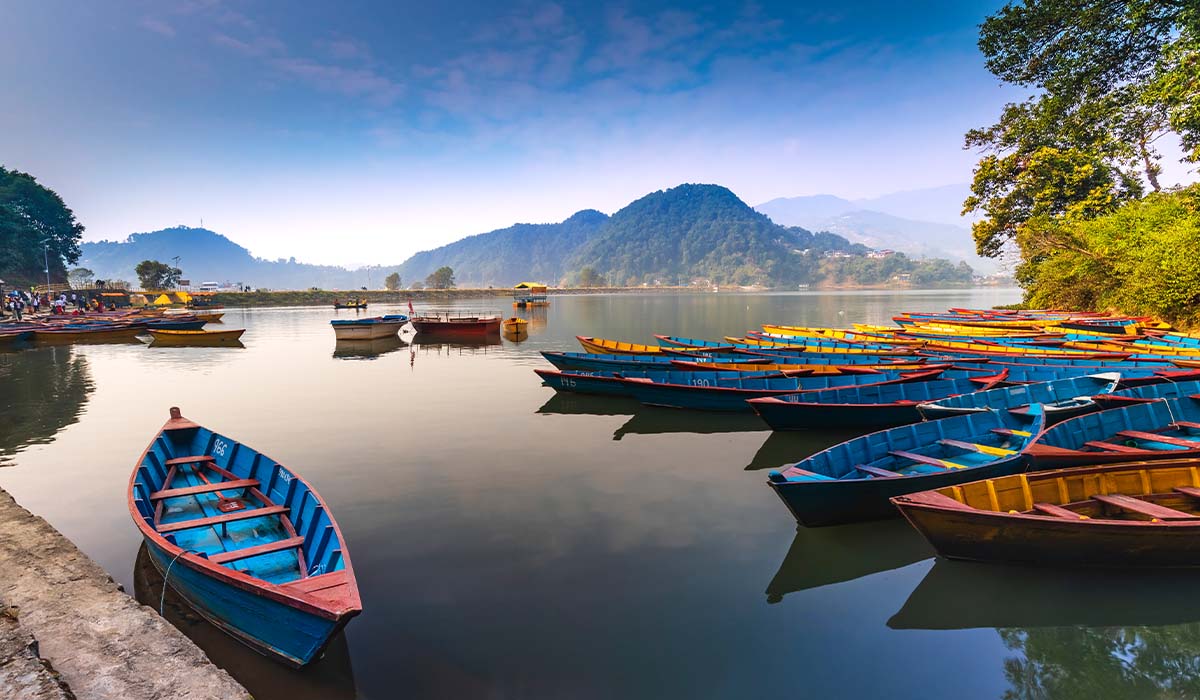
This day is kept open in Pokhara. After traveling in the previous days, most people take it easy here. As such, you can also spend some time around the lakeside area. You may also walk around or visit a few nearby places if you feel like it. There’s no fixed schedule.
By the eighth day, you realize your journey is coming to an end. And the return to Kathmandu from Pokhara on this day means you are getting a step closer to going back home.
During this section of the trip, the road feels the same as before. Also, it takes a similar amount of time to reach the destination. The evening is kept free.
After exploring the two important spiritual destinations — Pashupatinath and Muktinath — in Nepal, your nine-day tour concludes today. As such, you leave Kathmandu on the ninth day of the journey. A representative from Radiant Treks will drop you off at the airport or your place of departure if you are traveling by road. The drive is not long, but it’s usually better to leave a bit early because of traffic. This marks the end of the journey.
Pashupatinath and Muktinath Tour Cost Details
Cost Includes
- Pickup on arrival and transport to your hotel, drop-off for departure
- Public bus transfers from Kathmandu to Pokhara, Pokhara to Jomsom, and back
- Stay in a 3-star hotel in Kathmandu (three nights) and Pokhara (three nights)
- Two nights' accommodation (twin sharing) at teahouses/hotels in Jomsom
- Full-board meals (breakfast, lunch, and dinner), including seasonal fruit after dinner during the tour
- Licensed, English-speaking guide
- Food, accommodation, salary, and insurance for the guide
- First aid kit
- All necessary permits and government taxes
Cost Excludes
- Optional private jeep/car transfer: you need to pay an additional cost
- Lunch and dinner in Kathmandu and Pokhara
- Personal expenses (snacks, hot and cold drinks, alcoholic beverages, etc.)
- Charges for hot showers, battery charging, and Wi-Fi during the tour
- Personal equipment and clothing
- Tips for staff and drivers
- Travel insurance (recommended to get one)
- Kathmandu sightseeing tour
- Extra expenses arising from unforeseen events (such as weather or political situations)
FAQs
For most travelers, visiting Pashupatinath Temple and Muktinath Temple in the same trip just works out well. It’s not only convenient, but the route itself fits together in a way that feels quite natural.
Continuous Route
Pashupatinath is in Kathmandu, which is where most journeys in Nepal usually begin. From Kathmandu, the road moves towards Pokhara and then further north into Mustang, where Muktinath is located. When you combine both sites, you are simply following this same route — there’s no need to take detours or double back.
Gradual Transition
It starts in Kathmandu, where there’s a constant sense of activity and movement all around. Thereafter, the route slowly takes you towards quieter places as you head up towards Muktinath. By the time you arrive there, it feels quite different — fewer crowds, more open space, and a landscape that’s shaped by the altitude and the terrain of Mustang. The journey progresses gradually, step by step.
Time Efficient Pashupatinath and Muktinath Tour
Another reason people combine both places is simply because of time. Reaching Muktinath already takes a few days by road. Thus, including Pashupatinath at the beginning or end doesn’t really change the overall plan much. It simply means you can cover both places in one trip, rather than coming back again later.
For travelers from India or different parts of Nepal, this arrangement makes things easier. You reach Kathmandu and then visit Pashupatinath. Thereafter, the journey continues towards Muktinath along the same route, without having to plan everything separately.
A visit to Pashupatinath Temple marks the starting point of the Pashupatinath and Muktinath tour. The temple remains active from early morning, mostly with people visiting for darshan.
As you walk around, you will also see Hindu priests performing rituals and people offering prayers. And some are sitting quietly along the Bagmati River.
Likewise, there are more visitors in the temple, especially on Mondays and Saturdays and during festivals.
Most people don’t spend the entire day here. A few hours are usually enough for darshan and to look around. After that, you can either return to your hotel or visit nearby places if you feel like it.
The experience here is quite different from what comes later in the journey. It’s more active, more crowded, and set within the city. This makes it a natural starting point before the route gradually moves towards quieter areas.
By the time you reach Muktinath, it doesn’t feel like the same trip anymore. As you go further, the road gets quieter, the air starts to feel different, and it feels far removed from the crowds of Kathmandu and Pokhara. There aren’t many people around, and the whole place just feels open and calm.
The temple itself is quite simple. Most people first go to the 108 water taps. The water is extremely cold here. Nonetheless, the pilgrims often take this holy bath as mandatory before heading towards the main temple for darshan.
Along with the spiritual vibes, you can also feel the altitude here. That means you need to pause for breath even after walking a short distance. Because of that, people naturally slow down. Nobody is in a hurry, and honestly, there’s no reason to be.
It’s a quiet place. Not in a dramatic way, but in a simple, natural way. You just spend some time there, take it in, and leave without feeling rushed.
The Pashupatinath and Muktinath tour can be done throughout the year, but the experience changes quite a bit depending on the season, mainly because of road conditions and temperature differences between Kathmandu, Pokhara, and Muktinath.
Spring (March to May)
This season is one of the easier times to travel, similar to overall best time to visit Nepal. One of the main reasons is the relatively stable weather. For that reason, the road conditions are also usually manageable.
Temperatures:
- Kathmandu / Pokhara: around 15°C to 30°C
- Muktinath (Mustang): around 5°C to 18°C
The temperature difference becomes noticeable as you move higher. Due to mild temperatures, it feels comfortable during the day. But mornings can still be cool in Muktinath in the spring. Meanwhile, the route is generally clear. As such, the delays are less common compared to other seasons.
Autumn (September to November)
Autumn is also the easiest time to do this trip. Once the monsoon is over, the air clears up and the views get much better. Travel also feels more predictable compared to the rainy months.
Temperatures:
- Kathmandu / Pokhara: around 12°C to 28°C
- Muktinath: around 5°C to 15°C
Road conditions are generally better after the rains, though stretches beyond Beni can still be rough in parts. It’s a busy time as well, so you’ll see more people along the route, especially near Muktinath.
Winter (December to February)
You can still do this trip in winter, but it feels very different once you get higher up.
Temperatures:
- Kathmandu / Pokhara: around 5°C to 20°C
- Muktinath: can drop to -5°C or even lower
The cold is the main thing you deal with here. The water at Muktinath is extremely cold, and mornings can feel quite harsh if you are not well prepared. Roads are usually open, but if the weather turns, travel can slow down a bit.
Monsoon (June to August)
The monsoon season is the least predictable time of the year for commencing any kind of journey, mainly because of rain in the lower regions. The same is true for the Pashupatinath and Muktinath tour.
Temperatures:
- Kathmandu / Pokhara: around 20°C to 30°C
- Muktinath (rain shadow area): around 10°C to 20°C, and usually drier
The main issue during this time is the road between Kathmandu and Pokhara. Landslides and delays are quite common in the monsoon. Even though the Mustang area near Muktinath doesn’t get as much rain, reaching there can still take longer because of the road conditions on the way.
Which Season Works Best for Pashupatinath and Muktinath Tour?
Most people prefer spring or autumn, as travel tends to be smoother and more predictable. But the route itself is open throughout the year. It’s not really about whether you can go — it’s more about how easy or slow the journey might feel, depending on the season.
The Pashupatinath and Muktinath tour is done by road, but you don’t use just one type of vehicle throughout. The kind of transport changes along the way, mostly because the road conditions change as you move higher.
By Bus (Kathmandu to Pokhara)
Most people take a tourist bus from Kathmandu to Pokhara. This part of the road is comparatively better, so buses run regularly. It’s a long drive, but manageable, with a few short stops in between. If you are used to road travel, this section usually feels quite straightforward. Radiant Treks arranges your journey via a public bus.
By Car (Flexible Option)
Some people prefer to travel by private car rather than taking the bus. The route is the same, but it just feels easier as the vehicle is more comfortable. And it is a better option, especially if you are traveling with your family. You don’t have to follow a fixed schedule, and you can stop whenever you feel like it — grab tea, take a short break, or just rest for a bit. On a long drive like this, the flexibility makes a real difference.
By Jeep (Pokhara to Jomsom and Muktinath)
After Pokhara, the journey starts to get a bit tougher. Once you cross Beni, the road isn’t smooth anymore. That’s why people usually switch to jeeps for this part. It’s not a very long distance, but the road slows everything down. The ride can be rough and bumpy, and it often takes most of the day. The stretch towards Muktinath feels similar, so it’s more about going slowly than rushing.
Return Journey (Same Route Back)
The return is along the same road. Nothing really changes during the journey. Nonetheless, you will find it more comfortable the second time since you already know what to expect.
The accommodation option changes as per the location during this tour. Nonetheless, it is more or less simple.
In Kathmandu, you will find all kinds of places to stay, depending on what you want to spend — from simple budget options to more comfortable hotels. Pokhara is quite similar, though it feels a bit more relaxed overall. There are plenty of hotel options, and most rooms are comfortable enough.
Meanwhile, things slightly change as you go further towards Jomsom and the Muktinath area. The accommodation becomes simpler. Furthermore, facilities are not as extensive as in Kathmandu or Pokhara. Even so, it’s generally enough for a short stay.
Overall, the change is gradual — you move from more developed places to simpler ones, so it helps to keep expectations flexible.
Finding food along this route isn’t really an issue, though the choices can vary from place to place.
In Kathmandu and Pokhara, there are many eateries. Also, there is a mix of local food and international cuisines. So, you can choose what you are comfortable with. Most people don’t have to think much about meals in these two places.
As you move towards Jomsom and Muktinath, the variety becomes more limited. The food is simpler — things like dal bhat, noodles, fried rice, roti, tea, and soup are commonly available. It’s basic, but it’s freshly made and usually enough after a long day.
During travel days, many people prefer eating light. The roads can be rough in some sections, so lighter meals tend to feel easier. Warm food and tea are easy to find, especially once you reach the higher areas.
You don’t need heavy trekking gear for this trip. It’s mostly road travel, so keeping things simple usually works better.
Clothing
- Light jacket or something warm for mornings in Muktinath
- Comfortable clothes for long drives
- A cap or shawl if you feel cold easily
- Extra socks (useful more often than expected)
- Footwear
- Comfortable walking shoes you have already used
- Slippers or sandals for short walks or hotel use
Essentials
- Personal medicines (keep them within reach)
- Sunglasses
- Sunscreen
- Lip balm (the air gets dry around Mustang)
Day-Use Items
- Small backpack or day bag
- Water bottle
- A few snacks for the road
- Documents & Money
- Valid ID (passport/citizenship for Indian travelers)
- Cash (ATMs are limited beyond Pokhara)
Note
- No need to overpack for this trip
- You’ll be traveling by road most of the time
- Keeping your bag light makes the journey easier
- It helps to start early on travel days, especially on the way to Jomsom. Once you are on the road late, the day tends to stretch longer than expected.
- Be ready for long hours in the vehicle. The distance might not look much, but the road after Pokhara slows things down quite a bit.
- At Muktinath, it’s better to take things easy because you go up to an altitude of around 3,710 meters.
- Keep drinking water throughout the day. It makes the travel more comfortable and helps your body adjust along the way.
- Try to keep your plan a little flexible. Delays are quite normal on this route, so a bit of extra time always helps.
- Carry some cash with you before leaving Pokhara. You won’t always find ATMs once you move further up.
- During long drives, lighter meals usually feel better. Heavy food and rough roads don’t go well together.
- Keep small things like medicines, water, or snacks within reach instead of packing everything away. It just makes the day easier.
The Pashupatinath and Muktinath tour is apt for those people who want to visit both Pashupatinath and Muktinath in one go. Since the route is by road and doesn’t involve trekking, many find it easier to manage.
Families often go for this option as well, mainly because the journey is planned with stops in between. It’s not physically difficult, but the long drives are something to keep in mind.
Elderly travelers can also do this trip if they can travel for hours sitting in a bus, a car, or a jeep. Taking it slow usually makes a difference here.
It also works well for travelers coming from India or other parts of Nepal, especially if they prefer completing the journey overland instead of flying.
As the elevation of the Muktinath Temple is around 3,710 meters, you should always be careful about the effects of altitude. For most people, it doesn’t turn into a serious issue, but you may notice the difference once you get there.
Some feel slightly tired or short of breath. And the same is true if they move too quickly. For that reason, it’s better to take things slowly and not rush through the visit.
Drinking water, taking short breaks, and just moving at a steady pace usually help. Since the journey goes up gradually — with stops in between — most people adjust without much difficulty.
Can Pokhara to Muktinath be done in one day?
It is possible, but most people avoid doing it that way. The road is rough after Beni, and the drive takes a full day to reach Muktinath from Pokhara. But stopping at Jomsom makes your journey easier.
Is the Pashupatinath and Muktinath tour suitable for elderly travelers?
Yes, it can be done, since there is no trekking involved. The main thing to consider is the long hours of driving. A slower itinerary usually works better.
What is the altitude of Muktinath?
Muktinath is at around 3,710 meters (12,172 ft). Because of these factors, it’s better not to rush and to take things slowly during the visit.
Is road travel safe for the route of Pashupatinath and Muktinath tour?
Yes, this is a regular travel route, which is why most people don’t face any issues. The only thing is, once you move towards the mountainside, the road isn’t always smooth. Some stretches can feel slow or a bit rough. That is why it really depends on how the drive goes that day.
When should I go for the Pashupatinath and Muktinath tour?
Choose the spring and autumn for stable weather and good visibility. It is possible to travel in other seasons, too. Nonetheless, road and weather conditions might not be favorable, and such factors can affect the journey.