Trekking to Everest Base Camp in May is the ideal choice for those looking for warmer days, milder nights, and an opportunity to walk alongside climbers preparing for the summit.
Why hike Everest in May? As the mountain’s true action month, Everest Base Camp transforms into a vibrant city of climbers preparing for the summit. Beyond the adrenaline, the lower trails are alive with lush greenery and blooming rhododendrons.

However, trekkers must also be prepared for the season’s reality: afternoon haze, potential heat, and dusty trails in the valleys. If you are drawn to this colorful and energetic time of year, Radiant Treks is ready to handle every detail of your Everest Base Camp Trek 15 Days in May itinerary.
Highlights
- The Everest Base Camp trek in May features teams preparing for summit pushes at Everest Base Camp
- Mild nights and warm hiking days make the trek comfortable
- Lower sections of the Everest Base Camp trail offer favorable trek conditions with cool weather
- Lower valleys get hot, humid, and dusty, requiring sun and dust protection
- Most Lukla flights operate from Ramechhap in May due to Kathmandu air traffic
- Trails and lodges are busy, especially around the end of May during the Tenzing Hillary Everest Marathon
Is May a Good Time for Everest Base Camp?
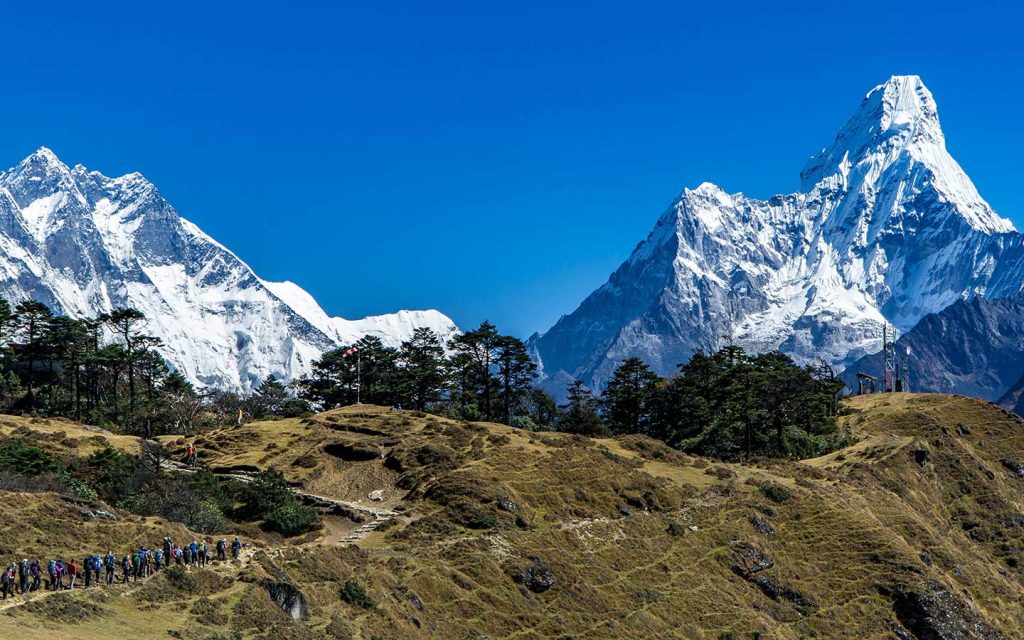
Yes. Indeed, it is one of the best months for the Everest Base Camp trek and the second busiest after October. You’ll enjoy warm days, milder nights, as well as the unique chance to interact with climbers readying for summits.
Trails are alive with greenery, and mountain views are excellent in the mornings. However, trekkers should expect hazy afternoons along with dusty lower trails, and occasional showers before the monsoon arrives.
On the other hand, as compared to the other two spring months, May is different. It is warmer but slightly cloudier than March. As compared to June, it’s far drier and more stable. Nonetheless, for a lively, warm, and energetic trek, late spring is a clear win.
Unique May-Only Events

May offers rare experiences you won’t find in any other time of the year. Here are some of the highlights:
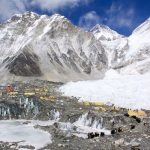
- Everest Base Camp turns into a sprawling tent city with hundreds of colorful expedition camps preparing for summit pushes.
- The famous Tenzing Hillary Everest Marathon, held every year on May 29, brings runners, supporters, and additional excitement to Namche and Gorak Shep.
- Depending on the lunar calendar, Buddha Jayanti also falls in May, bringing cultural celebrations to monasteries like Tengboche and Namche.
Everest Base Camp Trek in May Itinerary

- Day 1: Arrival in Kathmandu
- Day 2: Trek Preparation Day
- Day 3: Fly to Lukla, and Trek to Phakding
- Day 4: Phakding to Namche Bazaar
- Day 5: Acclimatization Day in Namche Bazaar, Hike to Hotel Everest View
- Day 6: Namche to Tengboche
- Day 7: Tengboche to Dingboche
- Day 8: Acclimatization in Dingboche / Explore Around
- Day 9: Trek from Dingboche to Lobuche
- Day 10: Lobuche to Gorakshep, Visit Everest Base Camp
- Day 11: Hike to Kala Patthar, and descend to Pheriche
- Day 12: Trek from Pheriche to Namche Bazaar
- Day 13: Trek from Namche Bazaar to Lukla
- Day 14: Fly from Lukla to Kathmandu
- Day 15: Departure to Your Home Country
Route Overview for Everest Base Camp Trek May Itinerary
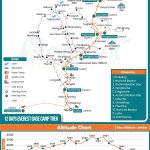
You can choose this 15-day itinerary and complete the classic Everest Base Camp trek. But you may also choose the 12 Days Everest Base Camp Trek package (without the option of Kathmandu accommodation). The actual trek in both cases begins after that famous flight into Lukla. From there, you will ease into things with a descent to Phakding before the steady climb up to Namche Bazaar.
As you push higher, you pass through the villages of Tengboche, Dingboche, and Lobuche. Eventually, you reach the rugged, high-altitude terrain of Gorak Shep, and Everest Base Camp itself during the warm May sun.
But the real highlight? The sunrise hike to Kala Patthar. Trust us, it offers the best panoramic view in the entire Himalayas during the spring trekking season.
On the way back, you retrace your steps, stopping overnight in Pheriche, Namche, and Lukla. A quick word of advice: Since May is right before the monsoon, the weather can sometimes mess with flight schedules. As a result, we recommend adding a buffer day or two to your itinerary just to keep your trip stress-free.
Customize Your Adventure with Radiant Treks

The standard trek package doesn’t work for everyone, which is why at Radiant Treks, we offer a few different ways to experience Everest in May.
- Want more comfort? Treat yourself to our 15 Days Luxury EBC Trek.
- Tight on time? Alternatively, check out the rapid 10 Days Everst Base Camp Trek, or if you are a fast, experienced hiker, the express 7 Days Everest Base Camp Trek.
- Don’t want to walk back? We get it that the knees can get tired. Therefore, skip the long descent with our 9 Days EBC Trek with Heli Return or the wallet-friendly 10 Days Low Cost EBC Helicopter Return.
However, you want to tackle Everest this May, just pick the option that feels right for you, and we will handle all the logistics. Simply contact us, and we are ready to cater to your needs.
Everest Base Camp Trek Weather in May

In May, the daily weather tends to follow a reliable rhythm. This means the mornings are your golden hours. The time may not be exact, but it is generally true from 6 am to 11 am. This is when the skies are the clearest.
But by afternoon, clouds often start to cover the skies. In addition, as you get closer to late May, you might encounter some light pre-monsoon showers.
While the Everest Base Camp trek in May weather is generally stable, mountain conditions can be fickle. Therefore, it is always smart to be prepared for the occasional afternoon storm.
Temperature Guide: How Cold is Everest in May?
Many trekkers ask about the Everest Base Camp temperature by month, specifically how May compares. In short, it is one of the warmest months to trek. The following table sheds light on May temperatures in different altitudes.
| Altitude Zone and Location | Temperature Range |
| Low Altitude: Lukla / Namche(2,800m – 3,400m) | Day: 15°C to 25°C (59°F – 77°F) Night: 5°C to 10°C (41°F – 50°F) |
| Mid Altitude: Dingboche / Lobuche(4,400m – 4,900m) | Day: 10°C to 15°C (50°F – 59°F) Night: -2°C to 5°C (28°F – 41°F) |
| High Altitude: Gorak Shep / EBC (5,100m+) | Day: 0°C to 5°C (32°F – 41°F) Night: -5°C to -10°C (14°F – 23°F) |
- Key Takeaway: The Everest Base Camp temperature in May is very manageable. Specifically, you likely won’t see temperatures below -10°C even at night at the highest point, whereas winter nights can hit -25°C.
- Precipitation: Late May brings higher chances of pre-monsoon showers. However, these usually occur in the late afternoon or evening, so they rarely affect the day’s hike if you start early.
Trail Conditions in May

Lower Valleys: Heat, Dust, and Greenery
The lower valleys comprise stretches from Lukla to Tengboche. This journey from the section offers a vibrant start to the May Everest Base Camp trek, but this month comes with intense heat. Effectively, the valleys below 3,800 meters act as a natural heat trap, and this makes the air thick and humid. While mornings remain pleasant, afternoon temperatures rise quickly, often leaving trekkers sweating in t-shirts rather than down jackets.
- Dust and Traffic: Since this is the main supply route, it gets busy. Therefore, expect to walk through clouds of fine dust caused by mule trains and yaks that are heading to and from Namche.
- Last Greenery: This is your final chance to see blooming rhododendrons and wildflowers around Monjo before the landscape turns barren and rough.
- The Real Challenge: You might get dehydrated and sunburnt, which is why hydration and sun protection are essential here.
The High Altitude Zone: Intense Sun and Afternoon Winds
As you push from Dingboche to Lobuche, the landscape turns barren at high altitude. While the air feels cooler, the environment is actually deceptive. That is because you will enjoy clear mornings. However, the dry air in this area is dehydrating, and nights near 5,000 meters start biting with real cold.
- The UV Trap: The sun here is the strongest. For instance, at 4,000 meters, the UV radiation is extreme as it reflects off the barren ground. Thus, sunburn can happen in minutes. So high-SPF sunscreen and a sun hoodie or hat are non-negotiable.
- Afternoon Gales: Strong gusts usually kick up after noon, especially near Thukla. Ideally, you should aim to reach your lodge before this wind becomes a nuisance.
Glacial Zone: Rock, Ice, and Tents
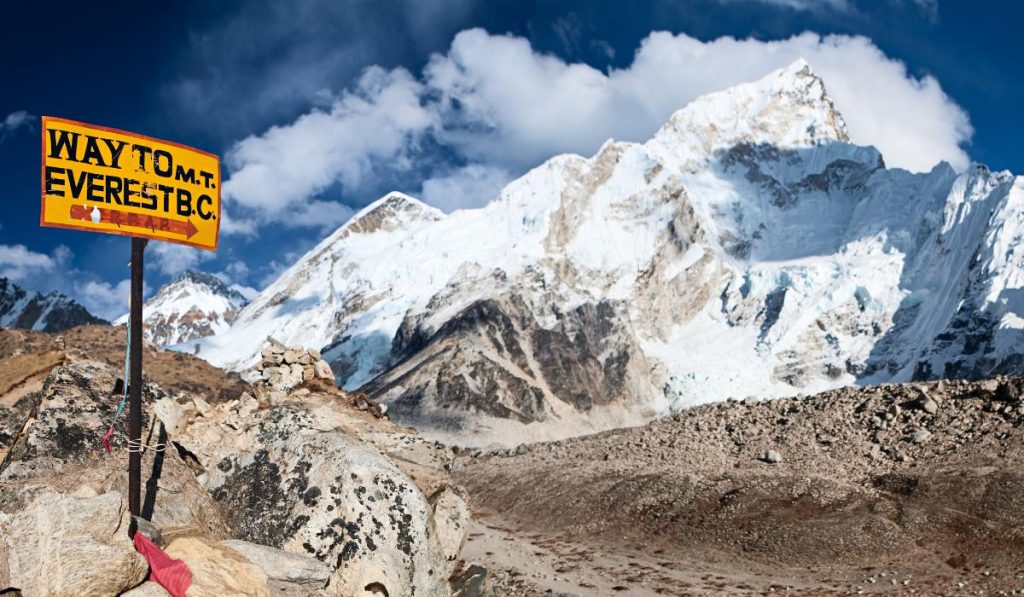
This is the climax of your trek, from Gorak Shep to Everest Base Camp and then to Kala Patthar. You need to walk along the rugged terrain onto the Khumbu Glacier moraine. In late spring, this landscape of gray rock and ice transforms into something surprisingly energetic. The trail is uneven and loose. Yet the vibe is unmatched as you witness real mountaineering operations up close.
- Trail Surface: Expect to walk on loose scree and gravel. Since May witnesses the spring thaw, you might be able to escape slushy sections or melting ice pools on the glaciers.
- The Tent City: Hundreds of colorful expedition tents stand on the gray and stark landscape of the Base Camp. It’s noisy and alive — helicopters buzz overhead, and similarly, climbers train for the summit.
Flights and Ramechhap Diversion

One of the most important logistical details for the Everest Base Camp trek in May is the flight situation.
- Air Traffic: Due to heavy air traffic at the Tribhuvan International Airport in Kathmandu, the Civil Aviation Authority of Nepal (CAAN) has halted almost all Lukla flights from Kathmandu. This is especially true during peak seasons of spring and autumn.
- The Detour: Flights to Lukla depart from Manthali Airport in Ramechhap. This flight diversion is to a small town located about 130 km east of Kathmandu.
- The Impact on You: You must travel via road to Ramechhap from Kathmandu as early as 3:00 am, or go there one day prior. You take a shared bus or private vehicle (approximately 4 to 5 hours) to Ramechhap. Then, you fly from Ramechhap to Lukla. The flight duration is about 20 minutes.
How Radiant Treks Handles the Logistics
The dawn drive to Ramechhap is not easy. That’s why we do everything we can to make it smoother for you.
- Transfers: We have got the logistics covered. We handle all your transportation details, from the drive to Manthali to your flight into Lukla. You just need to be ready in your hotel lobby with your bags; we take care of the rest.
- Option to Sleep in Ramechhap: Hate the idea of a sleepless night? We can drive you to Ramechhap the day before. You can sleep in a local guesthouse and catch the first flight out fresh and rested. Just ask us to customize this for you.
- Skip the Drive: Want to avoid the road entirely? We can arrange a helicopter flight from Kathmandu to Lukla. It costs you more, but it saves you hours of hassle and fatigue due to road travel before the actual journey.
Crowds and Accommodation: The Reality of May

The Expedition Crowd: May is one of the prime times for the Everest Base Camp trek. So, you will share the route with trekkers, climbers, and support staff. However, the real issue is in Gorak Shep, the final stop before Base Camp. The teahouses here are extremely limited and fill up instantly. This can make accommodation here the biggest challenge of the trip.
Marathon Impact: Also, be aware of the Tenzing Hillary Everest Marathon that runs on May 29 every year. Since Namche Bazaar is the finish line, the town gets incredibly busy during the last week of the month. Lodges in Namche see a huge spike in demand as runners and spectators gather for the event.
Radiant Treks Advantage: We use our long-standing relationships to secure your rooms months in advance. Solo trekkers may often find themselves struggling for space. However, if you travel with us, we can guarantee you a comfortable bed.
Difficulty and Fitness Training

The EBC trek difficulty is rated as moderate to challenging. And for the May trek, keeping this difficulty level in mind, you do not just train for the hills. You need to train for the May heat as well. The lower valleys can be surprisingly draining in May.
- Cardio and Strength: Focus on loaded cardio. Spend 4 weeks hiking or climbing stairs with a weighted pack (5 to 10 kg) to build leg endurance.
- Heat Adaptation: If possible, do some training sessions during the warmer part of the day.
Food in May (Freshness and Fuel)
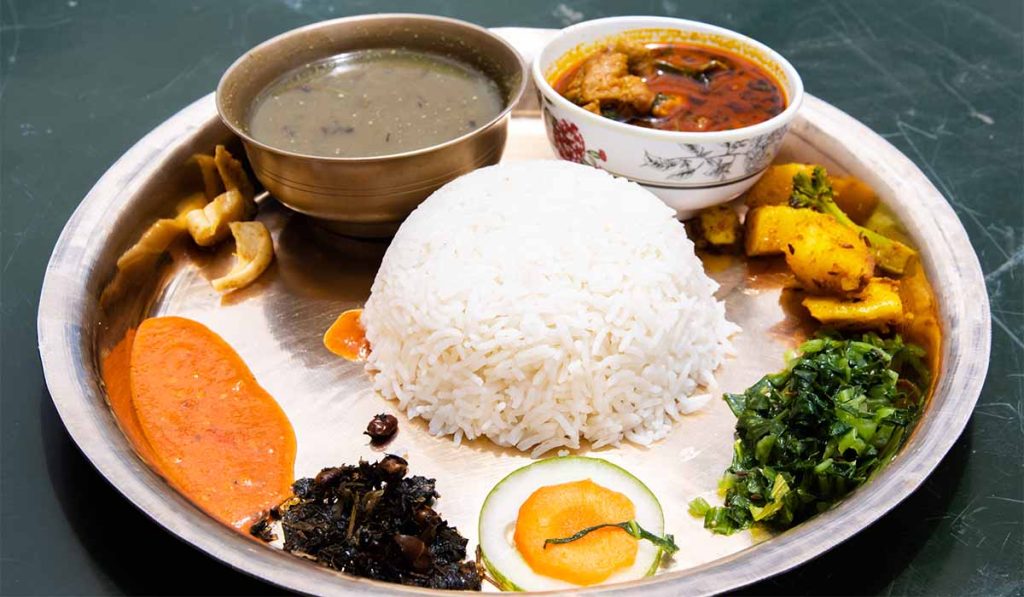
May is a great time for food lovers on the trail. Unlike winter, spring means fresh vegetables — like spinach and local greens — are actually available and delicious. Menus are extensive, offering everything from Dal Bhat to pizza and pasta.
- Meat Safety: A golden rule: Go vegetarian after Namche. The warmer May weather means meat spoils faster as it’s carried up unrefrigerated. Stick to eggs, lentils, and cheese for protein.
- Snack Strategy: Since you will sweat more in the heat, bring electrolyte powders to mix in your water. Avoid chocolate that melts easily; stick to nuts, energy bars, and dried fruit.
Packing List Adjustments for May

Your standard packing list needs a few tweaks for the Everest Base Camp trek weather in May. They are:
Sun Protection (Critical):
- The UV index is extreme. So, you need a wide-brim hat that covers your neck. Bring a ‘sun hoodie’ — a lightweight, long-sleeve shirt with a hood. It keeps you cool while blocking the sun.
- SPF 50+ sunscreen is non-negotiable.
Dust Defense:
- The ‘Khumbu Cough’ is a dry, hacking cough caused by breathing cold, dry, dusty air. So, bring a high-quality buff or even a mask (like an N95) to wear on the dusty sections between Phakding and Namche.
Lightweight Rain Gear:
- You don’t need heavy Gore-Tex pants for the whole trip, but a lightweight poncho or a packable rain shell is essential for those potential afternoon showers in late May.
Sleeping Bag:
- A bag rated to -10°C (14°F) is sufficient for May. You likely won’t need the -20°C bags required for winter, saving you weight and bulk.
Layering Strategy:
- Mornings are cold, days are hot. Ensure your base layers are moisture-wicking. You will sweat in the morning uphill climb, and if that sweat freezes when you stop for tea, you will get sick.
The Standard Essentials (Don’t Forget These)
Just because we are tweaking things for May doesn’t mean you can skip the basics. The terrain is still rugged, and the remote nature of the Khumbu remains the same.
- Footwear: Waterproof, broken-in boots are non-negotiable. Pack light trainers or Crocs to let your feet breathe in the lodges.
- Clothing: Follow the ‘no cotton’ rule. Stick to moisture-wicking merino or synthetics. Zip-off pants are brilliant for adapting to May’s swinging temperatures.
- Gear and Tech: Charging is expensive up high, so bring a robust power bank. A headlamp is vital for dark rooms, and water purification tablets are a must to avoid buying plastic bottles. Finally, trekking poles will save your knees on the loose, rocky descents.
Health and Safety in May

While May is warmer, it also introduces specific health considerations.
Heat Exhaustion:
This is a real risk in the lower valleys, which is uncommon in other seasons.
- Symptoms: Dizziness, headache, excessive sweating.
- Prevention: Drink at least 4 liters of water a day. Remember to add electrolytes to your water so as to replace salts lost through sweat.
Hygiene:
Warmer weather means bacteria multiply faster.
- Be extra careful with water purification. Radiant Treks encourages using sterilization tablets or filters rather than buying plastic bottled water (for environmental reasons, too).
Altitude Sickness (AMS):
The warmer weather of May does not reduce the risk of altitude sickness because air density is roughly the same.
- Follow the rules of acclimatization, maintain a gradual pace, and stay hydrated
- Our Protocol: Radiant Treks guides carry Pulse Oximeters to measure your oxygen saturation every morning and evening. We monitor your health proactively.
Permits and Costs
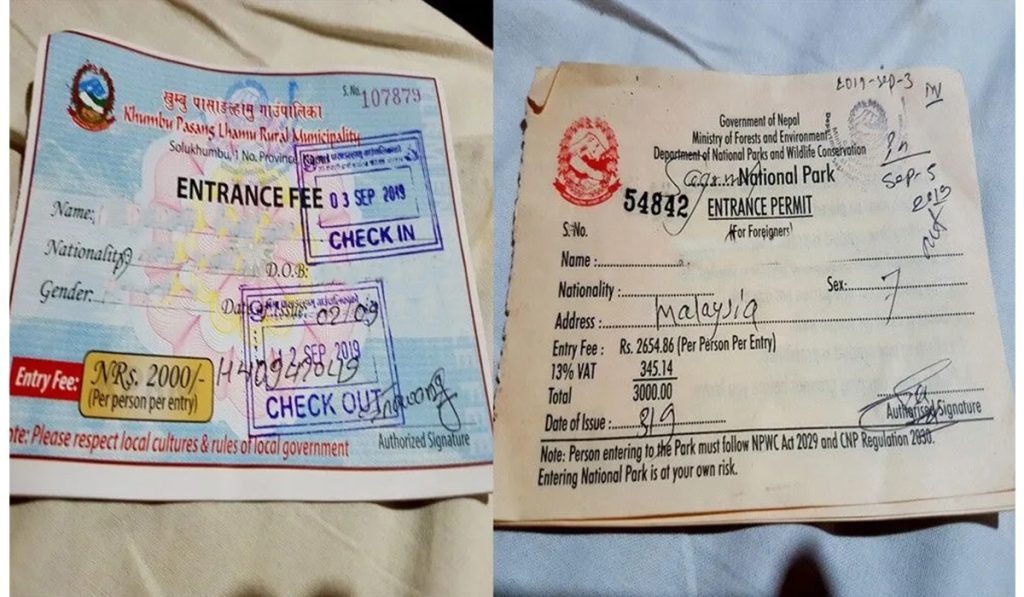
Permits Required:
- Khumbu Pasang Lhamu Rural Municipality Entry Permit
- Sagarmatha National Park Entry Permit
Cost Note:
Since May is peak season, flights and lodge prices are at their standard rates. There are no ‘off-season discounts’ in May. However, the value comes from the experience. The charm of the climbing season is worth the price tag.
At Radiant Treks, our EBC trek packages are all-inclusive. We handle the permits, the complicated Ramechhap logistics, the porter cost and insurance, and the accommodation bookings. You pay one price, and we handle the headaches.
Guide and Porter: Your Support Team for May EBC Trek
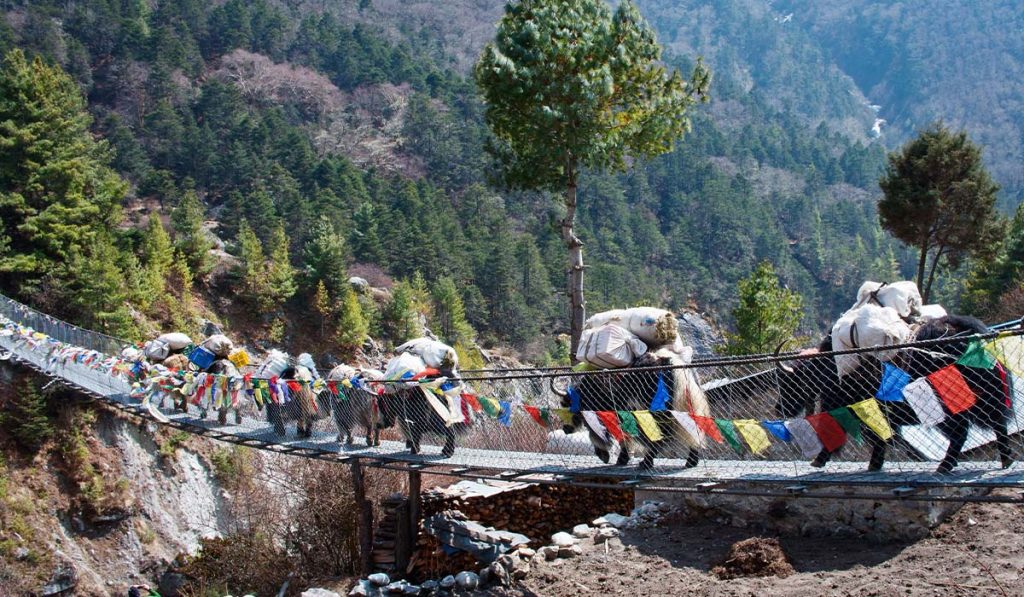
In May, hiring a guide and a porter is a strategic necessity. With trails bustling and lodges at capacity, your guide is your logistical lifeline. It is the guide who secures your bed before you arrive and navigates the daily chaos of peak season. More importantly, they constantly monitor your health for altitude sickness.
Then there’s the porter. The heat in the lower valleys is surprisingly draining. Having a porter carry your heavy duffel lets you hike with just a light daypack. As a result, it transforms the trek from a struggle into an experience.
Final Verdict: Should You Go?
Deciding on the Everest Base Camp trek in May comes down to what kind of traveler you are.
GO IF:
- You want to witness the history and energy of the Everest climbing season.
- You hate freezing cold nights and want a more comfortable sleeping experience.
- You want to see the unique line-up of colorful tents at Base Camp.
- You are interested in cultural events like the Everest Marathon or Buddha Jayanti.
AVOID IF:
- Your main priority is crystal clear photography of distant mountains (choose November or December instead).
- You absolutely hate crowds and want a solitary wilderness experience (choose February or September).
- You hate heat and dust.
Ready to Join the Expedition?
Late spring or May is a month of dreams realized. Whether you are a marathon runner or a trekker ticking off a bucket list item, the energy on the trail is infectious.
At Radiant Treks, we are ready to guide you for a safe, culturally rich, and logistically smooth journey. Contact Radiant Treks today to book your May Everest Base Camp adventure. The mountains are calling!
FAQs

Is May safe for beginners?
Yes. It’s physically demanding but technically easy. With good cardio and acclimatization, it can be a great first Himalayan trek.
Is solo trekking allowed in May?
Absolutely. The Everest (Khumbu) region still permits solo trekkers. However, due to May crowds and logistics, many travelers prefer to take a guide for safety and room bookings.
How early should I book for May?
Ideally, book 3 to 4 months in advance. Because May is peak season, there is a high chance for flights and lodges to sell out fast.
Is May too hot for trekking?
The lower sections are warm, but the higher altitudes remain cool and comfortable for hiking.
Is there snow on the trail in May?
Rarely, except for patches around Gorak Shep or after a rare late-season snowfall.
Do I need crampons for EBC in May?
Likely no. Your hiking boots are sufficient, but packing microspikes is a wise precaution.
Are leeches a problem in May?
Not usually. They appear only if the monsoon arrives earlier than expected.
Is the trek open in late May?
Yes, but expect afternoon showers and cloudier views of the mountains as the monsoon season approaches.
How crowded is EBC in late May?
It’s one of the busiest periods in May. That is because in May, marathon and summit attempts take place, increasing the footfall in the Everest region.
What happens if my flight to Lukla gets canceled?
You will be shifted to the next available flight. You can also pay for a helicopter upgrade. Worst case, you may need to wait until conditions improve.
What if I can’t find a room in Gorak Shep?
You may have to sleep in the communal dining hall. It is warm, but noisy, so pack a good pair of earplugs!
What should I do if I start feeling mild altitude sickness (AMS)?
Stop climbing immediately, rest, and hydrate. If the symptoms don’t go away, the only safe option is to descend instantly.