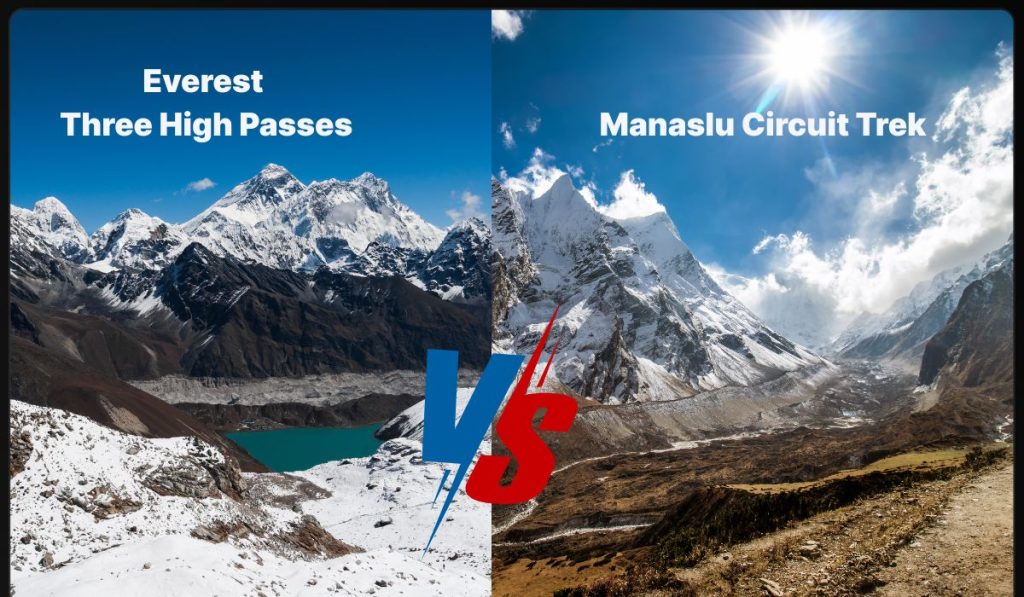
For trekking enthusiasts, the choice between the Everest Three High Passes and Manaslu Circuit comes down to your travel philosophy. Although both are demanding 12-to 16-day adventures that rise above 5,000 meters, treating them as interchangeable is a mistake.
Specifically, choose the Three High Passes if you want a good physical challenge. This route offers a sustained exposure to altitude and stark, alpine scenery. As a result, it becomes a grueling test of endurance in the region surrounded by the world’s highest peaks.
By contrast, opt for the Manaslu Circuit if you prefer a journey-style trek. This route takes you through a complete transition. In particular, it starts in lush, green jungles and gradually ascends to the ice. Moreover, the trek to the Manaslu Circuit offers more cultural richness and a wider variety of landscapes than the Everest region.

In short: Go to Everest for the high-altitude endurance and go to Manaslu for a diverse cultural odyssey. Ultimately, whichever option you choose — the Everest Three High Passes Trek or the Manaslu Circuit Trek — Radiant Treks can plan a suitable itinerary for you.
Highlights
- While Everest Three High Passes gives a high-altitude endurance test, Manaslu is a cultural, journey-style trek
- Three Passes keeps you above 4,000 meters for at least two weeks, whereas Manaslu gains altitude gradually
- Everest is pure alpine terrain with rock, ice, and glaciers; on the other hand, Manaslu shifts from jungle to snow
- Technically, Three High Passes is more technical due to icy passes and glaciers; yet Manaslu is long but non-technical
- Culturally, Manaslu offers remote Tibetan villages; meanwhile, Everest shows the classic Sherpa heartland
- It is quieter in Manaslu; however, Everest is busy on main routes, calmer on passes
- Legally, Manaslu requires a guide and permits, but Everest allows solo trekking (not advised)
- Regarding comfort, Everest has better lodges and Wi-Fi; conversely, Manaslu is basic and rugged
- Manaslu starts hot and humid; in contrast, Everest is cold, dry, and windy
Quick Decision Guide
Everest Three High Pass vs Manaslu trek — which is the best for you? Here is a quick comparison for those looking for a quick answer:
| Everest Three Passes | Manaslu Circuit |
| Terrain Exclusively high-altitude alpine zoneMostly above the tree line (above 3,500m) on rock and glacier | Terrain Transitions from subtropical forest ( from 700m) to high alpine snow Complete biological diversity |
| Difficulty Profile Altitude-based Requires sleeping above 4,000 meters for 10 to 14 consecutive nights. | Difficulty Profile Endurance-based Long days with massive vertical gain (ascending from low to high) |
| Regulations Flexible. No Restricted Area Permit needed Solo trekking is not legally permitted without a guide. | Regulations Strict. Restricted Area Permit (RAP) required. Must hire a licensed guide and trek in a group of at least two. |
| Crowd Level High on the main Everest Base Camp route Very low on the actual Three Passes sections | Crowd Level Moderately busy at the teahouses Permit regulations keep numbers moderate |
| Best Season October/November or April/May Can be trekked in colder months if passes are open | Best Season October/November Monsoon washes out lower trails in summer; winter closes lodges |
| Temperature Consistently cold Days are cool; nights are freezing to sub-zero throughout | Temperature Variation in temperatures Hot/humid (25°C plus) at the start; freezing pass crossing (-10°C) |
Logistics and Permits: Comparing Manaslu and Everest
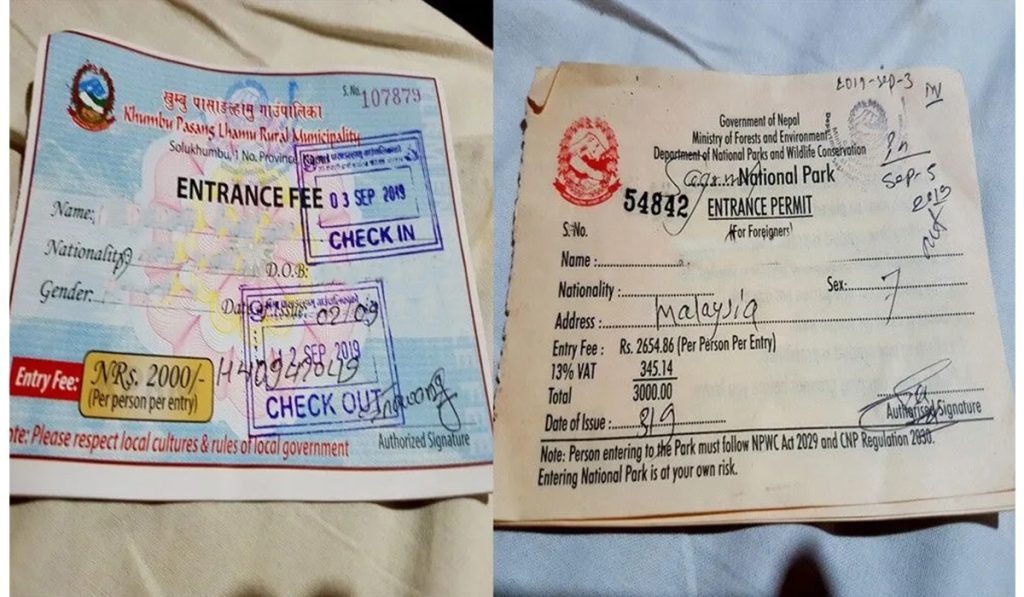
This is where the differences become tangible. Because of this, based on the regulations of these trek regions, you can decide where you want to be.
Manaslu: The Restricted Zone
Since Manaslu lies in a restricted area, bordering Tibet, it is a sensitive zone. Consequently, this affects your logistics.
Guides: The recent regulations do not allow you to trek solo. Therefore, rules require you to hire a licensed guide. Radiant Treks provides experienced guides.
Minimum Group Size: Specifically, permits are only issued to groups of a minimum of two trekkers.
Solo Hack: However, if you are a solo traveler, we can arrange a group for you, as we also offer the Manaslu Circuit group joining trek.
Permits: Currently, you need the Restricted Area Permit (RAP), Manaslu Conservation Area Project (MCAP), and Annapurna Conservation Area Project permits.
Three Passes: The Independent Zone
Conversely, the Khumbu (Everest) region operates under the Pasang Lhamu Rural Municipality, and you need to follow the following guidelines to be able to trek here.
Solo Trekking: The Khumbu region welcomes solo trekkers. While you technically require a guide, the local government issues its own permit that does not enforce this. However, trekking the Three Passes solo is risky due to glacier crossings.
No Group Minimum: You can go alone, with a guide, with a porter, or with a full crew.
Permit Costs: Simply obtain the Khumbu Pasang Lhamu Rural Municipality Entrance Permit and Sagarmatha National Park Entry Permit.
Which trek is harder: Manaslu or Three Passes?

Overall, the Everest Three High Passes trek is graded extreme, whereas the Manaslu Circuit trek is graded strenuous in terms of difficulty level. Physiologically, since neither is easy, they affect your body in different ways.
Everest Three Passes Difficulty
Oxygen Level: The primary challenge you face during the Three Passes is Hypoxia. That is because you sleep above 4,000 meters for nearly two weeks. And as there is a significant reduction in the oxygen, one might consequently face breathing difficulties.
Recovery: Additionally, the body does not heal well at this altitude. Thus, following the rules of acclimatization is a must.
The Terrain: While there is plenty of up and down, much of the walking is on gradual gradients until you hit the passes. However, the passes themselves are steep scree slopes.
Technicality: For instance, Cho La requires walking on ice, potentially needing microspikes. Similarly, Kongma La involves miles of loose boulders on a glacier.
Manaslu Circuit Trek Difficulty
Vertical Elevation Gain: Here, the primary antagonist is vertical elevation gain and endurance. Since you start at 930 meters. The amount of elevation you must gain to reach the 5,106m pass is high — 4,176 meters.
The Terrain: Comparatively, the trail is rougher. Because you are walking on river rocks, landslide debris, and narrow paths, it requires more agility.
The Long Day: Finally, the crossing of Larkya La is an endurance test. It is often a 9-to-12-hour day, starting as early as 3:00 am in the dark.
Training for the Manaslu and Three High Passes trek
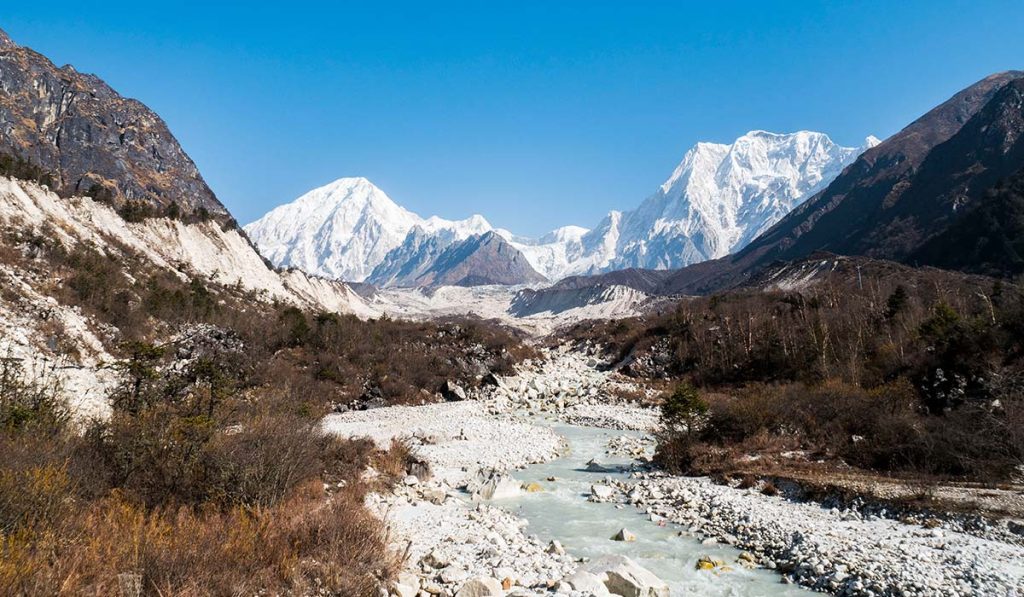
Basically, the foundation of the training for both treks is the same. However, focus on building endurance and lung capacity for the Everest Three Passes Trek.
- Specifically, long, steady hikes or runs will help your body adjust to spending nearly two weeks above 4,000 meters.
- Also, practice pacing yourself, staying hydrated, and recovering efficiently, since sleep can be restless at high altitudes.
- In addition, some uphill hikes with a light pack will also prepare you for the gradual climbs and the steep passes.
For the Manaslu Circuit Trek, prioritize strength and stability.
- Step-ups, lunges, and balance exercises will make steep, uneven trails and river crossings easier.
- Likewise, train your legs and core to handle long, demanding days like Larkya La without exhaustion.
Food and Accommodation
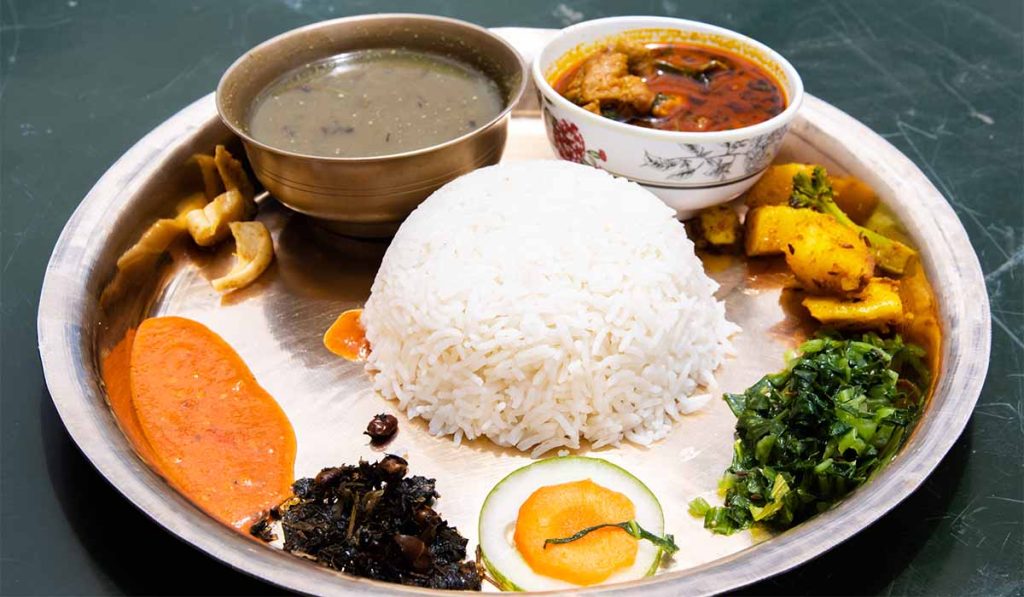
Admittedly, the gap between the Everest region and the Manaslu region in terms of facilities on the trail has been reducing in the past few years, but it is still significant.
Everest Three Passes
Rooms: Since the Khumbu is the most developed trekking region, major villages like Namche, Khumjung, and Dingboche do have luxury lodges, too. Even basic teahouses have plywood-lined rooms.
The Remote Reality: However, once you venture into the valleys for the passes (places like Lungden, Dragnag, or Dzongla), standards drop. You are back to unheated stone dormitories.
Dining: Surprisingly, you may get to eat even croissants and pizza. Although bakeries are common up to 4,000 meters, the Nepali staple dal bhat is nevertheless easily available.
Connectivity: Fortunately, Everest Link Wi-Fi is available throughout the trail (even at Everest Base Camp).
Manaslu Circuit
Rooms: Typically, standard accommodation is in teahouses, and you need to sleep in a simple room with two wooden beds and a foam mattress. In addition, insulation can be poor. Attached bathrooms are rare above the snow line, even if you look for luxury options.
The Dharmasala Challenge: Notably, the night before ascending to the Larkya La Pass, you need to sleep at Dharmasala (4,460m). As this is a seasonal shelter, expect to sleep in a multi-share stone hut. Therefore, it is cold and congested — a true mountaineering experience.
Dining: Menus are limited. Thus, you need to depend on dal bhat time. Fresh vegetables become scarce past Samagaun. Also, Meat is generally discouraged at higher elevations due to a lack of refrigeration.
Connectivity: Wi-Fi is available but can be spotty. Instead, you can rely on slow satellite connections or local SIM cards (Ncell/Namaste). Solar charging is most commonly available after paying a certain amount. Thus, it is wise to bring your power bank.
Safety and Evacuation

Although there are established safety networks along the Everest Three High Passes and Manaslu Circuit Trek trails, because the landscapes are so different, the way rescues happen differs, too.
Everest (Three Passes): Since the Everest region is the busiest place for helicopters, finding a place to land is very easy. Thus, if you need help, a helicopter can usually get to you on time. Note that it is more common for people to call for a helicopter due to altitude sickness.
Manaslu Circuit: While rescue is available, the region is much more peaceful. Unlike Everest, which feels like a highway for helicopters, Manaslu is a protected area. Consequently, rescues take a little more coordination than in Everest.
Important: Radiant Treks includes emergency evacuations, but you need to pay for the cost. For that, get a travel insurance policy that covers high-altitude trekking and emergency evacuation.
Trail Risks: What to Watch Out For
Whether you choose the Manaslu Circuit or the Everest Three High Passes, there are route-specific risks you need to respect. Ultimately, the goal is not to scare you. But rather, we aim to make sure you know what’s coming so you can handle it with confidence and actually enjoy the journey.
On the Manaslu Circuit
Rockfall: The trail can get pretty rough. So, just keep your eyes and ears open. If you see loose stones, don’t linger. Rather, move quickly and carefully through those sections.
Mule Trains: Because you share the trail with mules, always step to the mountainside (closest to the wall), never the cliffside. Likewise, give the animals plenty of room to pass safely.
Heat and Dust: Since the start of this trek is at a lower elevation. The gorges can get hot. At the same time, the mule traffic kicks up a ton of dust on the trail. Therefore, a scarf or buff over your face will save your lungs and keep you comfortable.
On the Everest Three Passes
Glacier Crossings: Crossing the massive Ngozumpa and Khumbu glaciers is challenging. Because the ice and rocks are constantly shifting, the trail changes season to season. Having a guide (or very reliable GPS) is crucial so you don’t lose your way in the maze.
Unpredictable Mountain Weather: The weather at high altitude keeps changing. For instance, on passes like Cho La or Kongma La, clouds can roll in out of nowhere, dropping visibility to zero in minutes. If this happens, stop and stick close to your group. It is easy to get disoriented in such visibility.
The Khumbu Cough: The air up there is incredibly dry and cold, and it lifts fine glacial dust that irritates your throat. Wear a buff or mask constantly — even when you are sleeping or just resting in the lodge — to keep that moisture in.
Route Overview: Manaslu Circuit vs Everest Trek Comparison
To effectively compare the treks of the Manaslu Circuit and Three High Passes, you must first understand the nature of the journey. While one is a more linear circumambulation of Mt Manaslu (8,163m), the other is a complex loop that takes you from one pass to another in the Khumbu region.
Outline Itinerary: Manaslu Circuit Trek
- Day 1: Arrival and Transfer to Hotel
- Day 2: Trek Preparation Day
- Day 3: Kathmandu to Machha Khola (930 m)
- Day 4: Machha Khola to Jagat (1,340 m)
- Day 5: Jagat to Deng (1,804 m)
- Day 6: Deng to Namrung (2,630 m)
- Day 7: Namrung to Syala (3,520 m)
- Day 8: Syala to Samagaun (3,530 m) via Pungen Gompa (4,000m)
- Day 9: Acclimatization Day in Samagaun; Hike to Manaslu Base Camp (4,800m) and Birendra Lake)
- Day 10: Samagaun to Samdo (3,860 m)
- Day 11: Samdo to Dharamsala (4,460 m)
- Day 12: Dharamsala to Bhimtang (3,890 m) via Larkya La Pass (5,106 m)
- Day 13: Bhimtang to Tilche (2,300 m)
- Day 14: Tilche to Kathmandu
- Day 15: Departure Day
In general, this is the standard Manaslu Circuit trek package offered by Radiant Treks. However, there is an option of the 12 Days Budget Manaslu trek as well, and this is sans Kathmandu hotel.
Regardless of the package, the Manaslu Circuit is a journey that progresses vertically. Essentially, it means it starts at a lower elevation and finishes at the higher elevation of the Larkya La Pass before descending.
Everest Three High Passes Trek: Outline Itinerary
- Day 1: Arrival in Kathmandu
- Day 2: Trek preparation day in Kathmandu
- Day 3: Fly to Lukla and trek to Phakding (2650 m)
- Day 4: Phakding to Namche Bazaar (3440 m)
- Day 5: Acclimatization day at Namche Bazar
- Day 6: Namche to Tengboche (3,860m)
- Day 7: Tengboche to Dingboche, (4,410 m)
- Day 8: Acclimatization day at Dingboche and Hike to Nangkartshang Hill (5,083m)
- Day 9: Dingboche to Chhukung (4730 m)
- Day 10: Cross the Kongma La Pass (5,535m), Reach Lobuche (4,940m)
- Day 11: Lobuche to Gorak Shep; Hike to Everest Base Camp (5,364 m); Back to Gorak Shep (5,180 m)
- Day 12: Early morning climb up to Kala Patthar (5,545 m) for sunrise, Trek to Dzongla (4,855m)
- Day 13: Cross the Cho La Pass (5,365m), trek down to Thangnak (4,700m)
- Day 14: Trek to Gokyo, Visit Fourth Lake; Back to Gokyo (4,750m)
- Day 15: Acclimatization day at Gokyo, Climb Gokyo Ri (5,357m)
- Day 16: Trek from Gokyo to Lungden (4,380m) via Renjo La Pass (5,360m)
- Day 17: Trek from Lungden to Namche via Thame Village (3,445m), visit the Thame monastery.
- Day 18: Trek to Lukla (2,860m)
- Day 19: Fly back to Kathmandu
- Day 20: Departure
Similarly, Radiant Treks offers the 16 Days Everest Three Passes trek package. And this skips the need to drive. Instead, by flying into Lukla (2,840m), you bypass the jungle entirely and land directly in the temperate alpine zone.
Trek Snapshot: Manaslu Vs. Three Passes
| Manaslu Circuit Trek | Everest Three High Passes Trek |
| Ideal Duration: 12-1 Days | Ideal Duration: 16 Days |
| Route Type Point-to-point progression Starts low, ends high, then drops. | Route Type Loop / Circular route Comprehensive tour of the Khumbu region |
| Start / Access Drive from Kathmandu to Machha (930m) | Start / Access Flight from Kathmandu to Lukla (2,860m) |
| Maximum Elevation 5,106m (Larkya La Pass) | Maximum Elevation 5,545 (Kala Patthar) 5,535 (Kongma La) |
| Terrain and Vibes Vertical Journey Drastic changes from humid subtropical jungle (monkeys, banana trees) to arid high alpine desert near Tibet | Terrain and Vibes Relentless Alpine Bypasses the jungle entirely You spend nearly two weeks consistently above 4,000 meters in a stark, icy landscape. |
| Key Challenges Larkya La Pass A long, non-technical climb with slippery descent | Key Challenges The Three Passes: Kongma La, Cho La (technical icy section), and Renjo La Requires sustained high-altitude endurance. |
| Cultural Highlight Nubri Valley A shift from Hindu lowlands to authentic, hidden Tibetan Buddhist villages | Cultural Highlight Sherpa Heartland: Iconic villages like Namche and ThameHigh-altitude monasteries of Tengboche. |
| Major Landmarks Mt. Manaslu Birendra Lake Pungen Gompa | Major Landmarks Everest Base Camp Kala Patthar Gokyo Lakes Ngozumpa Glacier |
Packing List: Route-Specific Necessities

You’ll need standard high-altitude trekking gear for both routes. The items below are only those that change because of the terrain, climate, and passes on each trek. However, you will need to pack the basics for both the Manaslu and Everest Three High Passes treks.
Manaslu Circuit – Pass-Driven Additions (Larkya La Focus)
Water Filtration System (Mandatory): Since single-use plastic bottles are banned and scarce inside the Manaslu Conservation Area, carry a bottle or purification tablets.
Lightweight Pants: The lower Manaslu trail is hot, humid. Therefore, heavy or fleece-lined pants will be uncomfortable during the early days.
Insect Repellent: Leeches and mosquitoes are common in the lower forests. And that is so especially during warm and damp conditions.
Light Sandals or Camp Shoes: Useful for airing out feet after long, sweaty days in the lower villages before gaining altitude.
Everest Three High Passes – Pass-Driven Additions (Renjo La, Cho La, Kongma La)
Microspikes / Light Crampons (Essential): Cho La Pass frequently has hard ice and compact snow. That is why microspikes are non-negotiable and often make the difference between crossing safely and turning back.
Moisturizer and Lip Balm: The Khumbu region is far drier than Manaslu. Thus, expect cracked skin, lips, and hands within days if you do not take protective measures.
Portable Solar Panel or Power Bank: Charging devices at high altitude is expensive and unreliable. However, the clear Himalayan sun makes small solar panels extremely effective on this trek.
Extra Sore Throat Medicines: Dry air, dust, and cold can cause the Khumbu Cough. Therefore, bring significantly more tablets like lozenges for sore throat than usual to protect your throat during long pass days.
The Verdict: Who Wins?
Everest Three High Passes Trek vs Manaslu Circuit Trek — which one should you choose?
Choose the Manaslu Circuit if:
- You want a journey: A point-to-point adventure that feels like a pilgrimage.
- You want culture: The Nubri and Tsum valleys offer an untouched Tibetan Buddhist culture that Everest lost decades ago.
- You are on a slightly tighter budget (excluding the guide requirement).
- You prefer a gradual rise in altitude rather than landing at 2,800 meters.
Book the 20 Days Manaslu Circuit and Tsum Valley Trek if you want more than the journey of the Circuit.
Choose the Everest Three High Passes if:
- You are an Alpine Purist: You want to be surrounded by snow and ice 24/7.
- You hate heat and dust: You want to skip the sweaty jungle slog and start right in the cool, crisp mountain air. (This is the critical factor for heat-sensitive trekkers).
- You want the challenge of technical terrain, including glaciers and ice.
- You want the ‘Bucket List’ views of Everest and the turquoise Gokyo Lakes.
Book your 15 Days Everest Base Camp Trek for a different experience (it handles your stay in Kathmandu as well). You can also opt for our Everest Base Camp Trek 12 Days itinerary if you want to arrange Kathmandu accommodation on your own.
Still Undecided?
Our team at Radiant Treks has trekked both routes extensively. If you need help choosing based on your fitness level and travel dates, contact us for a consultation, and we will help you plan the perfect adventure.
FAQs

Which trek is better for avoiding crowds?
The Manaslu Circuit is generally quieter. While Manaslu is growing in popularity, it is nowhere near the volume of the main EBC trail. However, the Three Passes allows you to escape the crowds once you leave the main EBC highway. Admittedly, the valleys of Thame, Gokyo, and Chhukung are peaceful, but you must rejoin the busy trail for short sections.
Can I do the Three Passes without a guide?
Legally, it is possible to do this trek. But safety-wise, it is not recommended. Currently, the Khumbu municipality allows solo trekkers. Nevertheless, the risk of a twisted ankle on a glacier or a whiteout on a high pass makes a guide or porter highly valuable. Therefore, if you go solo, ensure you have advanced navigation skills.
What is the best month for these treks?
October, November, or April. For Three Passes, October and November offer the best visibility. However, avoid winter (Jan/Feb) as passes are closed by snow.
For Manaslu, October is prime. Although March/April is beautiful for rhododendrons, avalanche risk on Larkya La can be higher due to warming spring snow.
Is the food safe?
Generally, yes, especially if you stick to vegetarian options. Since most lodges cook fresh meals, it is healthy. But avoid meat. Instead, stick to dal bhat, eggs, potatoes, and noodles.