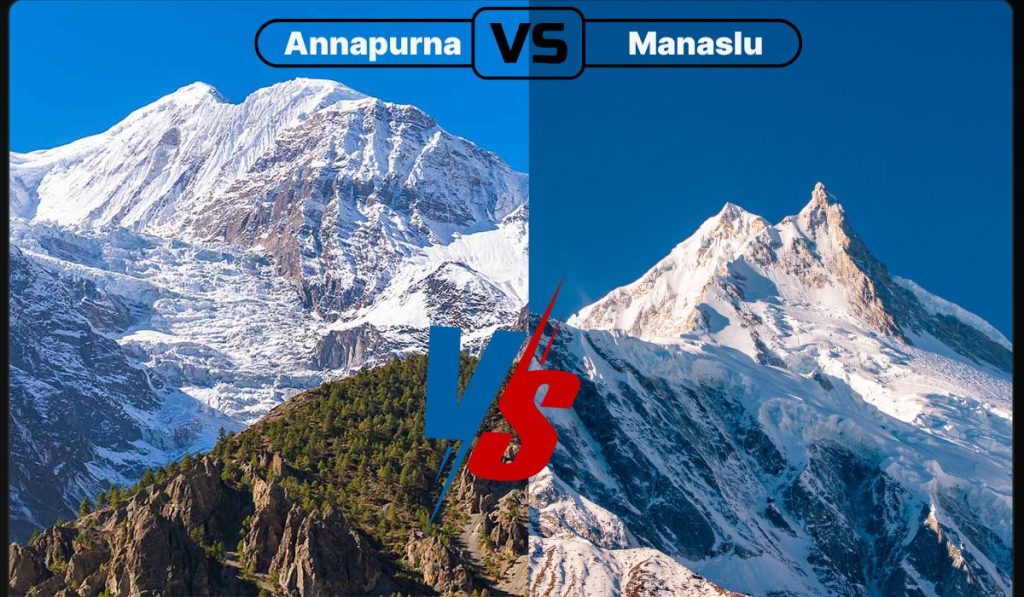
The Verdict in 30 Seconds: If you are deciding between Annapurna Circuit vs Manaslu, the choice comes down to atmosphere. For a social, diverse journey with modern comforts, choose Annapurna. If you want raw solitude, ancient Tibetan culture, and a rugged challenge, choose Manaslu. Annapurna is the ‘Himalayan Classic’; Manaslu is the ‘Quiet Soul’.
Overview
Choosing between the Manaslu vs Annapurna Circuit trek is ultimate hiker’s dilemma. While both promise legendary Himalayan views, the vibe of each trail is worlds apart. If you are weighing Annapurna Circuit vs Manaslu Circuit, you are likely torn between the classic, teahouse-rich convenience of the Annapurna region and the raw, restricted-area ruggedness of the Manaslu trek.
This Annapurna Circuit vs Manaslu comparison breaks down difficulty, scenery, crowd levels, and cultural experience to help you choose the right Himalayan circuit.
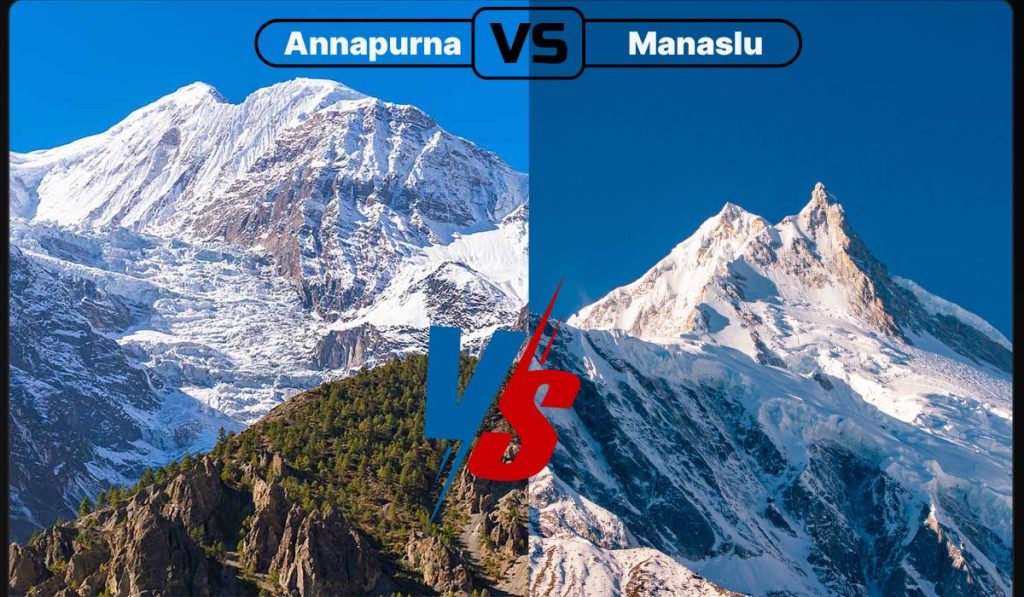
The Annapurna Circuit trek has long been Nepal’s most celebrated adventure. It is a sweeping loop around the Annapurna massif that captures everything this Himalayan nation has to offer. It features dramatic landscapes, a mix of cultures, and is easy to access. This trekking trail feels alive, buzzing with the warmth of teahouses. And you can enjoy conversations with fellow trekkers and the steady rhythm of village life.
Manaslu Circuit Trek, on the other hand, can be called Annapurna’s quieter sibling. It is wilder, more remote, and deeply rooted in Tibetan influence. Circling the world’s eighth-highest mountain, the trek carries an old-world charm, where you can walk for hours without meeting another group. Add to that the monasteries and stone houses that cling to the slopes as if untouched by time.
In this guide, we break down Manaslu vs Annapurna Circuit in terms of overall trekking experience, difficulty and scenery. Whether you are eyeing a Manaslu trek vs Annapurna Circuit for your next adventure, we will help you find the route that fits your specific trekking style and travel plans.
Highlights
- Annapurna Circuit is lively and scenic; Manaslu is remote and wild
- Trek of Annapurna Circuit is suitable for beginners and those who enjoy comfort and variety
- Manaslu is untouched and perfect for experienced trekkers who are seeking solitude
- Landscapes differ: Annapurna has rice fields and high valleys; Manaslu has gorges and glaciers
- Annapurna showcases Gurung and Thakali culture; Manaslu offers Tibetan-Buddhist traditions
- Crowd vibe: Annapurna is social and busy; Manaslu is quiet and peaceful
- Choose Annapurna for connection, Manaslu for isolation — both unforgettable
Annapurna Circuit vs Manaslu: Circuit Trek Comparison
The Annapurna Circuit and the Manaslu Circuit are two of Nepal’s most rewarding treks — often compared as Annapurna Circuit vs Manaslu Circuit by trekkers planning their Himalayan journey. Each offers a different window into the soul of the Himalayas, taking you through breathtaking terrain, ancient villages and spiritual landscapes. Nonetheless, the feeling of being on each trail couldn’t be more distinct.
Annapurna: The Grand Himalayan Loop
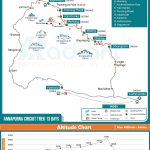
The Annapurna Circuit feels like a grand celebration of Nepal’s diversity. Stretching between 160 to 230 kilometers, it loops around the Annapurna massif. The circuit weaves through rice terraces, pine forests and arid highlands. In addition, the route crosses the legendary Thorong La Pass (5,416 m) — a high point in every sense — and passes through cultural landmarks like the sacred Muktinath Temple and the dramatic Kali Gandaki Gorge.
The trail buzzes with the camaraderie of hikers from all over the world. It is accessible, well-marked and dotted with teahouses offering warmth and comfort. This trek is for you if you want to be a part of trekking covering a long distance in Nepal. It is adventurous yet approachable; and challenging but comforting, too.
To help you experience this balance, Radiant Treks offers tailored itineraries, including the 13 Days Annapurna Circuit Trek or the 16 Days Annapurna Circuit Trek with Tilicho Lake, both promising a memorable journey through this iconic landscape.
Manaslu Circuit: The Remote Wilderness
In contrast, the Manaslu vs Annapurna Circuit comparison reveals Manaslu to be wilder and more remote. Circling Mount Manaslu (8,163 m), which is the world’s eighth-highest peak, this 180-kilometer journey follows the Budhi Gandaki River through deep gorges and bamboo forests. You will cross the dramatic Larkya La Pass (5,160 m), and pass ancient monasteries like Pungyen Gompa, where prayer wheels spin in the mountain wind.
The Manaslu region remains largely untouched — fewer trekkers, simpler lodges, and an overwhelming sense of calm. The trails are steeper and the logistics more demanding, making it a step back in time for those craving authenticity.
Radiant Treks provides a 15-day Manaslu Circuit Trek for a full-service experience. It also has a budget-friendly Manaslu trek 12 days for those seeking a more self-sufficient journey.
Manaslu vs Annapurna Routes: Location and Accessibility
Both the Annapurna and Manaslu Circuits sit in Nepal’s central Himalayas. But the way you reach them and how connected they feel makes a difference in the kind of adventure you will experience.
Annapurna Circuit: Easy Access and Connection
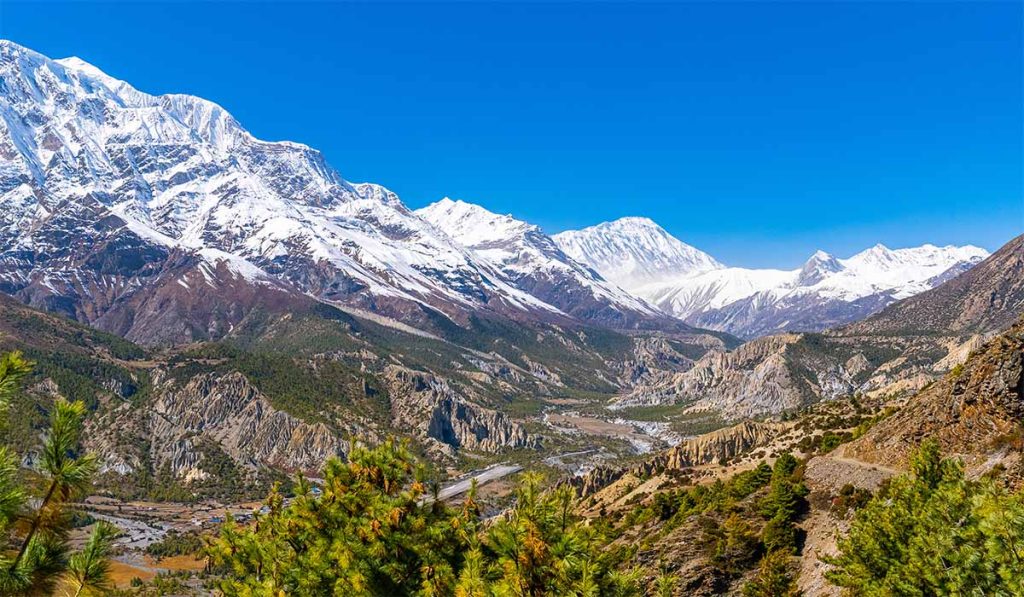
The Annapurna Circuit is one of Nepal’s most accessible major treks. You need to start the trek from Dharapani, a 6 to 7-hour drive west of Kathmandu. Public buses and shared jeeps run regularly along this route. As such, this makes it a convenient and budget-friendly start — logistics that Radiant Treks arranges as a part of our trek packages.
The route weaves through districts of Lamjung, Manang, Mustang and Myagdi. And the journey eventually ends in Pokhara. From there, trekkers can catch a bus or a short flight to return to Kathmandu.
Thanks to expanding roads, parts of the lower trail can now be covered by jeep — a benefit for those with limited time, though it slightly reduces the sense of isolation. Simply put, Annapurna’s infrastructure makes it an easy trek to plan and start, even for first-timers or those who value well-supported start.
Manaslu Circuit: Remote and Off the Grid
Reaching the Manaslu Circuit, by contrast, feels like stepping further off the grid. The trail usually begins from Machha Khola, following a long, bumpy 7 to 8 hours of jeep or bus ride from Kathmandu. When comparing Manaslu Circuit vs Annapurna Circuit, you feel the quite and wildness that define the trail from the very first day. The route threads deep into the Manaslu Conservation Area, crossing through Gorkha and Manang districts. Eventually, it connects to the Annapurna region at Dharapani.
There are no nearby airports, so all travel is by road. And during the monsoon, the journey can be slow and rough. Many trekkers book private jeeps for comfort, though it adds to the cost. However, you will feel the region is remote and this is a part of Manaslu’s charm. You feel the quiet and wildness that define the trail from the very first day .
- The Verdict on Logistics: If convenience matters most, then the Annapurna Circuit clearly wins for its better connectivity. But if you’re drawn to adventure and don’t mind a rougher ride to reach something unspoiled, the Manaslu Circuit rewards you with a sense of true Himalayan remoteness.
Permit Requirements and Logistics
Trekking in Nepal involves some essential paperwork. Once you understand the requirements, the process is smooth. smooth. Radiant Treks handles these formalities for you. Both the Annapurna and Manaslu Circuits have specific permit structures you need to follow.

Annapurna Circuit: Accessible and Flexible
In order to be eligible to trek to the Annapurna Circuit, you need to obtain the Annapurna Conservation Area Permit (ACAP). This permit helps authorities manage the large number of trekkers while also supporting conservation and local development efforts.
Cost: Approximately USD 25 (NPR 3,000).
Flexibility: Annapurna remains open and friendly for independent travelers. While hiring a guide is good for safety at high altitudes like Thorong La, it is not a legal requirement. You can easily obtain these in Kathmandu or Pokhara through our team.

Manaslu Circuit: Restricted and Regulated
The Manaslu Circuit involves more formalities for trek permits because it falls under Nepal’s restricted region. This added layer of regulation is exactly what keeps the trail pristine and less crowded.
Restricted Area Permit (RAP): Required for section between Jagat and Dharapani. This costs USD 100 per week (autumn) and USD 75 per week (spring / winter).
Conservation Permits: You will also need the Manaslu Conservation Area Permit (MCAP) and Annapurna Conservation Area Permit for that section for the section where the trail connects to the Annapurna region.
Mandatory Requirements: Unlike Annapurna, solo trekking was not allowed here in the past. But the recent regulation introduced in March 2026 allows one to trek solo. But you must be accompanied by a licensed guide from a registered agency like Radiant Treks.
- Key Differences at a Glance: While both treks are well-regulated, Annapurna offers flexibility for those who prefer planning on their own. Manaslu is more controlled, prioritizing environmental protection and trekker safety in a remote border region. It is a fair trade-off for those seeking an authentic, solitary experience in the Himalayas.
Manaslu vs Annapurna Circuit Difficulty
When it comes to the Annapurna Circuit vs Manaslu Circuit difficulty, both treks are challenging in their own ways. But Manaslu usually ranks a notch higher.
The Annapurna Circuit offers a mix of well-marked trails, stone steps and even some jeep tracks that provide a sense of security. While the climb toward the Thorong La Pass (5,416m) is demanding, the gradual altitude gain gives your body time to adjust. Because the route is dotted with teahouses and villages, you can rest, refuel, and recover easily. As a result, it becomes an adventurous choice for fit beginners.
On the other hand, the Manaslu Circuit feels wilder, more remote, and significantly more strenuous. The trails in this route are narrower, rockier and occasionally exposed. And there are sections that demand careful footing, especially near Larkya La Pass (5,160m).
In the recent days, more lodges have appeared. Yet the area remains less developed than Annapurna, meaning you’ll often walk longer hours each day without many comfort stops . Evacuation or rescue services are also less accessible and the connections are spotty. So, Manaslu isn’t just physically harder — it’s mentally tougher, requiring stamina and focus from the trekkers.
In short, Annapurna vs Manaslu comes down to supported comfort versus raw endurance.
Preparation: How to Ready Your Body
Both treks call for good preparation at least 8 to 12 weeks before you land in Kathmandu. Therefore, start training at least a month in advance of the trek. Combine cardio exercises like jogging, hiking or cycling with leg and core strength workouts as a part of your training.
Likewise, practice carrying a backpack with around 10 to 15 kg of weight to simulate real trek conditions. Arrive in Nepal a few days early to acclimatize.
- Which is More Difficult? The Annapurna Circuit is ideal for fit beginners looking for a classic Himalayan experience with support and accessibility. However, the Manaslu Circuit trek is for you if you are an experienced trekker. If you crave for wilderness, unpredictable conditions and a test of endurance, then choose Manaslu.
Scenery and Landscapes: A Visual Contrast

If you wish to trek to the Annapurna or Manaslu Circuit, you are essentially choosing between two of the most breathtaking theater sets of nature in Nepal.
The Annapurna Circuit feels like traveling through many different worlds in a single journey. You begin in lush valleys that are filled with terraced rice fields, waterfalls and subtropical forests. And if you are in this region in spring, then they are filled with rhododendron blooms.
As you climb higher, the greenery gives way to pine forests and then to dry and windswept terrain around Manang. It is an arid highland that feels otherworldly, almost like stepping into a mountain desert.
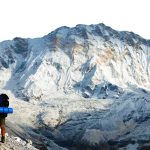
Crossing the Kali Gandaki Gorge, one of the world’s deepest, adds to the drama. Meanwhile, views of Annapurna I, Dhaulagiri and the striking Machhapuchhre (Fishtail) never leave your sight.
Reaching Thorong La Pass rewards you with 360-degree views of snow peaks and glaciers. Likewise, side trips to Tilicho Lake can add magic to your journey with its turquoise waters framed by icy ridges.
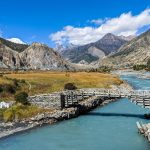
The Manaslu Circuit, in contrast, offers a landscape that is wilder, more vertical, and largely untouched. Your journey begins in dense forests along the Budhi Gandaki River, where you cross swaying bridges and pass hidden waterfalls. Gradually, the landscape opens into alpine meadows and rugged moraine fields.
Finally, the route leads you up to Larkya La Pass (5,160m). The views of Manaslu, Himal Chuli and Ganesh Himal are spectacular and feel more personal. You feel as if the mountains are right beside you. Meanwhile, some other highlights of this trek are Birendra Lake and Pungyen Gompa. And they add quiet and otherworldly beauty to your journey.
Culture and People: Spiritual Traditions of the Himalayas

Both the Annapurna and Manaslu treks open a window into Nepal’s incredible cultural mix.
In the Annapurna Circuit, every village has its own charm. You will get an opportunity to share tea with Gurung families known for their Gurkha roots. You can also taste the Thakalis’ famous apple brandy in Marpha and hear stories from the Manangi people whose lives are shaped by ancient trade routes.
Monasteries like Braga glow with murals that are centuries old. Meanwhile, Muktinath Temple draws both Hindu and Buddhist pilgrims. Prayer flags and chortens bring color to the trail. And the whole region feels alive during festivals like Dashain, among others.
Manaslu, on the other hand, feels more remote and untouched. Up in villages like Sama Gaon and Lho, the air hums with Buddhist chants from monasteries such as Ribung and Pungyen Gompa. The Nubri and Tsumba people live much as they have for generations — herding yaks, spinning prayer wheels, and celebrating masked dances during Mani Rimdu.
While Annapurna offers more encounters and comfort, Manaslu gives a glimpse of an older and quieter Nepal. Either way, a smile, a “Namaste,” and a little curiosity go a long way.
Accommodation and Food: Comfort vs Authenticity
One of the joys of trekking in Nepal is the warmth of the teahouses along the trekking trails. In terms of accommodation and food, the Annapurna Circuit and Manaslu Circuit trek routes feature small teahouses run by families. But the comfort level between the facilities available in these regions varies to some extent — it is a major factor in choosing your adventure.
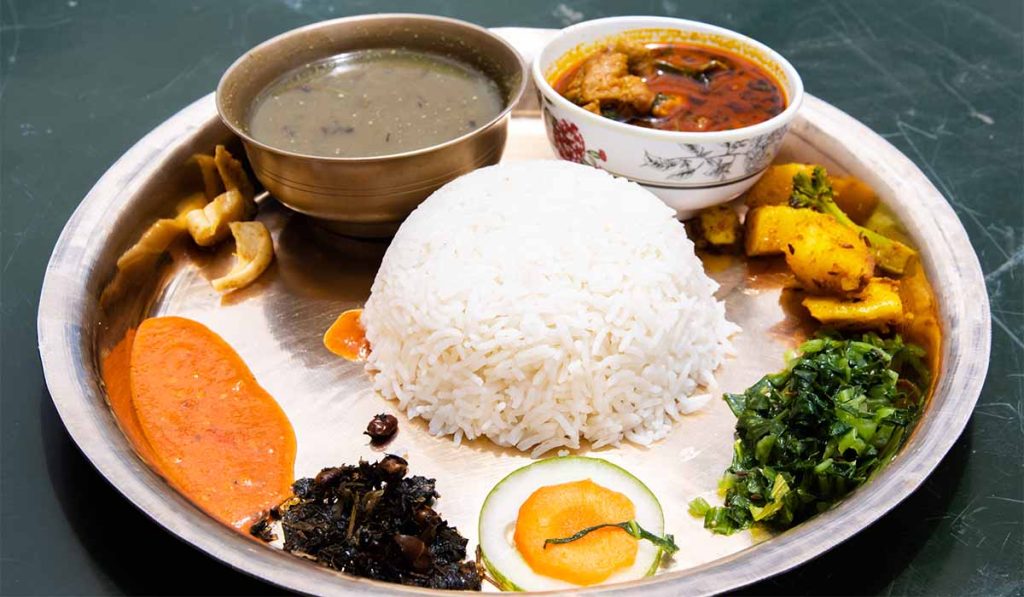
On the Annapurna Circuit, teahouses are well-developed and offer comfort. In popular hubs like Manang, Jomsom and Muktinath, you find rooms with attached bathrooms, hot showers (for a small fee) and even Wi-Fi. The beds usually come with blankets, though carrying your own sleeping bag is still wise for the colder nights. The menu is diverse and ranges from the staple dal bhat and momos to freshly baked apple pies in Marpha. You may even get pasta or pizza in some villages.
By contrast, the Manaslu region offers a simpler and more traditional teahouse experience. Most lodges are modest, often made of wood and stone, and run by local families. Expect shared toilets, bucket showers and limited electricity. In higher villages like Samdo or Dharamsala, the facilities are basic. That is to say, the rooms are basic but clean. But they always offer warm and genuine hospitality. Meals are simple yet filling in the Manaslu Circuit. Look forward to eating dal bhat, noodles, potatoes and occasional yak cheese. What you eat is limited but fresh, local and cooked with care.
- The Dining Tips: Regardless of which trek you choose, dal bhat remains the best option. It is freshly cooked, nutritionally balanced, and comes with a ‘free refill’ policy so that you never go to bed hungry. In the more remote Manaslu region, we recommend sticking to vegetarian options for food safety, especially at high altitudes.
Crowd Levels: Annapurna Circuit vs Manaslu Experience
The number of people you meet on a trekking trail can change how a trek feels. This is where the contrast — Annapurna Circuit vs Manaslu trek — is most visible. Depending on whether you crave the energy of a global community or the stillness of the high wilderness, one of these trails will clearly speak to you.
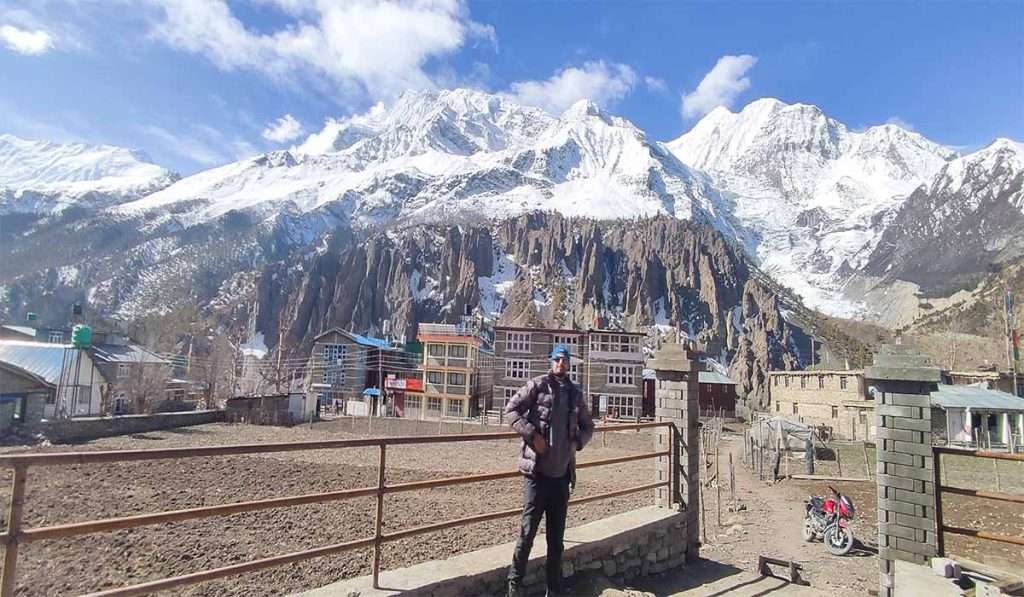
The Annapurna Circuit is a lively, social corridor. During peak trekking months, you will meet trekkers from around the world. You will share communal tables in warm dining halls and swap stories over steaming plates of dal bhat. This contagious energy makes the journey feel like a shared achievement. However, with this popularity comes a busier atmosphere. The lower sections can feel busy, with jeeps and crowds on certain stretches. This trek is perfect for you if you enjoy meeting new people and being part of a vibrant trail community.
Manaslu, by contrast, offers a quiet and deeply personal immersion. Because this is a restricted area with stricter permit requirements, there are only a handful of groups on the trail each day. As such, you often have the mountains to yourself. The silence lets you soak in the scenery, watch wildlife and reflect without distraction. It’s a more personal and meditative journey. And it is ideal for those who seek solitude in the Himalayas.
When to Trek: Annapurna Circuit vs Manaslu by Season
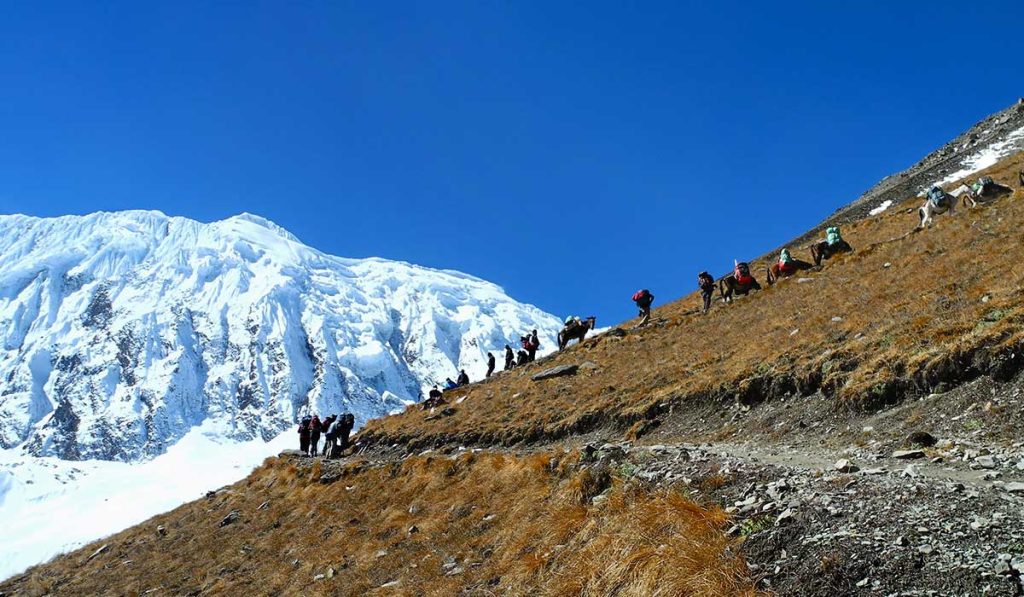
Both the Annapurna and Manaslu regions are at their best in spring and autumn windows. During these two seasons, the weather is stable. Likewise, the skies are clear, and the high passes of Thorong La and Larkya La are generally accessible. Add to that the trails that are open and offer breathtaking scenery.
- Spring (March-May): This is a favorite season for many trekkers. The hills burst into color with blooming rhododendrons, and the temperatures are pleasantly mild. The daytime highs are between 10°C and 20°C, though nights remain crisp. It’s the moment when mountain life revives into action as lodges reopen and the winter snow gives way to the first blooms of spring.
- Autumn (September-November): This is the gold standard for trekking in Nepal. After the monsoon rains, the air is washed clean. You can see clear skies and the sharpest views of Mt. Manaslu and the Annapurna massif. Daytime temperatures sit comfortably between 12°C and 18°C, while nights can dip below freezing at higher altitudes. Trails are dry and the weather is stable, offering the best conditions for crossing the passes.
- Winter and Monsoon: Winter (December-February) brings cold days and icy nights. Likewise, heavy snow might make high passes risky or even impassable. Only experienced trekkers with proper gear should attempt it. The monsoon (June-August) means rain-soaked trails, leeches and landslides, though Manaslu’s partial rain shadow keeps conditions slightly better there.
Which Trek Should You Choose: Annapurna Circuit vs Manaslu
Annapurna Circuit vs Manaslu comparison — which circuit should you choose for your Himalayan adventure? It depends on the kind of experience you are after.
- Choose the Annapurna Circuit if you are a beginner or an intermediate trekker who loves variety, comfort and social interaction. The trails are moderate, the teahouses are well-equipped and you will meet travelers from all over the world. Whether you choose a 13-day classic loop or a 16-day trek with Tilicho Lake, you are guaranteed a world-class adventure.
- Choose the Manaslu Circuit if you want solitude, challenge as well as authenticity. It is ideal if you have trekked before or prefer remote trails with fewer crowds. The cultures feel distinct and interesting, and the landscapes are wild and dramatic. Our 15-day Manaslu Circuit or 12-day budget itinerary offers an authentic window into a side of Nepal that remains beautifully unchanged.
Whether you choose the classic Annapurna route or the remote Manaslu Circuit, both journeys represent the very best of trekking in Nepal. Radiant Treks is here to handle every permit, guide, and logistics detail for your journey.