The best time to trek to Everest Base Camp falls in two seasons — autumn and spring. It depends largely on whether you prioritize mountain clarity or a warmer, livelier atmosphere.
Autumn is the top choice for visibility, providing stable weather and crisp, deep blue skies that are ideal for photography. In contrast, spring offers a warmer climate where trails burst with blooming rhododendrons. Likewise, Everest Base Camp buzzes with mountaineering expeditions.
If you want to avoid crowds, winter offers a serene but freezing escape. Meanwhile, the monsoon season is ideal for nature lovers as it offers lush and fresh landscapes.
Whichever seasonal experience suits you best, choose the one for your Everest Base Camp trek. That is where Radiant Treks comes in. Our 15 days Everest Base Camp trek offers a good balance of acclimatization and adventure so that you can these seasons to the fullest.
Highlight
- The overall best time to EBC trek is from mid-October to mid-November — it offers the highest probability of flight success, clear views, and manageable cold.
- Don’t overlook spring if you prefer warmer days, lively trails, and forests full of blooming rhododendrons.
- Flights often divert to Ramechhap now, so plan for that extra drive and always keep a few buffer days for safety.
- Winter is actually a hidden gem for peace lovers, as long as you have the grit to handle the freezing nights.
- Your gear really needs to match the season, like bringing a buff for the spring dust or microspikes for those icy winter paths.
Quick Verdict: When to Trek Everest Base Camp?

If you want the short answer, here is the breakdown based on safety, visibility, and comfort.
- Best for Views: October and November
Why: Humidity is gone, skies are a deep, crisp blue. You can see peaks 50 miles away.
- Best for Warmth: April and May
Why: The valleys are green, rhododendrons are blooming, and nights are significantly warmer than in autumn.
- Best for Solitude: January and February
Why: The trails are empty. The views are pristine. However, you must be ready to handle nights with temperatures up to -20°C.
- Avoid: June to August
Why: High risk of flight cancellations, leeches, rain, and zero mountain visibility.
The Two Major Windows: Spring vs. Autumn
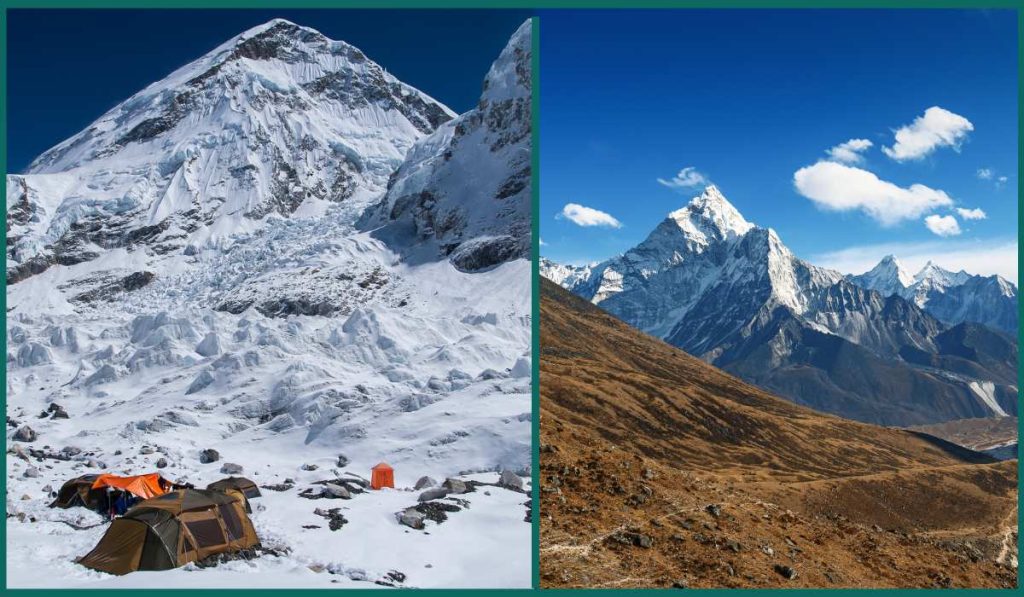
When people say Everest Base Camp trekking season, they are really talking about two very different windows of spring and autumn, and the difference usually comes down to whether you prefer biology or geology.
Spring (March–May): The Season of Biology
Spring is about life. As the winter snow melts, the lower valleys turn lush green, and by April, the hills are ablaze with pink and red rhododendrons.
- The Vibe: Energetic and social. Since Everest Expeditions are at Base Camp, the trail buzzes with climbers and helicopters.
- The Trade-off: Haze. Although mornings are clear, clouds often roll in by mid-afternoon, obscuring distant peaks.
Autumn (Sept–Nov): The Season of Geology
Autumn is about dramatic landscapes. The monsoon rains have washed the sky clean of dust and pollution.
- The Vibe: Stark and crisp. The landscape turns brown and golden.
- The Trade-off: Cold. The wind is very cold in autumn, and temperatures drop faster compared to the spring season.
Pick Your Season
| Spring (March-May) | Autumn (Sept-Nov) |
| Vibes: Blooming rhododendrons, lush greenery, and rivers full of snowmelt. | Vibes: Crystal clear mountains, deep blue skies, and dramatic landscapes. |
| Visibility: Good in the mornings, often hazy or cloudy by mid-afternoon. | Visibility: Excellent all day. The sharpest views of the year. |
| Temperature Warmer Daytime 15°C to 20°C Nights are chilly but manageable | Temperature Colder Daytime 10°C to 15°C Nights are freezing (-10°C is common) |
| Crowds: High. The trail buzzes with Everest Expedition climbers and groups. | Crowds: Very High. The busiest time of year, trails and lodges are packed. |
| Flights: Reliable, but afternoon winds can often delay Lukla flights. | Flights: Stable post-monsoon EBC trek weather means fewer cancellations, and thus are reliable. |
| Best for: Social trekkers, nature lovers, and those who hate the freezing cold. | Best for: Serious photographers, view seekers, and those wanting the classic shot. |
While understanding the general seasons is helpful, the conditions in the Himalayas change rapidly. To help you choose the exact right dates for your trek, here is a detailed monthly breakdown.
March: The Spring Awakening
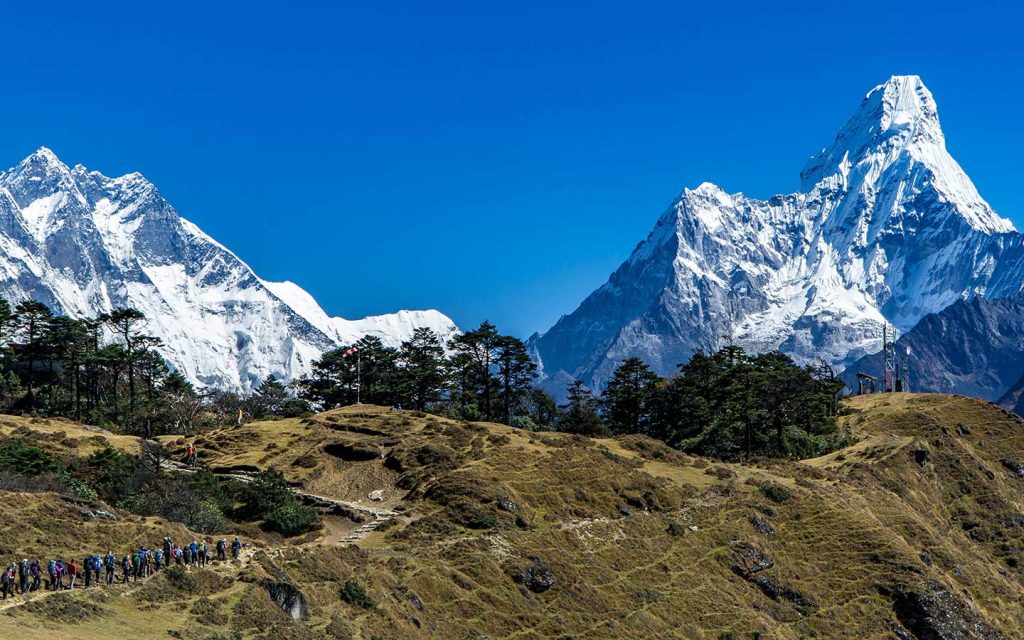
March is a shoulder month offering quiet trails and blooming flowers, although high passes may still be blocked by winter snow.
- Avgerage Temperatures: 10°C (Day); -12°C (Night at Base Camp)
- Weather: Cool
- Crowds: Low to Moderate
- Precipitation: Low (30mm)
- Best For: Solitude and early rhododendrons
Think of March as the thaw. Teahouses are dusting off their winter cobwebs. In addition, you get the best of the rhododendrons without the chaotic crowds that arrive in April. Similarly, it’s a fantastic time for solitude, but you need to be realistic about the cold. The sun is warm, yet the moment it hides behind a ridge, the temperature drops. If crossing the Cho La Pass, bring microspikes because ice lingers here long after the valleys have greened up.
- Should I Go? A smart choice for trekkers who want spring flowers but hate crowds. And be ready to face very cold nights.
April: The Social Peak

April is the most popular spring month, characterized by stable weather, moderate temperatures, and the bustling energy of the Everest Expedition.
- Average Temperatures: 14°C (Day); -8°C (Night)
- Weather: Moderate
- Crowds: High (Peak Season)
- Average Precipitation: 50mm
- Best For: Socializing and seeing the Everest Expedition
This month features comfort and energy. If you prefer a higher level of comfort during these busy times, consider booking our 15 days luxury EBC trek, which ensures better accommodation and amenities even in peak season.
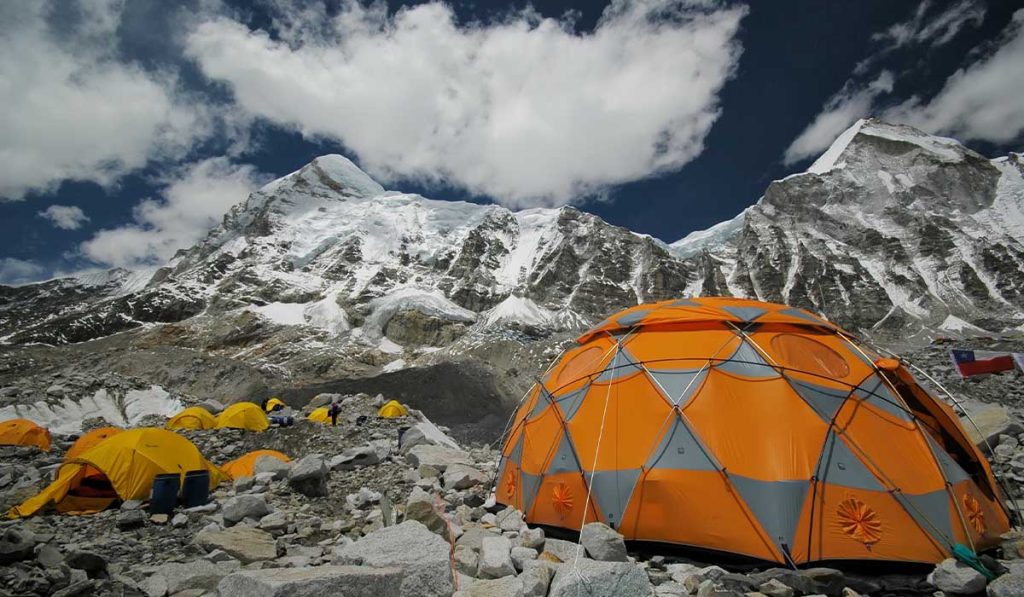
You can see yaks hauling gear up to Base Camp. Additionally, if you are social, you will love this month. The biggest draw of April is Base Camp itself, which feels like a neon city of yellow and orange tents of expedition teams. However, lodges are packed, and you might have to fight for a spot near the stove in the dining hall.
- Who Should Go? Those who love to mingle and enjoy crowd. Book your flight to Lukla months in advance.
May: The Pre-Monsoon Warmth

May is the warmest month to trek, perfect for cold-sensitive travelers, though visibility often deteriorates in the afternoons due to pre-monsoon heat.
- Average Temperatures: 16°C (Day); -2°C (Night)
- Weather: Warm
- Crowds: High (decreasing towards the end)
- Average Precipitation: 60mm
- Best For: Cold-sensitive trekkers
By May, the lower valleys are properly hot. You will likely be hiking in shorts and a t-shirt until you hit Dingboche. Nonetheless, it is a forgiving month if you hate the cold, but the clouds are the enemy here. The mountains are often clear in the early morning, yet gone by noon. Towards late May, the pre-monsoon weather condition affects you. One year it’s dry; the next, you are walking in rain for days.
Pro Tips: Ideal if you hate the cold, but start your days early to beat the clouds.
June, July, August: The Monsoon Season
The monsoon season brings daily rain, leeches, and flight cancellations, making it unsuitable for viewing mountains but excellent for solitude and lush vegetation.
- Agerage Temperatures: 18°C (Day); 4°C (Night)
- Weather: Wet
- Crowds: Very Low
- Average Precipitation: 240mm
- Best For: Botanists and extreme solitude lovers
Let’s be honest: unless you are a plant lover or enjoy challenging conditions, skip this. The trails turn to mud, and leeches may drop from the trees in the lower sections. Furthermore, you could walk for days and yet not see mountains. The only upside is the lushness — the Khumbu valley turns into a green paradise. However, the risk of getting stuck in Kathmandu for days because planes can’t land at Lukla is just high for most people.
- Can I Go? Opt for this season only if you are specifically interested in Himalayan flora.
September: The Post-Monsoon Gamble
This is a transition month where early weeks see rain, whereas late September offers lush landscapes and clearing skies with very few trekkers.
- Average Temperatures: 17°C (Day); -1°C (Night)
- Weather: Mild
- Crowds: Low (Early) to High (Late)
- Average Precipitation: 160mm
- Best For: Lush landscapes and clear skies
September is tricky. Go too early (first two weeks), and you are basically trekking in conditions resembling the monsoon. However, time it right (last week), you get the best conditions. The air is starting to dry out, but the landscape remains green, offering a fresh feeling that you don’t get in dusty November. Pack good rain gear, because afternoon showers are still common.
- Which Part of September? Aim for late September. Any earlier, and you risk flight cancellations.
October: The King of Trekking Months

October is the peak trekking month, offering the most stable weather, clearest visibility, and moderate temperatures, but it comes with the highest crowd levels.
- Average Temperatures: 14°C (Day); -10°C (Night)
- Weather: Crisp
- Crowds: Very High (Maximum Capacity)
- Average Precipitation: 40mm (if any)
- Best For: Perfect mountain views and stability.
This month is often used as the poster child for trekking. The weather is in its best state. The days are sunny, there is zero rain, and the visibility is endless. However, the EBC trail is busy and crowded in this month. Likewise, without a guide booking your rooms, you might end up sleeping on a dining room bench. Therefore, if you want the views and don’t mind the ‘human traffic‘, this is your month.
- Why October? Choose this month if you are looking for the safest and best weather conditions.
November: The Photographer’s Dream

November offers the clearest skies of the year and thinner crowds, yet requires high-quality gear to handle freezing temperatures.
- Average Temperature: 10°C (Day); -15°C (Night)
- Weather: Cold
- Crowds: Moderate to High
- Average Precipitation: Almost non-existent (10mm)
- Best For: Crystal clear photography
By November, the autumn rush is fading. The air gets drier and drier, which means the sky turns a deep, dark blue for perfect photos. For instance, the golden hour light on Ama Dablam is sharper in November than at any other time.
But let’s be real: winter is knocking on the door. A -20°C sleeping bag isn’t just a suggestion here; it’s a must. The mornings get so frosty that your water bottle can actually freeze mid-hike if you don’t keep it tucked inside your jacket.
- Why Choose November? It is hands down the best month for Everest Base Camp trek photography, as long as your gear can handle the freeze.
December, January, February: The Winter Silence
Winter is the season of silence and solitude. It offers the clearest views of the year and empty trails, but it demands mental toughness and specialized gear to survive the biting cold.
- Average Temperature: 6°C (Day); -20°C (Night)
- Weather: Freezing
- Crowds: Very Low
- Average Percipitation: 15-20mm
- Best For: Solitude and clear skies
If you are willing to endure the freeze, you get the mountains entirely to yourself. The trails are empty, and you can walk for hours without seeing another soul. Also, you will likely have the lodge to yourself, giving you rare opportunities to sit and chat with the Sherpa owners. Similarly, the sky is often brilliantly clear — even clearer than autumn. But the cold is extreme, and the simple tasks in spring, like washing your face or brushing your teeth, become a test of willpower. In addition, high passes like Cho La or Kongma La are dangerous or impassable due to hard ice, so you must stick to the classic EBC route.
Best For: Only for experienced trekkers. Stick to the classic EBC route and avoid high passes.
Logistics: Flights, Ramechhap, and Buffers

In peak seasons, flights divert to Ramechhap’s Manthali airport, requiring a very early Kathmandu departure and a 4-hour drive. Therefore, the talk about the best time for EBC trek is incomplete without understanding these logistics.
Why Ramechhap
If trekking in October-November or April-May, you will likely not fly from Kathmandu. The authorities divert flights to Manthali Airport in Ramechhap to manage air traffic.
This means your trek starts with an early morning 4-hour drive to Ramechap from Kathmandu in a shared van. As a result, it can be an exhausting experience for those who are not used to road travel.
Pro Tip: If you trek in winter or the monsoon, you can often fly directly from Kathmandu. To avoid this hassle on the way back, many trekkers opt for our 10 days low cost EBC trek with helicopter return, which skips the return walk and the long drive entirely.
The Buffer Day Rule
Lukla airport is perched on the side of a cliff. As a result, a bit of fog can close the airport instantly. In addition, cancellations are common in the monsoon and winter. Similarly, even in peak season, afternoon winds can ground flights.
The Rule: Never book your international flight home for the day after your trek finishes.
The Strategy: Always keep 1 or 2 buffer days in Kathmandu at the end of your itinerary.
Why? If flights are cancelled (common in all seasons), these buffer days save you thousands of dollars in rebooking fees. However, if you don’t need them, have a sightseeing day in Kathmandu with Radiant Treks.
Road and Trail Conditions
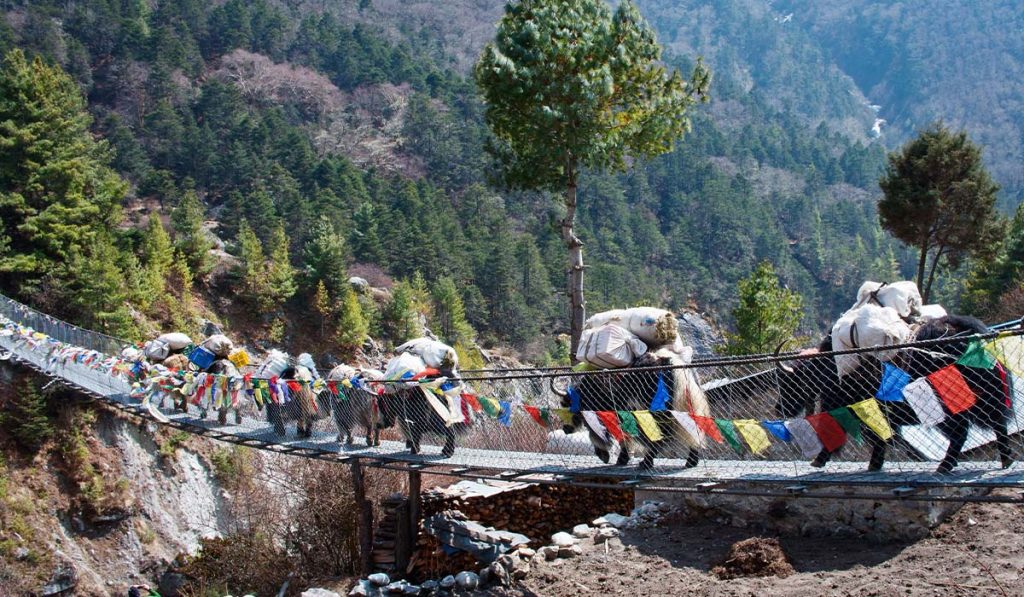
The challenge isn’t just the altitude; it’s the roads and trails as well when you opt for the Everest Base Camp trek.
Spring (March–May): The trails are dry but incredibly dusty. With thousands of trekkers and yaks grazing and walking, fine dust is everywhere. Thus, a high-quality buff is mandatory to prevent the Khumbu Cough.
Autumn (Sept–Nov): Post-monsoon, the trails are cleaner and firmer, offering the best grip.
Winter (Dec–Feb): Expect blue ice — hidden, slippery patches on the trail, especially near Dingboche. Even though microspikes are not optional here, they are a safety requirement.
The Drive: In peak seasons, the drive to Ramechhap airport is on a narrow and winding road. If you get motion sickness, remember to pack medicines.
Accommodation and Services: Seasonal Impact
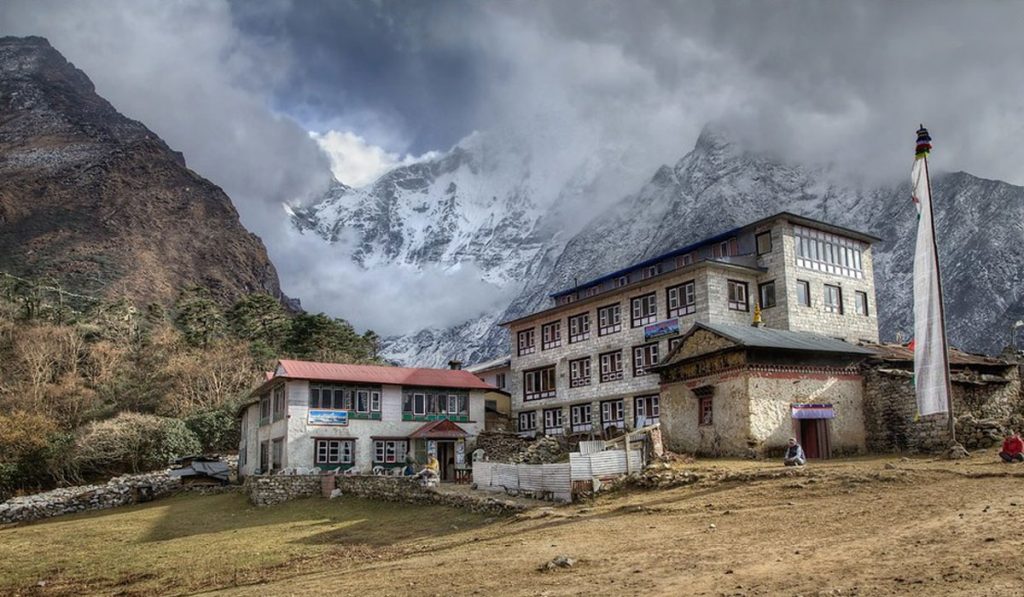
The availability and comfort of tea houses change drastically depending on when you trek; peak seasons mean crowded teahouses, while winter often sees many shut their doors.
Peak Season (Oct to Nov, April to May): Race for Beds
The availability and comfort of teahouses change depending on when you trek. Peak seasons mean crowded teahouses. Meanwhile, winter often sees many shut their doors.
- Lodges in small settlements like Gorakshep or Tengboche fill up by mid-afternoon.
- It is common to see independent trekkers sleeping on benches in the dining hall because every room is taken.
- Services like Wi-Fi become slow due to congestion,
- You might have to queue for an hour to use the one hot shower in the lodge.
Winter (Jan to Feb): Managing in Limited Options
Many trekkers assume lodges are open year-round, but this is false.
- Lodge owners in high-altitude villages (like Dingboche and Lobuche) may migrate to Kathmandu or other cities for the winter to escape the cold.
- Only a few lodges might be open.
- You will find a place to sleep, but your choices will be limited.
- The bedrooms are uninsulated and freezing, and you will likely spend all your time huddled around the yak-dung stove in the dining hall until the moment you sleep.
Monsoon (June to August): The Dampness
Most lodges stay open, but humidity is the enemy.
- Bedding can feel permanently damp
- Washing clothes is a bad idea because nothing dries.
- Fresh vegetables and meat are scarcer in the monsoon flights (which carry the cargo) are frequently cancelled.
Seasonal Gear Checklist: Don’t Pack Generic

Your packing list must adapt to the specific challenges of your chosen month. Start with the standard base layers, then add these seasonal specifics:
For Spring (Dust and Sun)
Buff / High-Quality Face Mask: The trails are dusty due to dry winds. The Khumbu Cough is a real risk in April and May.
Sun Hat and Strong Sunscreen: The UV radiation at 5,000 meters in May is brutal, and you will suffer from sunburn in minutes.
Lighter Layers: You won’t need the heaviest down jackets during the day, as they are warm.
For Winter (Ice and Cold)
Microspikes / Crampons: Non-negotiable. The trail from Dingboche to Lobuche often has patches of blue ice.
Insulated Booties: A lifesaver in the evenings because those wooden lodge floors are freezing.
-20°C Sleeping Bag: Do not rely on lodge blankets alone.
For Monsoon (Rain and Leeches)
Poncho: Better than a jacket, as it covers your backpack too.
Leech Socks and Salt: Essential for lower valleys to keep leeches off your skin.
Breathable rain shell and waterproof over-trousers: You need waterproofing that breathes, or you will sweat as much as you get rained on.
Must-Haves for All Seasons
Regardless of when you go, these items are mandatory for survival and basic hygiene.
- Water Purification Tablets: Buying plastic bottles is expensive and environmentally irresponsible.
- Broken-in Hiking Boots: Waterproof with ankle support. Never bring new boots.
- Headlamp: Bring one with extra batteries, and they are useful for early start and during power cuts.
- First Aid Kit: Blister plasters and Diamox (for altitude, consult your doctor).
- Cash: Bring cash that is enough for you to survive on the trail.
- Toilet Paper: Lodges do not provide it. Bring 2 rolls minimum.
Festivals and Fun

The Khumbu is not just rock and ice, but it is a living spiritual landscape. If you want to see the Sherpa culture at its peak, timing is everything.
Mani Rimdu (Autumn): Held at Tengboche Monastery (usually late October or early November), this is the biggest Sherpa festival. Expect 19 days of prayer, public mask dances, and a packed courtyard.
Dumji (Spring): Often in May or June, this festival celebrates the birth of Guru Rinpoche. It is huge in Namche Bazaar and Khumjung.
Lhosar (Winter): Sherpa New Year falls in late February. While many lodges close, the ones open offer a warm, family-style celebration.
Wildlife Sightings
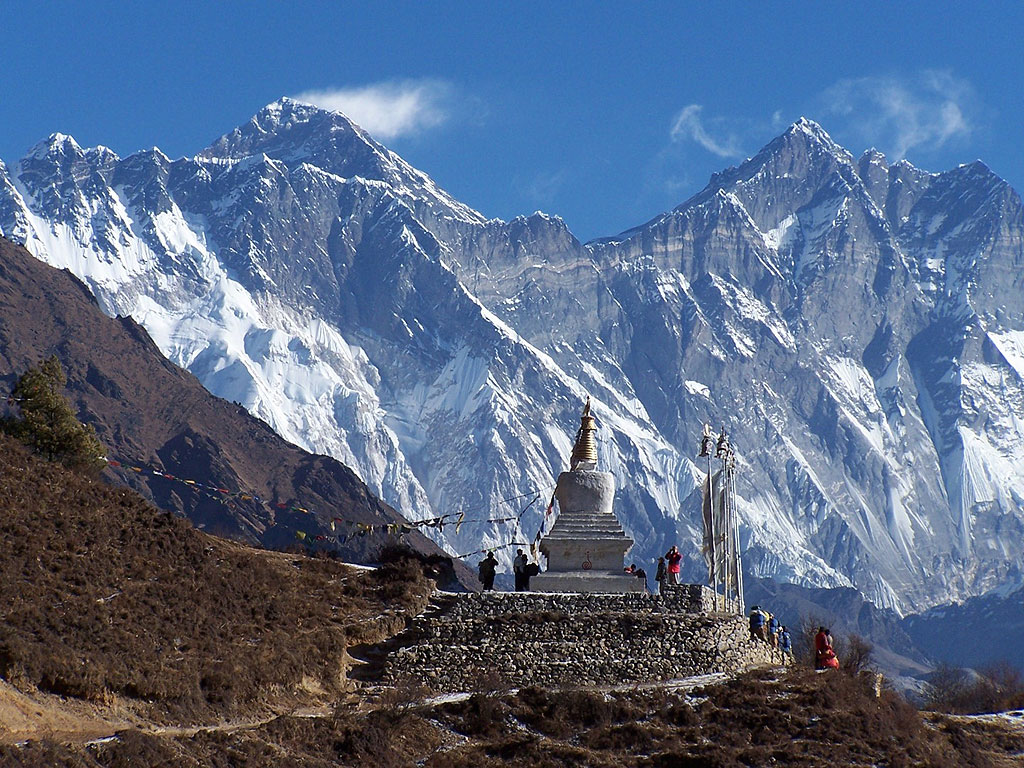
You aren’t going on a safari, but Sagarmatha National Park has life if you look for it.
Spring is the best time for bird lovers. Interestingly, the Himalayan Monal (Danphe), Nepal’s national bird, is mating during this time.
However, as the vegetation dies back, Himalayan tahr and musk deer are easier to spot on the hillsides during autumn. They often venture lower down the valley as the temperatures drop.
The Rule: Wildlife is shy. You are most likely to see them on quiet acclimatization days, not while hiking in a loud group on the main trail.
Final Verdict
The best time for Everest Base Camp trek is when you can commit to the trip. However, aiming for mid-October or late April gives you the highest chance of success.
If you are on a tighter schedule, we have curated faster itineraries, including the 12 days Everest Base Camp trek or the 10 days Everst Base Camp trek to fit your calendar.
Nonetheless, there is no bad time to be in the Himalayas, but there are definitely easier times. Therefore, if this is your first big trek, stick to the main windows of October to November or April to May. However, if you have a bit of grit and want to see the mountains without the circus, don’t be afraid of the cold, too.
All you need to do is visit Radiant Treks’ website, contact us, and book your next trip to the Everest Base Camp. We help you identify the best time and the best packages, too.
FAQs
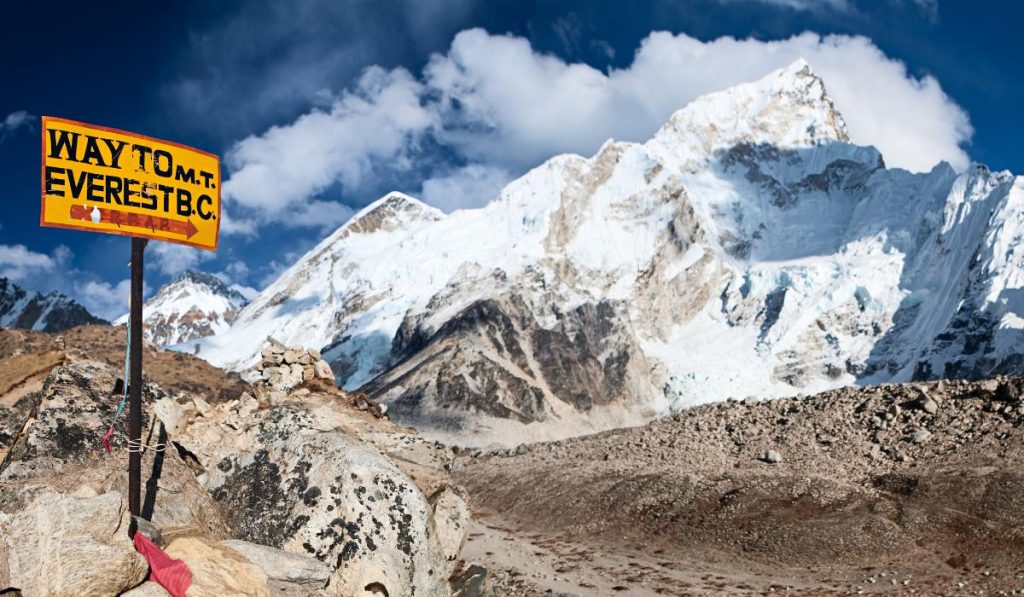
Is April or October better for my trek to the Everest Base Camp?
Opt for the October trek of EBC for the views. Likewise, you may choose April for the experience this month offers. October has clearer skies and April is warmer. Meanwhile, this is the only time you’ll see the tent city at Base Camp.
What is the coldest month at Everest Base Camp?
January is the coldest month. Nighttime temperatures at Gorakshep (5,164m) regularly drop to -20°C or -25°C.
Can you trek to the Everest Base Camp in winter?
Yes, and it is a favorite for experienced trekkers. The days are usually sunny and beautiful. You just need to be prepared for the extreme cold at night and the possibility of snow delays.
Is the monsoon season safe for the EBC trek?
It is generally safe from major avalanches on the main trail. Nonetheless, the risk of landslides in the lower valleys increases. However, the main issue is the frustration of flight cancellations and the lack of views.