March is one of the best months to trek to Everest Base Camp, offering an ideal balance of moderate temperatures, clear skies, and a peaceful atmosphere before the peak spring rush.
As winter releases the Khumbu Valley, the lower sections come alive with blooming rhododendrons. Meanwhile, Everest and the surrounding 8,000-meter peaks remain snow-capped.
Days are sunny with excellent visibility. Although temperatures at higher camps can still drop to around –10°C at night, conditions are generally dry and predictable. March is called the ‘Goldilocks window’ because it is warmer than January yet far quieter than April.

If you want crisp mountain views, stable weather, and a calmer trail, March delivers one of the most rewarding journeys to the Sherpa heartland.
At Radiant Treks, we can handle all logistics for your Everest Base Camp trek in March.
Highlights
- Hit the perfect window that is warmer than January’s freeze but quieter than April’s rush
- Walk among hundreds of expedition tents and feel the energy of professional climbers preparing for Everest
- Watch the landscape shift from blooming red rhododendrons in the valleys to frozen white peaks above
- Brace for the Ramechhap flight diversion, requiring a drive from Kathmandu to catch your plane to Lukla
- Celebrate Holi in the Everest region by throwing colored powder against a backdrop of snowy peaks
- Prepare for warm days and freezing nights of March
- Spot the rainbow-colored danphe, Himalayan tahr, and snow leopard
- Enjoy razor-sharp, crystal-clear mornings before afternoon clouds roll in to create moody views.
March Trekking Profile: What to Expect?

March strikes that sweet spot between deep winter and the full spring rush. Although we call it ‘shoulder season’, the March energy is electric. Initially, early in the month, it’s quiet, and you can walk for hours without waiting at suspension bridges.
As the days warm up, the Khumbu region wakes up. You’ll see teahouses reopening and locals prepping for the season.
However, the real highlight is sharing the trail with those on Everest expeditions. Walking alongside yak trains and mountaineers adds a unique excitement you just don’t get in autumn.
How cold is Everest Base Camp in March?

Expect a big difference between day and night temperatures. You will go from warm weather to freezing cold every single day.
- Warm and Sunny Days: Under the strong mountain sun, it feels surprisingly warm. On lower trails between Lukla and Namche, temperatures hover between 7°C to 12°C (45°F to 54°F). You will likely get hot enough to take off your heavy jacket and wear a light long-sleeve shirt.
- Freezing Cold Nights: As soon as the sun goes down, it gets cold very fast. Above 4,000 meters, at stops like Dingboche and Lobuche, temperatures often plummet to -10°C or even -15°C. Since teahouse bedrooms are unheated, a high-quality sleeping bag is non-negotiable.
How is the Visibility and Weather in March?

March presents some of the clearest mountain views of the year, as long as you finish your trekking in the morning.
- Clear Mornings, Cloudy Afternoons: The mornings are almost always sunny with deep blue skies. However, clouds usually start to build up by 2:00 PM. This is why Radiant Treks always recommends starting early so that you can see the peaks before the clouds block the view.
- Snowfall: Snow is still a reality even though March heralds spring in this region. You might find old, hard ice on the higher trails or encounter fresh snow if a storm passes through. It is not as heavy as winter, but you must be prepared for it.
Everest Base Camp Trek: March Weather at a Glance
| Elevation Zone | March Weather Conditions |
| Lukla (2,860m / 9,383ft) | Temperatures: 8°C to 12°C (Day); 0°C to 2°C (Night) Wind: Moderate Note: Pleasant days, early spring chill in the mornings. |
| Namche Bazaar (3,440m / 11,286ft) | Temperatures: 4°C to 8°C (Day); -5°C to 0°C (Night) Wind: Moderate Note: Generally clear skies, the last warm stop |
| Dingboche (4,410m / 14,468ft) | Temperatures: 0°C to 4°C (Day); -10°C to -5°C (Night) Wind: Strong (esp. afternoons) Note: Dry, dusty winds; feels significantly colder |
| Gorakshep (5,164m / 16,942ft) | Temperatures: -5°C to -2°C (Day); -15°C to -12°C (Night) Wind: High Note: Severe cold at night; water bottles may freeze inside rooms. |
Crowd Levels: Early vs. Late March

Early March is surprisingly quiet and offers peaceful trails and easy lodge availability before the rush. However, as the month progresses, the spring climbing season wakes up.
By late March, the route is abuzz with expedition teams and trekkers. While the crowd is not like that of the chaotic peak of April, you can notice the difference between the two halves of March.
Therefore, choose early dates for solitude, or late March if you prefer warmer days over privacy.
Everest Base Camp Trek in March: Outline Itinerary

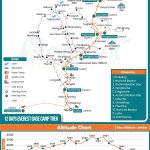
Here is an outline of our classic 12 Days Everest Base Camp Trek. It serves as the foundation for most of our March treks because it gives your body the best chance to adapt to the altitude.
- Day 1: Fly to Lukla, Trek to Phakding
- Day 2: Phakding to Namche Bazaar
- Day 3: Acclimatization Day in Namche, Hike to Hotel Everest View
- Day 4: Namche to Tengboche
- Day 5: Tengboche to Dingboche
- Day 6: Acclimatization Day at Dingboche, Hike to Nangkartshang Hill
- Day 7: Dingboche to Lobuche
- Day 8: Lobuche to Gorakshep, Visit Everest Base Camp
- Day 9: Hike to Kala Patthar, Descend to Pheriche
- Day 10: Pheriche to Namche Bazaar
- Day 11: Namche to Lukla
- Day 12: Fly Back to Kathmandu
Customize Your March Adventure: Radiant Treks offers several variations to match your pace and budget. If you want to let us handle your Kathmandu hotel stays as well, you can opt for the 15 Days Everest Base Camp Trek. Alternatively, there is an option of the 15 Day Luxury EBC Trek as well. For those short on time, you can opt for the trek of 10 days or 7 days as well. Nonetheless, you may opt for a helicopter return from the trek with a journey of 9 days or 10 days. Interestingly, whichever option you choose, March is suitable for this adventure.
Route Overview: The March Ascent to Everest

The March journey to the base of the world’s highest peak is less about daily mileage and more about the dramatic shift in varied ecosystems. Specifically in March, this route transitions from the blooming lower hills to the frozen, windswept high altitude desert.
The Gateway and Greenery: Lukla to Namche Bazaar
Landing at Lukla airport immerses you in the vibrant Dudh Koshi valley. In March, red rhododendrons bloom amidst pine forests as you cross the iconic Hillary Suspension Bridge. This oxygen-rich warm-up quickly transitions into the steep and dusty switchbacks that climb toward the bustling Sherpa capital of Namche Bazaar.
Into the Thin Air of Dingboche
March winds define the altitude above 4,000 meters. The landscape is shedding its winter coat, leaving a raw mix of rock and melting snow patches. The cold wind of March challenges you here, so have your layers ready. Additionally, crossing the Thukla Pass memorials feels especially poignant under the crisp skies and high-contrast scenes — the bright white snow and dark grey rocks — typical of early spring.
The Apex: Base Camp and Kala Patthar
Since it is March, upon reaching the Base Camp, you will see the first wave of expeditions pitching yellow tents on the ice for the climbing season. The air is frozen but dust-free. Moreover, climbing Kala Patthar now offers a razor-sharp and crystal-clear view of Everest. And this is possible only in the mornings of March, before the hazy warmth sets in.
The Rapid Descent: Pheriche to Lukla
Dropping from Pheriche, you feel the sharp transition of March. During the descent from Gorakshep to Pheriche and then to Lukla, you leave the sub-zero and biting winds. You need to rush back toward the valleys where the spring sun feels surprisingly hot. It’s a rapid thaw, and you will be taking off heavy down layers. As such, the frozen landscape gives way to the blooming, oxygen-rich warmth below.
Everest Base Camp Trek Difficulty March: What to Expect
We rate the Everest Base Camp trek in March as moderate to challenging. While you don’t need technical mountaineering skills, the seasonal transition from winter to spring adds a few specific hurdles.
- The Altitude Factor: This is your primary opponent. As you go above 4,000 meters, the air thins significantly. Even gentle inclines make you feel like you are working hard.
- Trail Conditions: While the lower trails are mostly dry and dusty, early March often retains icy patches on the shadowed paths near Lobuche and Gorakshep.
- Health Management: The risk of altitude sickness is real at these elevations. Therefore, you need to maintain a steady pace, stay aggressively hydrated to combat the dry March winds, and give your body the time it needs to acclimatize.
Everest Base Camp Trek March Permits
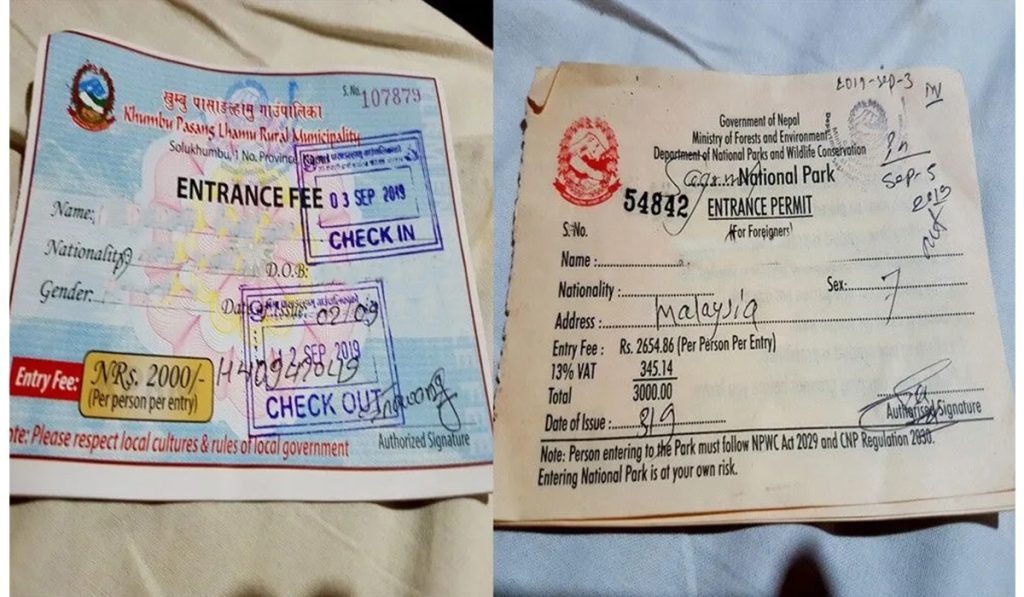
For trekking to the Everest region in March, you need two permits. At Radiant Treks, we arrange those specific local permits for you:
- Khumbu Pasang Lhamu Rural Municipality Permit: The fee raised from it goes directly to the local Sherpa community.
- Sagarmatha National Park Permit: This permit fee supports conservation efforts.
Porters for March: The Unsung Heroes
Hiring a porter in March is not just a luxury but it is a safety strategy. By offloading your 10 to 15kg duffel bag, you conserve vital energy needed for warmth and acclimatization in the cold, thin air of March on the Everest Base Camp trail.
- Ratio: Typically 1 porter for every 2 trekkers
- Weight Limit: Usually capped at 25kg total
- Cost: USD 200 (shared between two trekkers)
Why Hire a Guide for the March Trek
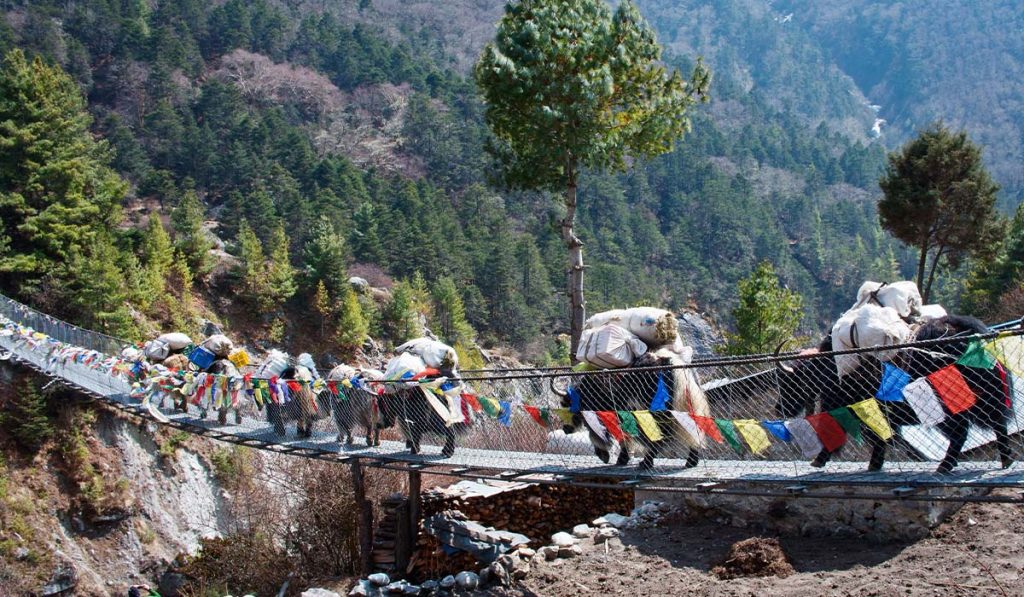
It is a safety strategy rather than a convenience to hire a guide for the Everest Base Camp trek in March. First, as of recent regulations, trekking without a guide is banned in many regions and highly discouraged in Everest for safety.
Next, the early spring trails often retain hazardous ice and packed snow, particularly above 4,000 meters, demanding expert navigation to avoid injury. A guide also serves as your frontline health monitor against risks of March. Specifically, they monitor for dehydration caused by cold and dry winds, along with altitude sickness.
Logistically, they manage unpredictable spring weather flight delays at Lukla and secure teahouse beds as the season begins to peak. In a month of volatile transition, they are your essential safety net.
Kathmandu to Lukla Flights March: The Ramechhap Diversion
For March, Kathmandu to Lukla flights may be diverted to Manthali Airport in Ramechhap. This is because March is the beginning of peak season, and thus, direct flights can lead to air traffic congestion in Kathmandu. It necessitates a significant logistical adjustment.
You need a 4 to 5-hour drive from Kathmandu, and the flight from Manthali Airport is around 12 minutes. Radiant Treks manages this transfer, arranging vehicle transport and guiding you through the Ramechhap terminal to ensure you make it to the mountains.
Acclimatization Strategy for March Trek
Acclimatization on the EBC trek in March relies on physiological adaptation rather than physical fitness. In this first spring month, the combination of altitude and cold, dry winds makes dehydration a primary risk factor for Acute Mountain Sickness (AMS).
The Golden Rules:
- Climb High, Sleep Low: Our itinerary uses high day hikes and lower sleeping altitudes to start the adaptation.
- Hydration is Key: Cold air can suppress thirst, but moisture loss is rapid. So, you must drink 3 to 4 liters of water daily.
- Bistarai, Bistarai: It is a Nepali term that means ‘slowly, slowly’, and you should follow it when walking. Rushing is dangerous, as walking slower maximizes oxygen intake.
- Listen to Your Body: Mild headaches are common, but nausea and dizziness are not. Tell your Radiant Treks guide immediately if you feel off, and they will take necessary actions.
Where We Sleep: March Accommodation

Teahouses are the standard accommodation options while you are on the Everest Base Camp trek in March. They operate fully by March, offering twin-sharing rooms with basic bedding. Early March is quieter, so getting rooms is easy. But by late March, lodges fill quickly.
Heating is provided only in dining halls, and rooms remain cold at night. Most places offer attached bathrooms only up to Namche. Above that, expect shared toilets. Hot showers are available but unreliable above Dingboche.
Wi-Fi is available, but it can be slow due to crowds. Carry a warm sleeping bag for comfort. However, accommodation on the EBC trek in March is different if you opt for our luxury option. You retreat to premium lodges, which offer heated rooms with electric blankets and attached bathrooms with hot showers.
What We Eat and Drink: Fueling for March Cold
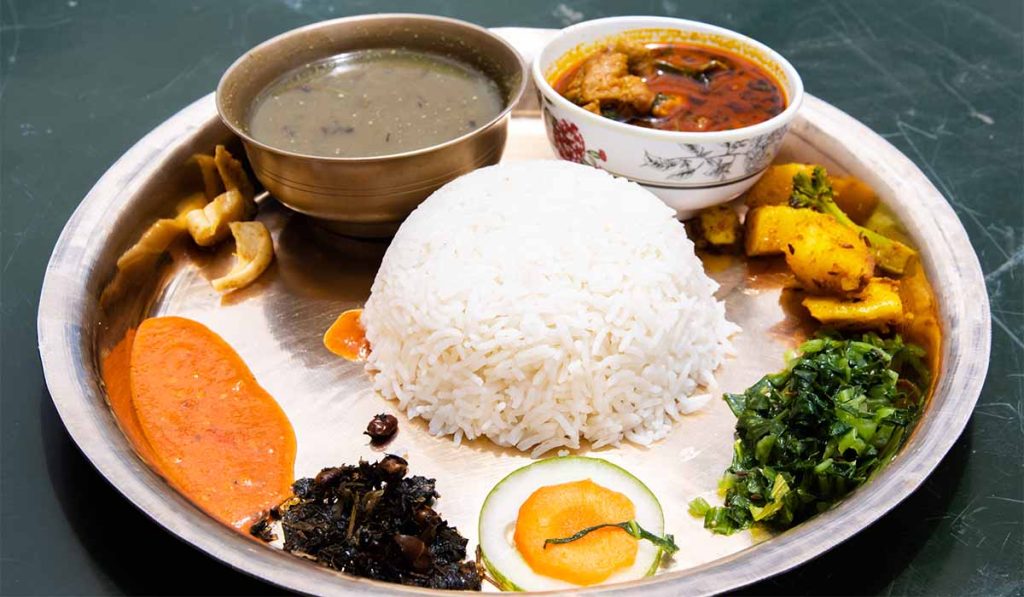
The food menu on the Everest Base Camp trek in March is dominated by carbohydrates that provide slow-burning energy for the cold days. After all, nutrition is about survival strategy in this month. That is because in March, your body burns nearly double its normal calories just to stay warm and function in the thin air.
- So, what is available? The most common and safest option available here is Dal Bhat. It is a platter of steamed rice, lentils, vegetables, and spices, and comes with free refills.
- March Reality: Since winter has just ended, fresh green vegetables are rare above Namche Bazaar. You will rely heavily on potatoes, noodles, and lentils.
- The Secret Weapon: Garlic Soup. Locals swear by it for acclimatization.
- Drinking Water: Save money and the environment by using purification tablets in insulated bottles for drinking water rather than buying expensive plastic ones.
Packing List for EBC Trek in March: The Essential Gear

Packing for the Everest Base Camp trek temperature March is tricky because of the variable weather. You cannot just pack for winter, and you cannot just pack for spring. You need a mix of both. Here are some March must-haves.
The Layering System
- Base: Merino wool is your best friend. It wicks sweat away (which is important, because sweat freezes) and doesn’t smell after 12 days.
- Mid-Layer: A good fleece or a synthetic active-insulation jacket.
- Outer Shell: A high-quality down jacket is mandatory. It should be rated for at least -20°C. You will live in this at the teahouse. Also, a windproof/waterproof hard shell is needed for the trekking days.
Footwear and Traction
- Boots: Waterproof hiking boots that you have already broken in.
- Micro-spikes: This is our No. 1 pro-tip for March. The trail near Base Camp and descending from Kala Patthar can be icy. Simple slip-on microspikes (crampons) can save you from a nasty fall.
- Gaiters: Useful if there is fresh snow, to keep your socks dry.
Accessories
- Buff/Neck Gaiter: The dry, cold air causes the ‘Khumbu Cough’. Therefore, keep your mouth and throat covered.
- Sunglasses: Snow blindness is real. Ensure your glasses have UV400 protection.
- Sleeping Bag: If you bring your own, make sure it is a four-season bag rated to -20°C.
Note: Radiant Treks provides a complimentary duffel bag, sleeping bag, and down jacket for the trek (return after trek). So, you can adjust your packing list accordingly.
Getting Fit for the March Chill
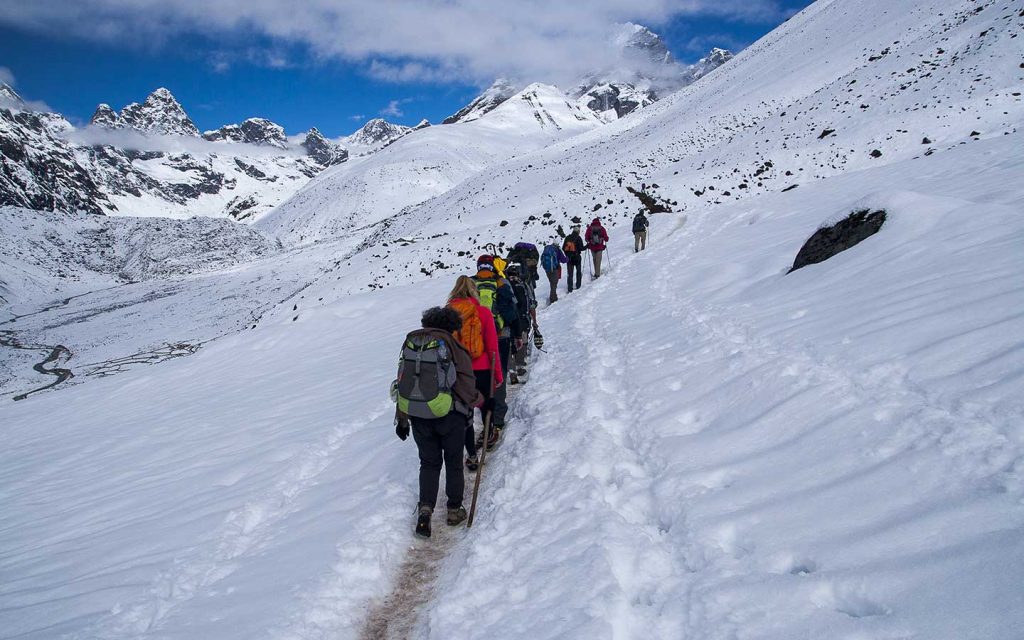
How fit do I need to be for the Everest Base Camp trek March weather? You don’t need to be an Olympic athlete, but March demands endurance to handle altitude and biting winds.
Lung Capacity vs. Cold: Cardio is your best defense against thin, freezing air. Run or swim to train your lungs for when the afternoon winds pick up.
Strong Legs: The trail is thousands of stone steps, often slick with spring ice. Squats and lunges are essential to armor your knees for steep descents.
The Mock Trek: Nothing beats reality. Hike with a backpack of 5 to 10 kg in the actual boots that you will wear during the trek. It’s the only way to make your feet and shoulders strong before facing the rugged Khumbu terrain.
What Wildlife Can I See in March?
March is the great awakening of Sagarmatha National Park. As the snow of winter melts, wildlife descends to the thawing valleys. Thus, this is one of the best months for sightings.
- Himalayan tahr can be seen climbing and standing on the rocky edges near Namche Bazaar.
- Nepal’s national bird, danphe, is active and visible in the pine forests.
- Keep a sharp eye on the birch forests for the shy musk deer. While rare, the elusive snow leopard is sometimes tracked in the snow.
Festivals During the EBC Trek in March
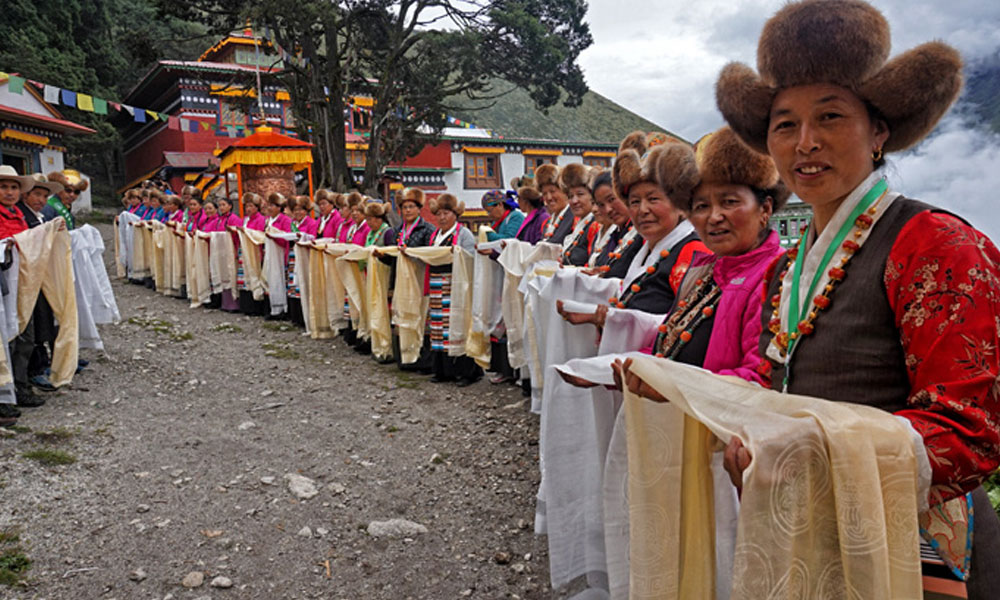
Holi: The Hindu festival of colors, also known as Fagu Purnima, usually falls in March. Trekkers and Sherpas tend to smear colored powder on each other against a backdrop of snowy peaks. It is a day of pure joy and photography gold.
Sherpa Culture: Depending on the lunar calendar, the festivities of Gyalpo Lhosar (Sherpa New Year) may extend into early March. Even without a specific festival, monasteries like Tengboche are active and offer a deep spiritual atmosphere.
Why Trek in March: Pros and Cons
Choose the March Everest Base Camp trek to experience the unique combination of winter beauty and a lively expedition atmosphere without the extreme cold of winter.
The Benefits
- You get the ‘winter wonderland’ aesthetics on the EBC March trail. But there is no risk of closed passes, which is the case in January.
- Unlike autumn, Everest Base Camp is filled with climbers preparing for the summit. And this creates a unique energy.
- Trekking in early March often allows you to secure the best rooms (with attached bathrooms) before the heavy crowds arrive on the trail.
The Trade-offs
- It is still freezing, so you cannot skimp on warm gear.
- You must be patient with potential flight delays caused by morning fog at Lukla.
- A neck gaiter or buff is non-negotiable because the trails are often dry and dusty before the spring rains arrive.
FAQs

Is March the Best Time for the Everest Base Camp Trek?
Yes, if you want the clearest possible mountain views and the beauty of blooming rhododendrons without the chaotic crowds of April.
How cold does it actually get?
During the day, it can feel like a pleasant spring afternoon (12°C). But the second the sun drops behind a peak, it freezes instantly. At high camps like Gorakshep, expect your room to be -15°C at night.
Will I fly directly from Kathmandu to Lukla?
To manage air traffic, authorities divert most flights to Manthali Airport in Ramechhap in March. This means driving there to catch your flight.
Do I need micro-spikes?
Yes, bring them. While the trail is mostly dry, you will likely hit patches of old, hard ice on the shaded paths near Lobuche and the descent from Kala Patthar. A simple pair of slip-on spikes can save you from a nasty fall.
Is it crowded?
It’s a mix. Early March is surprisingly peaceful. But by late March, the rush begins as the main spring season kicks off.
Is a solo Everest Base Camp trek in March possible?
New regulations discourage solo trekking in the Everest region for safety. Plus, in March, having a guide is a massive safety net for monitoring altitude sickness and navigating any lingering ice on the passes.