Annapurna Circuit in November offers some of the best trekking conditions before winter settles into the Himalayas. The monsoon is already over by this time, so the trails are usually dry, the skies stay clear for days, and the mountain views feel especially sharp in the cold autumn air. Trekking during the day is comfortable in most sections of the route, though mornings and nights become noticeably colder as you move higher toward Thorong La Pass.
Many trekkers prefer to trek the Annapurna Circuit in November because of how the trail feels at this time of year. Lower valleys still hold onto their autumn colors. Likewise, the air feels crisp and clean in November. And the views of Annapurna, Dhaulagiri, Machhapuchhre, and nearby peaks often remain clear for hours.
The scenery also changes constantly along the trail. In just a few days, the route shifts from green hillsides and terraced fields to pine forests, rocky cliffs, and the dry landscapes of the upper Mustang region. The higher you climb, the more dramatic the surroundings begin to feel.
November is still part of Nepal’s busy autumn trekking season, especially in the first half of the month, but trails usually feel slightly calmer than peak October. Most teahouses along the route remain open, and conditions are generally stable for crossing Thorong La Pass before heavier winter snowfall becomes more common later in the season.
Annapurna Circuit In November: Quick Facts
| Annapurna Circuit In November | Details |
|---|---|
| Season | Late autumn |
| Weather | Mostly dry and stable |
| Day Temperature | 10°C to 20°C (lower elevations) |
| Night Temperature | Can drop below freezing at higher elevations |
| Trail Conditions | Dry and easier to walk after monsoon |
| Visibility | Excellent mountain views |
| Crowd Level | Busy, but slightly quieter than October |
| Snowfall Chance | Possible at higher elevations late in the month |
| Thorong La Pass | Usually accessible in November |
| Teahouses | Open throughout the route |
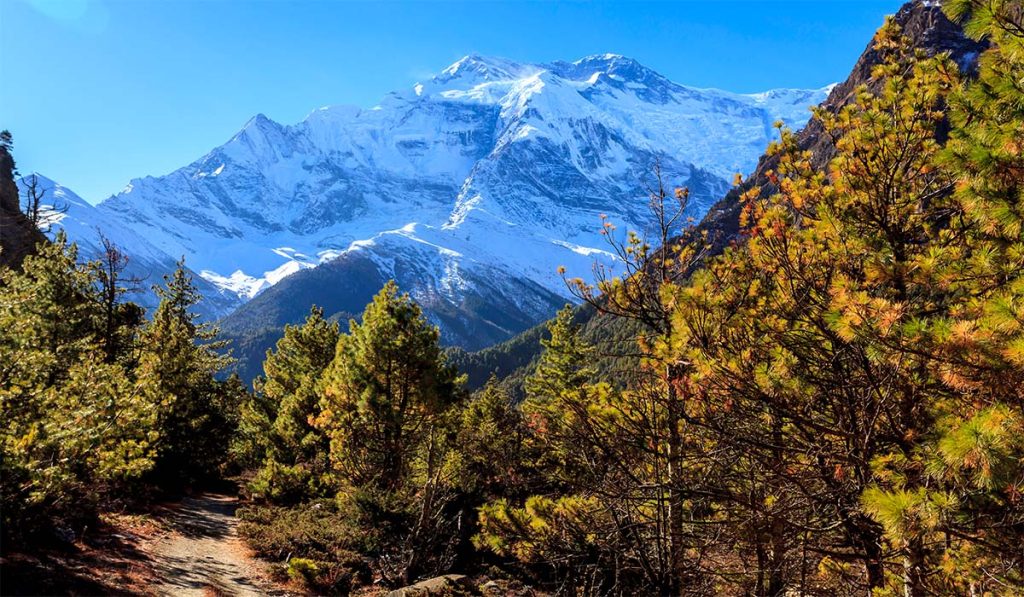
Highlights
- November usually brings clear days and comfortable weather for walking
- Most trails dry out after the monsoon, so the route feels less muddy and slippery
- Mountain views are often at their best during this time of year
- Good visibility makes November a great month for photography on the trail
- Compared to October, some parts of the route feel a little less busy
- Lower sections of the trek still carry traces of autumn color
- Teahouses across the Annapurna Circuit remain open and active in November
- You may also get to experience festivals like Tihar in local villages
- Thorong La Pass is normally still accessible before heavier winter snow begins
Why Trek The Annapurna Circuit In November
November is one of the busiest months on the Annapurna Circuit, and most trekkers choose this time for a simple reason — the conditions are usually very reliable. The monsoon is over, the trails begin to dry out, and the mountain views are often at their clearest.
It’s also a good time for people who want stable weather without the heavier snow and colder temperatures that arrive later in winter.
Stable and Clear Weather
Weather along the Annapurna Circuit in November is mostly dry. Rain is rare during this period, especially once the month settles in, and many days start with clear skies.
After the monsoon season ends, visibility improves noticeably across the region. Mountains that stay hidden behind clouds during the summer become visible again, especially in the morning. Views of Annapurna, Dhaulagiri, and Machhapuchhre are common on clear days.
The trails also start drying after months of rain. Sections that are muddy during monsoon become easier to walk on in November.
Comfortable Temperatures For Trekking
Daytime temperatures in November are usually comfortable for walking. Lower sections of the Annapurna Circuit stay fairly mild, particularly around villages and forest areas.
Once you get above Manang, the cold feels much more noticeable. Around Yak Kharka and Thorong Phedi, the temperature drops quickly in the morning and after sunset, and the cold feels much sharper than in the lower parts of the trail. Near Thorong La Pass, freezing nights are normal in November.
Even so, many trekkers prefer November because the cold is still manageable compared to December and January.
Dry Trail Conditions
Trail conditions are one of the main reasons people trek the Annapurna Circuit in November. Most parts of the Annapurna Circuit are usually dry in November, so the trail feels much easier to walk compared to the monsoon season.
You’ll notice the difference more on steep downhill sections and rocky parts of the trail where rain can make the ground slippery.
Clear Mountain Views
November is one of the better months for mountain views in the Annapurna region. After the monsoon season, the skies are often clearer and the mountains stay visible for longer periods during the day. The air usually feels cleaner after the monsoon, and haze is much less common.
Because of that, the views often stay open for longer parts of the day. Trekkers regularly see Annapurna II, Gangapurna, Dhaulagiri, and Machhapuchhre from different sections of the trail.
Crowds In November
November is still part of the main autumn trekking season, so the Annapurna Circuit can feel busy in popular stops and teahouses.
Still, the trail is often a little less crowded than October, which is normally the peak month for trekking in Nepal.
Things To Keep In Mind
The biggest thing to prepare for in November is the cold at higher elevations. Early mornings and nights near Thorong La Pass can be freezing.
Daylight hours also become shorter later in the month, so trekkers usually begin walking earlier in the day. Snowfall is possible near Thorong La Pass toward the end of November, although the pass normally stays open unless weather conditions change suddenly.
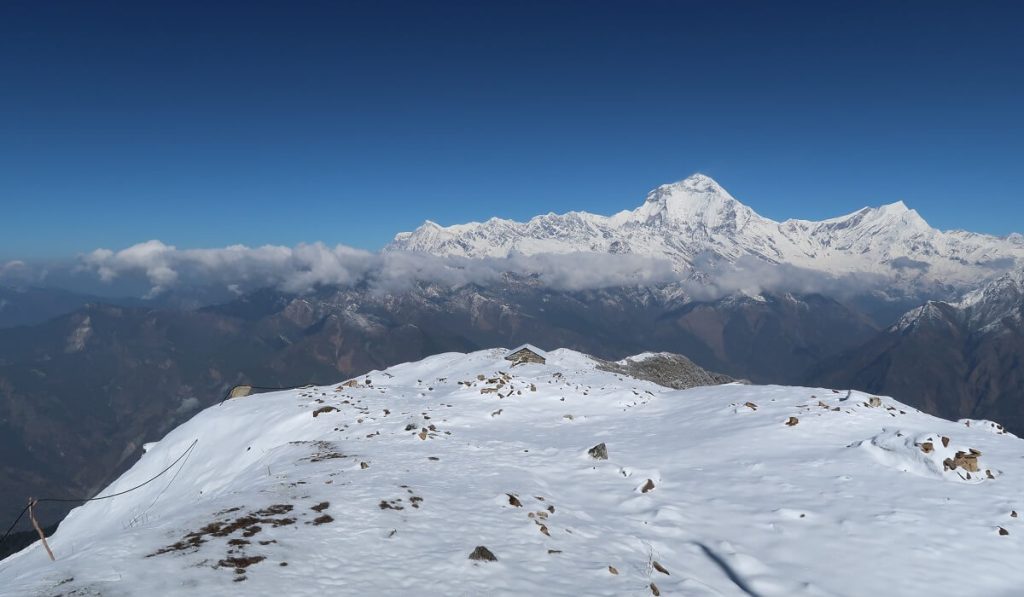
Annapurna Circuit Weather In November
Weather on the Annapurna Circuit in November is usually stable and dry. Since the monsoon season ends earlier in autumn, rainfall becomes very low across most parts of the trail. Mornings in November are usually clear, and on many days the mountain views stay visible for hours without clouds covering the peaks.
The weather feels pleasant for walking in the lower and middle sections of the Annapurna Circuit. But once you start climbing higher toward Thorong La Pass, the cold becomes much more noticeable. Places like Manang, Yak Kharka, and Thorong Phedi can feel very cold early in the morning and after sunset.
Light snowfall is possible at higher elevations later in November, although the pass usually remains open under normal weather conditions.
Annapurna Circuit Temperature In November
| Location | Average Temperature In November |
|---|---|
| Besisahar | 20°C to 25°C during the day |
| Chame | 10°C to 15°C during the day |
| Manang | 8°C to 12°C during the day |
| Yak Kharka | 5°C to 10°C during the day |
| Thorong Phedi | Around 5°C during the day |
| Thorong La Pass | Can drop below freezing |
Rainfall And Trail Conditions
November is one of the driest months for trekking in the Annapurna region. As the trails are usually dry after the monsoon, it is easier to walk compared to the rainy season.
Most sections of the Annapurna Circuit remain in good condition during this month, including rocky climbs and steep descents.
Visibility And Mountain Views
One of the main reasons trekkers choose November is the mountain visibility. The air is usually cleaner after the monsoon season, so views of Annapurna, Dhaulagiri, Gangapurna, and Machhapuchhre often stay clear for long periods during the day.
Snowfall In November
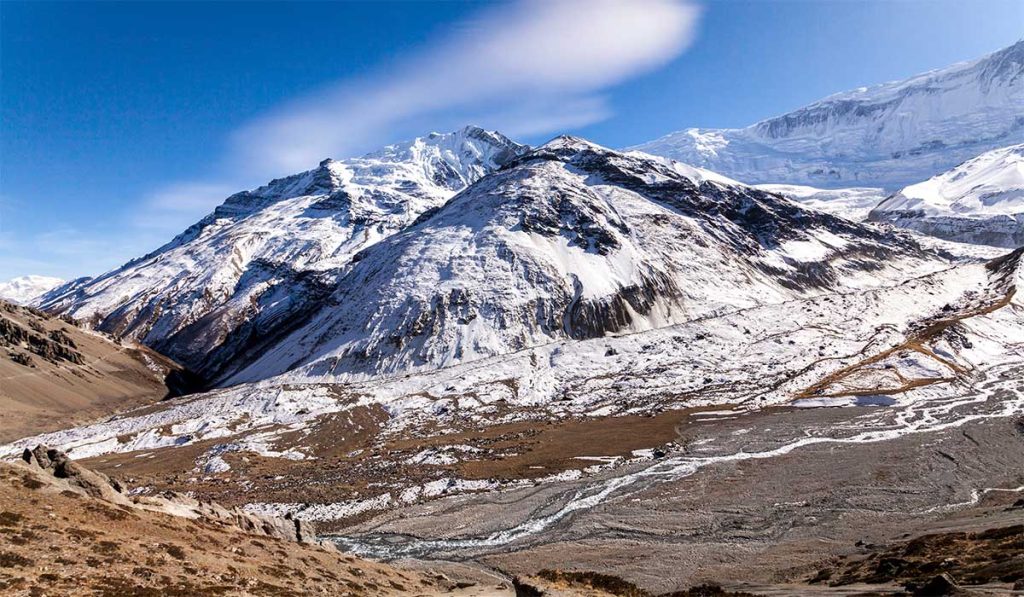
Snowfall is possible near Thorong La Pass and other higher elevations toward the end of November. Heavy snowfall is less common in November than later winter months like December or January.
Still, it’s important to be prepared for freezing temperatures and sudden weather changes near the higher parts of the Annapurna Circuit.
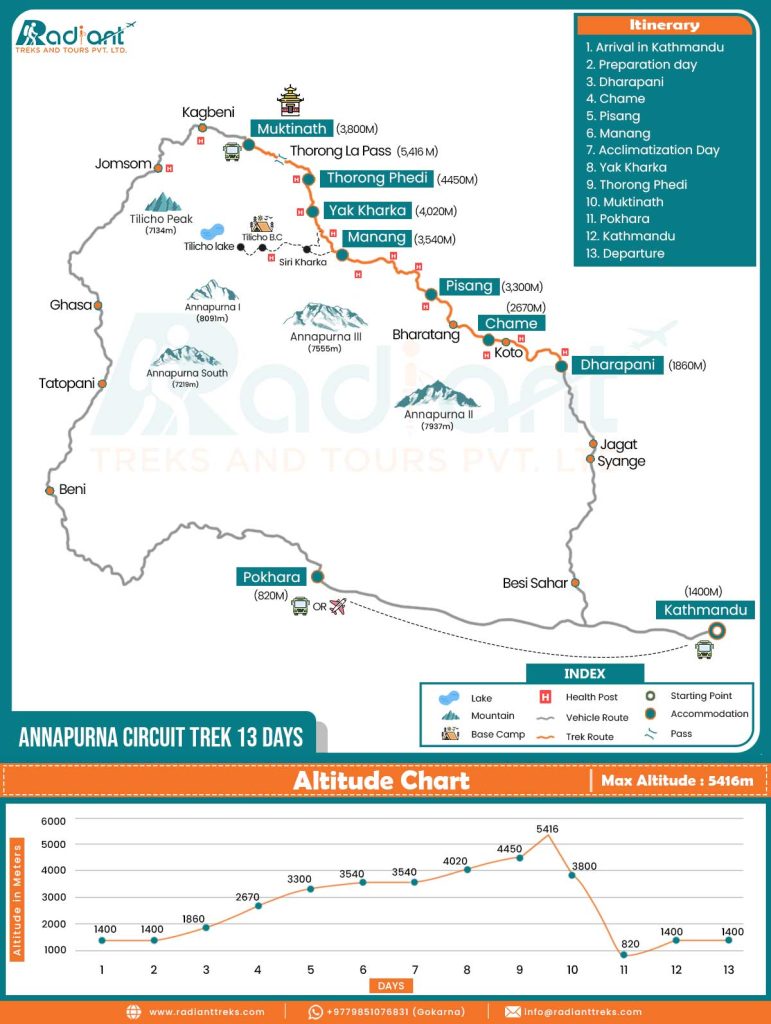
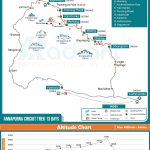
Annapurna Circuit Route Overview In November
The Annapurna Circuit feels quite different in November compared to the rainy months. The skies are usually clearer, the trails begin drying out properly, and the mountain views become much more consistent along the route.
Temperatures also change noticeably as the trek gains elevation. Lower villages stay fairly mild during the day, while higher places near Thorong La Pass become much colder, especially in the morning and at night.
Kathmandu To Dharapani (1,860 m)
The trip toward the Annapurna region starts with a long drive from Kathmandu to Dharapani. During November, the lower hills are still green after the monsoon, and the weather along this section is usually comfortable.
The road passes through riverside towns, terraced hillsides, and smaller mountain villages before reaching Dharapani, where the trekking route properly begins.
Dharapani To Chame (2,670 m)
The trail from Dharapani to Chame follows the Marsyangdi River through pine forests, suspension bridges, and scattered villages along the valley.
November weather around this section is normally cool and dry, which makes walking easier compared to the monsoon season. As the trail climbs higher, the mountain scenery also starts opening up more clearly around Chame.
On clear mornings, trekkers often get their first closer views of Lamjung Himal and nearby snow-covered peaks.
Chame To Manang (3,540 m)
The scenery starts changing noticeably between Chame and Manang. Beyond Chame, the trail opens up as the thicker forest disappears. The walk toward Manang passes through broad valleys, rocky ground, and dry mountain slopes.
Near Upper Pisang, the snow peaks start looking much closer and remain visible along much of the trail. In November, clear weather often keeps peaks like Annapurna II and Gangapurna visible for most of the day.
The air also feels colder around Manang, especially during the morning and evening. Most trekkers spend an extra day here before continuing toward Thorong La Pass.
Manang To Thorong Phedi (4,540 m)
Above Manang, the trail becomes drier, windier, and more exposed. Trees gradually disappear, and the terrain starts looking more barren as the elevation increases.
Around Yak Kharka and Thorong Phedi, the cold feels much stronger once the sun goes down. Even so, November trail conditions are usually stable, and most sections remain dry during this time of year.
Crossing Thorong La Pass In November (5,416 m)
Thorong La Pass is the highest point of the Annapurna Circuit and one of the most important parts of the route.
Most trekkers leave before sunrise because mornings usually bring calmer weather and clearer visibility around the pass. November is often considered a favorable time for crossing Thorong La Pass since heavy winter snow has not yet normally arrived.
Freezing temperatures are common near the top, and light snowfall is still possible later in the month. After crossing the pass, the trail descends toward Muktinath.
Descending To Muktinath And Mustang (3,800 m)
The scenery changes quickly after Thorong La Pass. The greener mountain trails begin giving way to the drier landscapes of Mustang.
Around Muktinath and Kagbeni, November is usually dry, and clear skies are common during most days. After descending from Thorong La Pass, the temperature also starts feeling more comfortable compared to the colder higher sections of the Annapurna Circuit.
Optional Tilicho Lake Extension In November (4,919 m)
Some trekkers add Tilicho Lake to their Annapurna Circuit itinerary in November. Early November generally offers more stable conditions for this route of the Annapurna Circuit with Tilicho Lake trek, although temperatures around the lake remain cold throughout the day.
Toward the end of November, snowfall and icy sections can make the Tilicho Lake trail more challenging, especially during the morning hours.
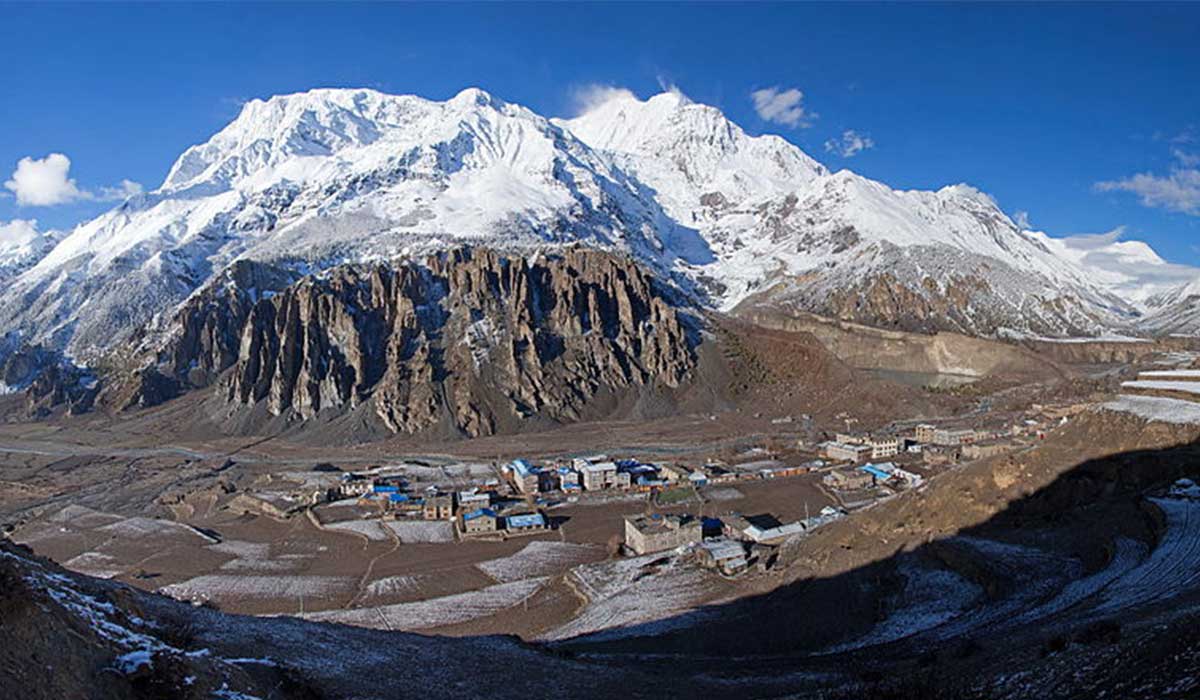
Training Before The Trek
Preparing properly before the trek in November makes a noticeable difference on the Annapurna Circuit. This is true especially during the higher sections of the route where the air becomes thinner and walking days get longer.
Most people prepare with regular hiking, stair climbing, cycling, or longer walks a few weeks before arriving in Nepal. Walking with a backpack during practice hikes can also help before spending multiple days on the trail.
The higher parts of the trail can still feel tiring in November, so it helps to walk at a steady pace and give your body enough time to adjust to the altitude.
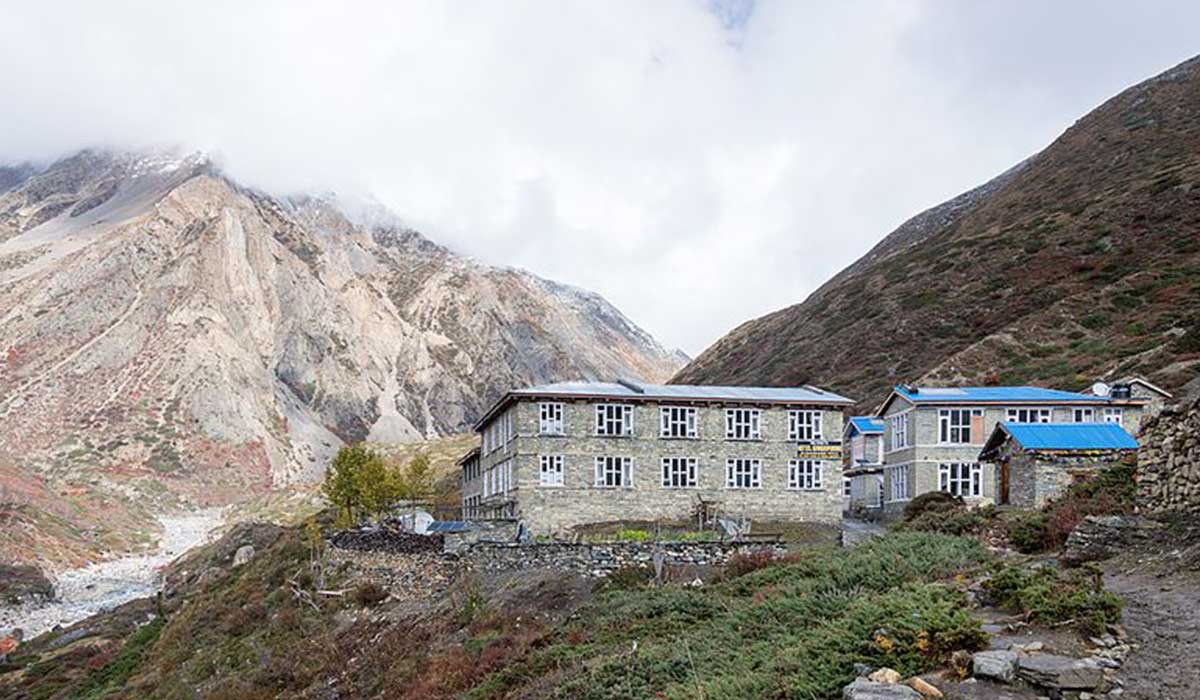
November Annapurna Circuit Permits
Trekkers need permits before starting the trek to the Annapurna Circuit in November. The main permit required for the route is the Annapurna Conservation Area Permit (ACAP).
Most people arrange permits in Kathmandu or Pokhara before heading toward the trail. Since November is still part of the busy trekking season in Nepal, transportation and permit arrangements can take longer than usual during peak weeks.
Many trekkers also organize permits through trekking agencies before the trip begins. We, at Radiant Treks, offer that service if you choose to trek the Annapurna Circuit in November with us.

What To Pack For The Annapurna Circuit In November
When you pack for this trek in November, you should prepare for the cold weather in the higher parts of the trekking trail. The temperature starts feeling much colder after Manang in this month. You can feel that especially in the morning and evening and near Thorong La Pass. The lower trail sections usually do not feel too cold during the day, but the temperature changes quite a bit after Manang. Because of that, most trekkers carry extra warm layers for the upper part of the trek.
Warm Clothing For November Weather
Clothing people commonly pack for November includes:
- Thermal layers
- Fleece jacket
- Down jacket
- Waterproof jacket
- Trekking pants
- Wool socks
- Gloves
- Warm hat or beanie
Extra layers become more useful once the trail starts climbing above Manang.
Trekking Boots And Essential Gear
The Annapurna Circuit has many rocky trails, uneven paths, and long downhill sections. Because of that, most trekkers prefer hiking boots with ankle support and decent grip for November conditions.
Other gear commonly carried on the trek includes:
- Trekking poles
- Backpack with rain cover
- Sleeping bag
- Headlamp
- Insulated water bottle
- Sunglasses
Health And Personal Essentials
Most trekkers also carry a few basic personal items on the trek:
- First-aid kit
- Personal medicines
- Sunscreen
- Lip balm
- Water purification tablets
- Snacks or energy bars
- Wet wipes
- Hand sanitizer
Extra Gear for Late November Conditions
Late November can feel colder near the higher sections of the route. Light snow and icy patches sometimes appear near Thorong La Pass toward the end of the month. For that reason, some trekkers also bring the following:
- Microspikes
- Sleeping bag liner
- Hand warmers
- Power bank
- Emergency blanket

Should You Trek the Annapurna Circuit in November?
For many trekkers, November is one of the most reliable times to do the Annapurna Circuit. The monsoon season is already over by then, so the trails are usually drier and mountain views become much clearer across the route.
The weather is also more stable compared to the rainy season, especially in the middle of November. Clear mornings are common, and visibility around the Annapurna range often stays excellent for longer parts of the day.
Another reason people choose November is the trail condition. Sections that stay wet during the monsoon are usually much drier in November, so the trail feels easier to walk in many areas.
At the same time, the higher elevations can still feel freezing during the morning and nighttime hours. Areas near Thorong La Pass regularly experience freezing temperatures in November, especially later in the month.
November is also part of Nepal’s main trekking season, so villages and teahouses along the Annapurna Circuit can feel busy, particularly during early November. Even so, many trekkers still prefer this period because it offers a favorable balance of weather, visibility, and trail conditions before winter becomes harsher.
Food and Accommodation on the Annapurna Circuit in November
Teahouses along the Annapurna Circuit remain open throughout November, especially on the main trekking route. Since this is still part of the autumn trekking season, most villages continue operating normally during the month.
Places like Manang, Yak Kharka, and Thorong Phedi can still feel busy during the first part of November, especially in the main trekking period.
The food available along the trail stays mostly the same as other trekking months in Nepal. Dal bhat, noodles, fried rice, soup, pasta, potatoes, tea, and basic bakery items are commonly available in most teahouses.
As the elevation increases, food prices also become pricier because supplies have to be transported into the higher villages.
Frequently Asked Questions (FAQs)
Is Thorong La Pass Open In November?
Thorong La Pass is open during most of November in normal weather conditions. Heavy winter snow usually arrives later in the season, although light snowfall can still happen near the pass toward the end of the month.
Does It Snow On the Annapurna Circuit In November?
Snow can fall on the higher parts of the Annapurna Circuit in November, especially around Thorong La Pass. Snow is usually less common earlier in the month compared to late November.
How Cold Is The Annapurna Circuit In November?
The weather feels completely unique between the lower and higher parts of the trail in November. Lower villages are usually manageable during the daytime, but the cold becomes much stronger after gaining elevation beyond Manang. Near Thorong La Pass, freezing mornings and nights are common.
Is November Crowded On The Annapurna Circuit?
The Annapurna Circuit still gets a good number of trekkers in November since it falls within Nepal’s main trekking season. Popular overnight stops and teahouses can feel busy at times, especially during the first half of the month.
Are Teahouses Open On The Annapurna Circuit In November?
Teahouses remain open across most parts of the Annapurna Circuit during November. Accommodation and meals are available throughout the main trekking route.
What Should I Pack For Trekking The Annapurna Circuit In November?
As the temperature starts feeling much colder after crossing the lower sections of the trail, you should pack for that. It means carrying extra warm clothing for the higher elevations. Thermal layers, a down jacket, gloves, wool socks, and a warm sleeping bag are commonly packed for November trekking conditions.
Is November Better Than December To Be On The Annapurna Circuit?
A lot of trekkers choose November because conditions are usually easier before winter becomes stronger in the mountains. December is colder overall, and snow around Thorong La Pass becomes more common later in the season.